 Finding Hope
Hello and Goodbye to Lithium
Posted on March 7, 2018
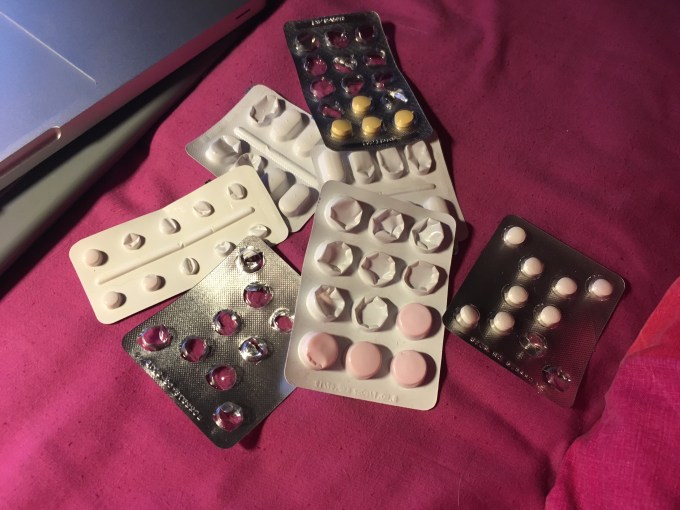
About a month ago, I went back to my psychiatrist. We discussed the Venlafaxine and since it hasn’t had the effect we’d hoped for, it was time to think about what to do next. The most obvious option, the one most likely to work in the shortest amount of time, was to add an ‘augmenting agent’ and so I started taking Lithium. I’m aware of the perception of Lithium but it didn’t worry me, not any more than any other medication anyway. I’m always hopeful that a new medication will work, and if that comes with the opportunity to defy expectations then it’s even better. So I was feeling optimistic and, as I did with the Venlafaxine, I took notes so that I could track any progress and/or side effects.
FIRST NIGHT AND NEXT DAY
As the first night and then day was pretty interesting, I thought I’d write this one up separately. I slept restlessly and woke up multiple times with night sweats. The first time I woke up was very surreal: I was overwhelmed by the physical sensations in my body. I remember thinking, “I can really feel my hands. I really have hands.” It was very strange. I struggled to get back to sleep and when I got up in the morning, I felt very nauseous. I had a headache all day and by the evening, I felt very spaced out and tired.
WEEK 1
The restless sleep and night sweats continued, joined by complicated and busy dreams. I found it very difficult to wake up and I was so sleepy that I was falling asleep multiple times during the day. When I was awake, I was tired and weak, like there was no strength stored in my body. It was frustrating and upsetting to struggle to do everything I would normally do. I was spaced out and nauseous and shaky; if I stood up for more than about thirty seconds, I got dizzy and nauseous and my vision went white. It was horrible.
WEEK 2
I was still having difficulty sleeping and was struggling with sleepiness during the day. I continued to struggle with nausea and feeling spaced out but I also felt low; I think I would’ve felt depressed if I was able to really feel anything. The shakiness and weakness also continued.
WEEK 3
And we STILL have difficulty sleeping. It was taking me hours to get to sleep and hours to wake up and in the few hours between, I slept very restlessly. Then when I was awake, I was very sleepy. The shakiness, weakness, and nausea combination was still around. I also started to struggle with almost constant anxiety; there were stressful things going on but I couldn’t seem to shake it off once I’d done those things so it was around all the time.
WEEK 4
Continued difficulty sleeping, especially staying asleep and then I was so tired that I fell asleep during the day. Those short sleeps were actually the best I’ve had in months, much better than the hours I got at night. I was also still struggling with the shakiness, dizziness, and nausea, as well as the anxiety.
WEEK 5
The restless sleep continued, as did the struggling to wake up. On several occasions, I fought to wake up only to fall asleep again; I also fell asleep during the day multiple times. I was constantly tired. The nausea and dizziness also continued, as did the anxiety.
I did not like taking Lithium. It didn’t actually help my depression – I’m still feeling very emotionally numb and the fatigue has only gotten worse – and the side effects were constant and actually got worse over time: the difficulty sleeping, the shakiness/dizziness/nausea combination as well as all of those as separate symptoms… I was struggling so much that I had multiple doctors’ appointments to make sure that nothing else was going on. I had blood tests and blood pressure tests and even an ECG. They didn’t show anything outside the normal ranges but the fact that it was bad enough to warrant those tests meant that I booked an appointment with my psychiatrist for as soon as possible to look at my medication.
I have now had that appointment and we’ve decided to stop the Lithium; he was surprised and impressed, I think, that I’d stuck with it so long considering how bad the side effects were. Since the Venlafaxine hasn’t done much for me, I’d like to try something else but given how much is happening in the next couple of months, I’m reluctant to put myself through the ordeal of getting off it, the period of no medication, and then getting onto something new. So for now, I’m trying a new augmenting agent and I guess we’ll see how that goes. I think the emotional numbness is preventing me from getting too low about anything but regardless of that, I’m still optimistic about medication, even with all the bad experiences I’ve had recently. I fully believe that it was Phenelzine that made going to university possible and even now, years later, I still remember so clearly how good I felt when I started taking it. It felt like I was flying. It was amazing. Searching for that will always be better than letting the depression take over, even if I have to let it take over to remember that.
To Gig Or Not To Gig
Posted on February 17, 2018
What with the medication and the side effects and the day-to-day consequences of my specific Venn diagram of issues, I have been feeling incredibly unwell over the last several months. It’s been really tough: I’ve been dealing with nausea, dizziness, weakness, shortness of breath, shakiness, and so on. Having spent so much time and effort convincing people that a mental illness is actually an illness, that it isn’t less important just because the symptoms are inside your head, I think it’s easy to forget that these problems also have physical symptoms. I’m guilty of it too and I’m not very good at accepting that reality. But I’ve had to of late. Or, at the very least, try not to give myself such a hard time over it.
But this week I had my first gig in a really long time and I was going to do it, come hell or high water. The hardest thing has been not being able to do the things I love the most, namely singing and songwriting. That makes me a kind of stir crazy that I’m not sure I can put into words. So I did my absolute best to make sure I was ready, in both the health and music sense, and I thought I’d share some of the things I did in case they’re useful to anyone else.
Make sure your expectations are realistic – In the last six months, I’ve been offered a couple of gigs that I knew I just couldn’t do, regardless of how much I wanted to do them. I just wasn’t well enough. But this one was perfect: a short set, a relaxed atmosphere, lovely and supportive people… It was a really good opportunity to do this thing that I love so much without too great a cost to myself.
If it feels right, let those in charge know – I don’t think this is always necessary but when you know it could affect your performance, it can be a good move. It’s my default position to be open and honest and because I write songs about my experiences with mental health and Autism, they find out soon enough anyway but I’m also aware that people can jump to incorrect conclusions when they hear the word ‘Autism.’ So there are pros and cons but it’s something to consider.
Practice in small doses – There’s no getting away from the fact that you need to practice to be ready to perform well at anything. But it doesn’t have to be a huge, daunting black cloud that swallows up your day. I hadn’t been doing much consistent practice because I just felt so awful but I managed to build in fifteen minutes a day. It felt pathetic given that I used to be able to sing and play for hours but I’m trying to just acknowledge the thought and then put it aside. Even fifteen minutes was leaving me shaky but it gave me back some of my confidence and even though I don’t have another gig for a while, I am going to try and keep to this. It gives me more than it takes away.
Physically prepare your body – Make sure you’ve slept enough, eaten enough, and drunk enough water. These can be hard; I’ve struggled with all of them. But try to remember why you’re forcing yourself through it and do your best. It puts you in the best possible position to perform well which is, after all, the goal. Hopefully that motivation is enough.
Do whatever it is that gives you a boost and if you can’t do that, avoid the things that bring you down – I usually listen to music to inspire and energize me before a gig. They’re not necessarily happy songs but they are all high energy or high intensity. That helps me get into the right mindset to perform and that usually overrides whatever I’m dealing with physically.
If you need to stop, stop – I’ve been to multiple gigs where acts have had to call it quits mid set because of a terrible cold or whatever and every single time, the only thing anyone says is how impressed they are that the person got as far as they did. That may not always be the case but would it be better to push through and end up face planting onto the floor when the dizziness turned into fainting? No, it would not. Do what you can for as long as you can and then gracefully retreat.
Now I can’t prove that these things helped but I know they didn’t hurt. The gig went really well and it felt so good to be performing again. A couple of days later and I’m still tired and shaky but if that’s the price, I’m more than happy to pay it. For the first time in weeks, I feel like I’m in sync with my life; my anxiety has dissipated and I actually feel calm. That’s not something I can say very often.

Tired
Posted on November 25, 2017
If I could change one thing about myself it would be my energy levels.
I’ve struggled with fatigue for most of my life. When I was twelve, I suddenly got sick and missed a lot of school. I was nauseous and so tired that even walking upstairs was exhausting. I went to the doctor, had many, many blood tests, saw various specialists but no one could figure out what was happening. No one could find anything wrong. And yet I was still very unwell. The only clue we had was that the blood tests showed I had had Glandular Fever at some point. But that was it. Months passed and we tried lots of different approaches but nothing helped. I was managing a bit of school but it was only a handful of classes a week and even that exhausted me. I basically lived on the sofa, missing out on pretty much everything.
Just over two years in and someone suggested something called the Lightning Process. It sounded strange but I was desperate so we said yes. It’s a fascinating idea: changing the pathways in your brain to affect your body and your health. I went to the three-day training course but by the end of the second day, I knew something had changed. I felt completely different and it showed. I still had very low stamina but somehow I had more energy. It was like a switch had been flipped. I went back to school and although I did still struggle a bit, it was so much better than before.
Everything seemed normal until I was eighteen and doing my A Levels. The stress was overwhelming and before I knew it, I was drowning in exhaustion. Somehow, I made it through my exams but my mental health deteriorated to a point where I couldn’t start the next course I’d planned to do. I struggled with both anxiety and depression and my fatigue seemed – and still seems – to be inextricably linked. It’s not as simple as ‘I’m more tired when my mental health is bad’ but there is a correlation. Medication has helped and was one of the major factors in getting me through university but it’s still something I struggle with daily.
When I was diagnosed with ASD, I was told that fatigue isn’t unusual and sleep problems are common with Autism. Personally, I’ve struggled with insomnia but more often, I sleep long hours only to wake up as tired as when I went to sleep. It’s like sleeping is just a break between days; I don’t feel like I actually get any rest from it. I think that it’s also to do with how hard my brain is working all the time. Simply existing requires a lot of processing of information: my surroundings, what other people are saying or doing or feeling, sounds, smells, as well as my own reactions and emotions about all of those things. I have to actively process all of that and it’s exhausting. That’s a normal day. If something emotional happens, good or bad, it takes all of my energy to deal with that. To me, strong emotions are like fog and it can take days or weeks to work my way through it. Sometimes longer. I also live with a lot of anxiety, which has always done a number on my energy. That anxiety feels like a programme running in the background of my brain, using up my energy, physically and mentally.
It’s a constant struggle, a constant frustration. I know that I have less energy than the people around me but I can’t seem to change my expectations. I try over and over again to do the same amount as everyone else but I can’t sustain it. Sooner or later, I crash, completely exhausted. I’m getting better at managing my energy and building in recovery time but I can’t seem to stop myself raging against it. I can’t accept it. I feel a bit like one of those wind up toys that just keeps running into a wall. I want to do so much more than I have the energy for and that’s really, really hard to deal with. As is the long-term nature of it. You can’t just quit your life for a few days like when you get the flu or have a migraine. I’m not making light of those things – I’ve had and hated both – but the need to keep pushing forward despite feeling so exhausted and the anxiety about not making any progress wears me down in a way nothing else does. It affects every aspect of my life and it’s starting to feel like a part of me.
This makes it impossible for me to work. I’ve been extremely fortunate to get some benefits over the last few years but it’s still very, very stressful. I find it so difficult to adjust my thinking, to adjust to my new reality. I keep trying to meet the standards I’ve grown up believing I need to reach only to feel like a failure when I can’t reach them. The idea of even a part time job fills me with blinding panic because I know that I am physically incapable of doing all the tasks that would be required of me. Some days, even having a shower feels like climbing Mount Everest. I want to link to this Tumblr post because I think it explains the relationship between energy and the tasks you’re trying to do really well.
And it’s not just physical energy; it’s mental and emotional energy too. I get overwhelmed and burnt out really quickly, I think because I feel everything so intensely. A job that doesn’t account for that would have a devastating effect on my mental health and even though the world is starting to think about mental health and spread the message of putting you’re mental health first, I still feel incredibly anxious about this area of my life. I feel like having so little energy means I’m lazy. I feel like a burden for not having moved out, for not being able to be independent, for not having a job. Everyone I know has had jobs that they didn’t like and I feel like I’m entitled for wanting a job that I like and can do with the limitations I have. I feel like I shouldn’t want more than my neurotypical peers, like I should just get on with it and stop expecting special treatment. And yet, I know the limits of my mental health and of my body. These two sides keep clashing (which I’m sure doesn’t help my energy levels). It’s a horrible place to be stuck in and I can’t help but think that it’s connected to getting an Autism diagnosis so late: I grew up with the same external expectations as everyone else but a different internal capability. I know that now but it’s hard to hold onto that when the voices in my head are telling me that I’m just not trying hard enough. That one is a constant, in every area of my life.
I’ve often used being a Mac in a PC world as an analogy for Autism: most of the functions are there but they’re in different places or you have to find an alternate way of doing something. And I think it’s true here as well. When you run a programme that isn’t meant for the system you’re using, it doesn’t work as well. I think that’s a good analogy for being neuroatypical in a neurotypical world. I feel like I have not been designed for this system and so I don’t function as well as the people that have. Or maybe the system hasn’t been designed for me. It’s a chicken and egg situation. But you get my point. For whatever reason, I feel incompatible with my environment and that takes up a hell of a lot of energy.
I don’t really have any answers to this problem. I’m not even sure how to finish this post. This is something I struggle with daily and at the moment, I feel very worn down by it. I don’t want to spend my whole life planning in recovery time, replying to ‘how are you?’ with ‘tired’. I don’t want my life to be decided by my energy levels but I’m scared that it will be.


 Finding Hope