 Finding Hope
Introducing my Mum
Posted on March 31, 2018
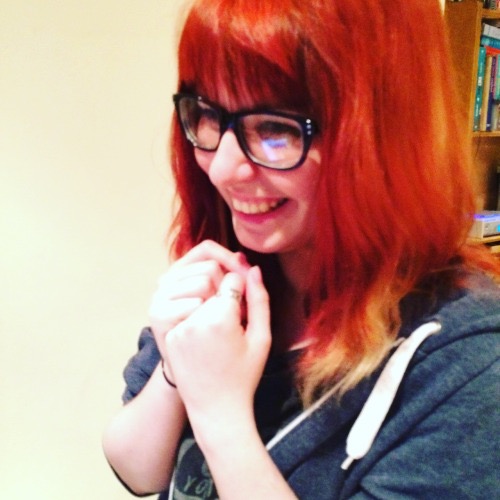
In this post, I’d like to introduce my Mum, Sandra. We’ve been talking about her writing a post or two for a while because I think she’s got some really valuable stuff to add to the discussion of Autism, and Autism in women. Most of the resources around Autism tend to be written by parents of young children and while that viewpoint is important, the lack of any other viewpoints is something that needs to be addressed. There’s very little written by young people with Autism and I can’t find anything written by the parents of young people with Autism. So we thought we’d throw this out there.
We’ve never had a typical relationship: I’ve never felt the need to rebel and I can probably count on one hand the number of times we’ve really argued. We just get on really well and we share everything; we talk everything through. So she’s been on every step of this whole journey with me, from the moment I realised that what I was feeling wasn’t normal. She must’ve talked to hundreds of people – friends, family, health professionals in multiple fields – and spent hours and hours reading up on every possibility. She’s been to every appointment with me and she came to therapy with me until I felt confident enough to do it by myself. She pushes me when I need pushing and she protects me when I need protecting. I genuinely wouldn’t have made it this far without her. She’s always believed in me and she’s never stopped pushing to get me the help I needed, not for a moment. I am more grateful than I could ever express. She spoke for me when I couldn’t and she still does if I need her too. I only have to ask and she’s there. She is my hero. I couldn’t be me without her.
Here is a little paragraph from her to start her off:
‘Get out and take up dancing!’ was one of the many pieces of well-meaning advice I was given during my search for help for Lauren. ‘Tough Love’ was another suggestion and was just another way of saying the same thing. Because of the age she was when we started seriously looking for answers, many people, both professional and otherwise, saw much of her anxiety and depression as the ‘normal’ behaviour of an adolescent. But I felt there was more to it and knew I had to try and get some answers. So I began researching: talking, reading, anything to better understand what I saw Lauren struggling with. Now, several years later, I still remember my response to that suggestion: ‘I will take up dancing once I find the help my daughter needs’. And I have been lucky. We have been lucky. We have found some extraordinary people to help and support her but it has often been a long and isolating journey and one that I wonder whether might be useful to share for other parents or carers finding themselves in a similar situation.
We’ve been throwing some ideas around but nothing’s written yet. Between work stuff, moving house, and my mental health, there just hasn’t been the time. But we’ll get there. Stay tuned!


Learn With Me
Posted on March 29, 2018
I was diagnosed with Autism Spectrum Disorder at the age of twenty, after actively struggling for several years. When I use the word ‘actively,’ I mean that, while I had had difficulties with all the things that turned out to be characteristics of Autism, they had become really hard to deal with and were having a serious impact on my life and my mental health. For example, I’d always found socialising confusing and stressful but I’d managed it for most of my life, thinking that that was just how I was built. Ultimately, that’s true but knowing where it comes from has been very helpful, both in validating that struggle but also in helping me to learn how to cope with those feelings. So, the diagnosis was a really big deal but I still think a lot about why it came so late and what that means.
In my opinion, there was one big reason why it took so long to get a diagnosis and that was the lack of awareness and understanding around both mental health and Autism, especially in women. Because Autism in women often presents very differently to the stereotypical male presentation, no one even mentioned it until we’d been looking for an explanation for more than eighteen months. I have a couple of blog posts about the process of getting my diagnoses coming up but the short version is that we started out by looking at my mental health. We went to various people but no one took my anxiety, my depression, and so on as serious problems, brushing them off as things that everyone deals with. So it took a lot of work to get even one person to recognise that what was happening was an actual problem, and then even more work to get them to see that that was part of a bigger pattern. And I know that all of that was down to this general lack of awareness about how Autism can manifest and again, how it can manifest in women.
I am very grateful to have my diagnosis, regardless of how long it took to get it but I do think that getting it so late has had a detrimental effect on me:
- Expectations, my own and those of others – Having grown up assuming I was neurotypical, I have always compared myself to my neurotypical peers and hated myself when I couldn’t measure up. When I got to sixth form, I started to really struggle (mentally, socially, academically) and so the whole thing started to snowball. And because I was comparing myself so viciously to those around me who were coping so much better, I did great damage to my mental health and self esteem. Had I known that my brain worked differently and that I might need support, those two years of my life would most likely have been an altogether different experience. Even now that I know the difference is there, I still find it really difficult not to compare myself to others; I still often see myself as less capable or less intelligent or less whatever word is relevant to the situation.
- The mental health consequences – While this is not something I can scientifically prove, the chances are that this whole process has had an impact on my mental health. Being repeatedly invalidated and brushed off definitely made my depression and anxiety worse. That invalidation may also have triggered the development of Borderline Personality Disorder; I’m not qualified to make a definitive statement on that but between discussions with my health professionals and my own research, it’s a theory if nothing else.
I’ve often had friends and family ask what they can do to help me and to be completely honest, I don’t know. I’m still trying to figure all of this out for myself: what’s affected, what helps, what doesn’t… Sometimes it feels like, just because it’s my diagnosis, people think I have this deep understanding of it. I’m definitely more clued in than I used to be but even two and a half years later, I don’t always know what to do when something comes up. I think the only thing I can say is this: “Learn with me.” This is a process, which involves a lot of trial and error and over-planning and screwing up. When it doesn’t work, it’s no one’s fault. We just learn and move on to the next thing. But hopefully, we can navigate it as a team rather than a group of individuals.
I try not to spend too much time thinking about how my life would’ve been different if I’d been diagnosed at a younger age because there’s little to be gained from it. It is how it is. But occasionally the thought creeps in and I imagine this life where I’m so much more productive and engaged and independent. I don’t know if that’s how it would’ve played out but it’s a seductive thought. But as I said, I try not to go down that rabbit hole. I think it comes down to this: there are people I wouldn’t have met and experiences that I wouldn’t have had if I’d been diagnosed as a child and ultimately, I wouldn’t give those up for anything.
The Consequences of an Autism Diagnosis
Posted on March 27, 2018
During my attempts to get a diagnosis, I had many people giving me their thoughts on finding a label and that only increased when we started pursuing an Autism diagnosis. It was almost as bad as the amount of people telling me to have a bath or go for a walk to help my depression. Everyone had an opinion on it and the majority of people were, at best, wary and, at worst, completely against it. But I knew I needed a diagnosis – an explanation – for why I was struggling and now, two and half years after my diagnosis, it’s clear that it was the right move for me. I’m not holding it against those people because they were only trying to look out for me but it did add to the stress of the situation so I thought I’d write out some of the positives and negatives that I’ve experienced around my diagnosis.
POSITIVES
AN UNDERSTANDING OF WHY I WAS STRUGGLING – Before my diagnosis, I was very aware that something was causing me to struggle and I needed to know where that was coming from. I could see that I functioned differently and, until I had an explanation, that was because I was broken. That was how it felt. If a doctor told me it was something – something that had been researched, had a name, something that other people had – then it was something that I could do something about. But if it went unnamed and uncategorised, it was because there was something wrong with me. So, to learn it was Autism, was actually quite a relief. Rather than being an intangible black cloud that was swallowing my life, it had boundaries and patterns and strategies to work with. That was massively helpful to me.
A VALIDATION OF MY STRUGGLING – Before my diagnosis, I was consistently dismissed by doctors and other medical professionals when I tried to get help. If I mentioned anxiety, I was told that, ‘everyone gets anxious.’ If I felt that I absolutely couldn’t do something because something in my body was screaming not to, I just had to pull myself together. If I talked about my debilitating fatigue, I essentially got a shrug of the shoulders. Now at least people listen. They don’t always have the answers I want – sometimes they don’t have answers at all – but I’m no longer being dismissed.
MAKING SENSE OF WHO I AM – The things I had been struggling with were taking over my life and, without knowing what caused it, that made me feel very lost. I struggle with identity stuff anyway but when all my thought and energy was being devoted to these problems, there wasn’t the space for anything else. With the Autism diagnosis, things became much more straightforward. Of course this may be different for other people but for me, I could put the Autism in a box in my brain and that allowed me to see what was there. I started to get more of a sense of who I was and who I wasn’t. There are differing opinions of whether you should define yourself by your Autism but it’s a massive part of my identity; looking back, I’m surprised I didn’t feel more lost.
ACCESS TO SUPPORT – Having an Autism diagnosis made it possible to get support, emotionally and financially. I’ve been able to get benefits, extra time on exams, flexibility in the arrangement of events, and so on. This has been so helpful and I’m so grateful for it. Of course I managed before but these things have made a great impact on my stress levels and have therefore made it possible for me to be more functional and more productive. And I’ve been able to enjoy myself where, before, I would’ve been paralysed by anxiety. None of that would’ve been possible without a diagnosis.
AN EXPLANATION FOR UNUSUAL BEHAVIOUR – Having ‘Autism’ as an explanation when people ask why I’m doing something a particular way or why I can’t eat a certain thing makes people a lot more accepting. While many people don’t understand Autism in detail, they do know that it can involve behaviours like these. For example, my family are much more patient with my food sensitivities than they were before the diagnosis because now they know where it comes from; they understood that I wasn’t being picky by choice, but because I was autistic. The focus has changed from putting myself through those tough experiences in the hope they’ll get easier to finding ways to help me manage them.
A CONNECTION TO OTHER PEOPLE WHO EXPERIENCE THE WORLD IN A SIMLIAR WAY TO ME – This is something I’ve only started exploring recently. For a long time, I needed to figure out how to be autistic, if that makes sense. I had to work out how to live with it, and adding more people into the equation was a bit too much to cope with. But now that I feel more together (at least in terms of the Autism), I’ve joined a group so that I can meet more people like me, i.e. similar age, gender, and diagnosis. This isn’t something that would’ve been possible without the diagnosis. And even though it’s so new, it has been really exciting. I’ve made some new friends and we’re having a lot of ‘oh my god, me too!’ moments which is surreal and wonderful and funny. Hopefully this is only the beginning of something.
BENEFITS TO MY MENTAL HEALTH – I cannot express how important it was to me to have my feelings and struggles validated, as they were when I finally got the diagnosis. Being believed was life changing. One of the theories as to why I developed Borderline Personality Disorder involves the continued invalidation I went through while trying to get answers for myself. I also had a lot of anxiety around the continued not knowing and I was severely depressed. Getting a diagnosis didn’t magically make things better but it was a huge weight off my mind. And it was movement; even if moving forward is scary, staying still is worse.
NEGATIVES
FEELING THAT THIS IS FOREVER – Pre diagnosis, there were many theories as to why I felt the way I did. But while I’d repeatedly flipped through those in my mind, I’d never really thought about what would happen after I got my answers. So while getting the Autism diagnosis was a huge relief and a generally positive milestone, I was still very thrown by all these other things that I hadn’t considered, and one of them was that Autism is a lifelong thing that I will have to deal with. When we thought it was depression for example, there was an end to it, the opportunity to recover. I know intellectually that although I won’t ‘recover’ from Autism and I will learn how to manage the difficulties, it did and still can make me feel very claustrophobic within my own mind. As irrational as it sounds, I’ve had moments where I’ve felt like, if I just tried harder, I would be able to break out of this ‘Autism prison.’ I swing back and forth on this feeling but, as you can probably tell, the positives of getting the diagnosis far outweighed the negatives for me.
I want to be clear that these positives and negatives are just from my experience. I know that many people have experienced stigma and have been badly treated because of their Autism but I don’t think I’m qualified to speak to those experiences. I don’t know what that feels like and I don’t want to speak for those people. So this is my experience. Hopefully it can be helpful.

 Finding Hope