Posted on March 27, 2018
During my attempts to get a diagnosis, I had many people giving me their thoughts on finding a label and that only increased when we started pursuing an Autism diagnosis. It was almost as bad as the amount of people telling me to have a bath or go for a walk to help my depression. Everyone had an opinion on it and the majority of people were, at best, wary and, at worst, completely against it. But I knew I needed a diagnosis – an explanation – for why I was struggling and now, two and half years after my diagnosis, it’s clear that it was the right move for me. I’m not holding it against those people because they were only trying to look out for me but it did add to the stress of the situation so I thought I’d write out some of the positives and negatives that I’ve experienced around my diagnosis.
POSITIVES
AN UNDERSTANDING OF WHY I WAS STRUGGLING – Before my diagnosis, I was very aware that something was causing me to struggle and I needed to know where that was coming from. I could see that I functioned differently and, until I had an explanation, that was because I was broken. That was how it felt. If a doctor told me it was something – something that had been researched, had a name, something that other people had – then it was something that I could do something about. But if it went unnamed and uncategorised, it was because there was something wrong with me. So, to learn it was Autism, was actually quite a relief. Rather than being an intangible black cloud that was swallowing my life, it had boundaries and patterns and strategies to work with. That was massively helpful to me.
A VALIDATION OF MY STRUGGLING – Before my diagnosis, I was consistently dismissed by doctors and other medical professionals when I tried to get help. If I mentioned anxiety, I was told that, ‘everyone gets anxious.’ If I felt that I absolutely couldn’t do something because something in my body was screaming not to, I just had to pull myself together. If I talked about my debilitating fatigue, I essentially got a shrug of the shoulders. Now at least people listen. They don’t always have the answers I want – sometimes they don’t have answers at all – but I’m no longer being dismissed.
MAKING SENSE OF WHO I AM – The things I had been struggling with were taking over my life and, without knowing what caused it, that made me feel very lost. I struggle with identity stuff anyway but when all my thought and energy was being devoted to these problems, there wasn’t the space for anything else. With the Autism diagnosis, things became much more straightforward. Of course this may be different for other people but for me, I could put the Autism in a box in my brain and that allowed me to see what was there. I started to get more of a sense of who I was and who I wasn’t. There are differing opinions of whether you should define yourself by your Autism but it’s a massive part of my identity; looking back, I’m surprised I didn’t feel more lost.
ACCESS TO SUPPORT – Having an Autism diagnosis made it possible to get support, emotionally and financially. I’ve been able to get benefits, extra time on exams, flexibility in the arrangement of events, and so on. This has been so helpful and I’m so grateful for it. Of course I managed before but these things have made a great impact on my stress levels and have therefore made it possible for me to be more functional and more productive. And I’ve been able to enjoy myself where, before, I would’ve been paralysed by anxiety. None of that would’ve been possible without a diagnosis.
AN EXPLANATION FOR UNUSUAL BEHAVIOUR – Having ‘Autism’ as an explanation when people ask why I’m doing something a particular way or why I can’t eat a certain thing makes people a lot more accepting. While many people don’t understand Autism in detail, they do know that it can involve behaviours like these. For example, my family are much more patient with my food sensitivities than they were before the diagnosis because now they know where it comes from; they understood that I wasn’t being picky by choice, but because I was autistic. The focus has changed from putting myself through those tough experiences in the hope they’ll get easier to finding ways to help me manage them.
A CONNECTION TO OTHER PEOPLE WHO EXPERIENCE THE WORLD IN A SIMLIAR WAY TO ME – This is something I’ve only started exploring recently. For a long time, I needed to figure out how to be autistic, if that makes sense. I had to work out how to live with it, and adding more people into the equation was a bit too much to cope with. But now that I feel more together (at least in terms of the Autism), I’ve joined a group so that I can meet more people like me, i.e. similar age, gender, and diagnosis. This isn’t something that would’ve been possible without the diagnosis. And even though it’s so new, it has been really exciting. I’ve made some new friends and we’re having a lot of ‘oh my god, me too!’ moments which is surreal and wonderful and funny. Hopefully this is only the beginning of something.
BENEFITS TO MY MENTAL HEALTH – I cannot express how important it was to me to have my feelings and struggles validated, as they were when I finally got the diagnosis. Being believed was life changing. One of the theories as to why I developed Borderline Personality Disorder involves the continued invalidation I went through while trying to get answers for myself. I also had a lot of anxiety around the continued not knowing and I was severely depressed. Getting a diagnosis didn’t magically make things better but it was a huge weight off my mind. And it was movement; even if moving forward is scary, staying still is worse.
NEGATIVES
FEELING THAT THIS IS FOREVER – Pre diagnosis, there were many theories as to why I felt the way I did. But while I’d repeatedly flipped through those in my mind, I’d never really thought about what would happen after I got my answers. So while getting the Autism diagnosis was a huge relief and a generally positive milestone, I was still very thrown by all these other things that I hadn’t considered, and one of them was that Autism is a lifelong thing that I will have to deal with. When we thought it was depression for example, there was an end to it, the opportunity to recover. I know intellectually that although I won’t ‘recover’ from Autism and I will learn how to manage the difficulties, it did and still can make me feel very claustrophobic within my own mind. As irrational as it sounds, I’ve had moments where I’ve felt like, if I just tried harder, I would be able to break out of this ‘Autism prison.’ I swing back and forth on this feeling but, as you can probably tell, the positives of getting the diagnosis far outweighed the negatives for me.
I want to be clear that these positives and negatives are just from my experience. I know that many people have experienced stigma and have been badly treated because of their Autism but I don’t think I’m qualified to speak to those experiences. I don’t know what that feels like and I don’t want to speak for those people. So this is my experience. Hopefully it can be helpful.

Category: about me, diagnosis, identity, mental health, treatment Tagged: actuallyautistic, autism, autism awareness, autism awareness week, autism diagnosis, autism in girls, autism in women, autism resources, autism spectrum disorder, autistic, autistic adult, autistic spectrum disorder, borderline personality disorder, bpd, mental illness, negatives, positives, pros and cons, waaw, waaw 2018, world autism awareness week, world autism awareness week 2018
Posted on March 26, 2018
World Autism Awareness Week is here! This is a week that is dedicated to raising money and awareness around Autism and since I started this blog in August of last year, this is my first WAAW as a blogger. I wanted to do something a bit different to the usual programming so, this week, I’m going to post something Autism related every day. Hopefully these will be interesting and insightful for both those with Autism and those without. Let me know if there’s anything specific that you’d be interested in reading. I might not be able to manage it for this week but it’ll definitely go on the list to be written and posted soon!
For those of you who don’t know much about Autism, I thought I’d do a brief summary to ease you into the week.
Autism is classified as a developmental difficulty that affects how someone perceives the world and how they interact with others. It’s a spectrum condition so while all autistic people share areas of difficulty, they affect people in different ways and so Autism can have varying presentations; one person may dislike being touched and avoid eye contact while another may appear very sociable but be incredibly over sensitive to light and sound. Another may have both or neither. The first thing I was told after my diagnosis was that each autistic person is the expert in their own Autism because no one else can know it as we do. Every presentation is different.
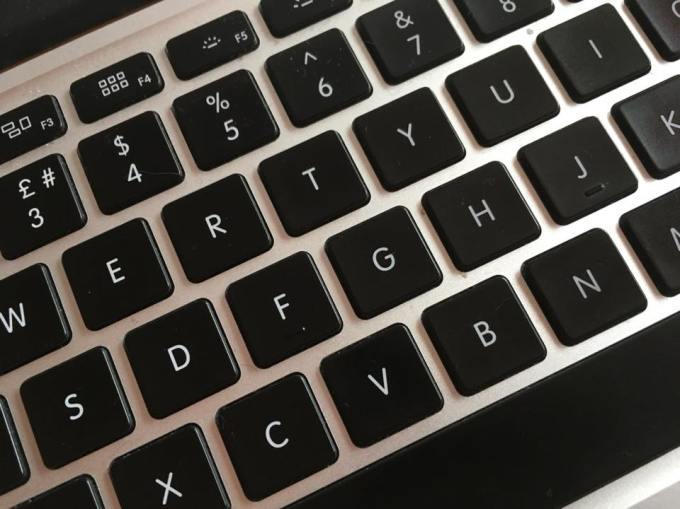
One of the common analogies for Autism compares brains to the operating systems on computers. If every one else is a PC, autistic people are Macs; each system is sensitive to different things, programmes that are designed to do the same things look and run slightly differently, icons and folders are in different places, even the keyboards are different. This isn’t something you can change; as far as I know, you can’t reformat a human being… There’s no cure but then it’s not an illness. Having said that, a person can learn how to manage the difficulties of their own presentation over time, which can make them easier and less stressful to deal with. Some may need more support than others, especially if they have additional needs like a learning disability or mental health issue, both common with Autism. We still don’t know what causes it (although we do know it isn’t vaccines) but research is being done and currently shows that there are many factors at play, including genetics, the development of the brain, and the environment.
As previously mentioned, there are specific areas of in Autism that people struggle with to varying degrees:
Struggling with social communication is the most well known difficulty in Autism. Some autistic people may not speak at all or may have limited speech; some have excellent language skills. Many find it hard to understand jokes and sarcasm, interpret facial expressions and tone of voice, and make sense of abstract or figurative language. These things can make a conversation confusing and overwhelming, and many autistic people need time out after socialising to recharge. When the expectations in a conversation seem unclear or the emotions of others hard to understand, an autistic person may talk at length about themselves or something they’re interested in because these are things they know and feel confident talking about. Rather than being insensitive or rude, it’s very often an attempt to connect with others while navigating a very complicated situation. It often feels like everyone else has read a rulebook on life that you were never given which can feel very isolating.
Change can be very difficult for someone with Autism; the world can feel very confusing and unpredictable and so many autistic people prefer to have strict routines to control that anxiety. This can mean eating the same food over and over again or adhering to a specific timetable throughout the day. When there’s a change in plans, an autistic person may need time beforehand to adjust their thinking. Rules are also important and they can feel difficult or even impossible to break away from, even if someone in authority has said it’s okay.
Another of the better-known characteristics of Autism is that an autistic person may have a very intense interest that is apparent from a young age. Sometimes they change but sometimes they’re life long, anything from a particular instrument to the mechanics of aeroplanes. Of course, a person without Autism can be very interested in these things but it’s the intensity that’s different: an autistic person may find it difficult to think or talk about anything else and may pursue it to the exclusion of everything else. These interests are vital to the autistic person’s happiness and wellbeing and so it can be massively helpful if that interest can be channelled into a related job, area of study, or hobby.
Many people with Autism have difficulty processing their environment and can quickly become overwhelmed by light, colour, smells, and so on. Personally, I particularly struggle when I’m surrounded by people: there’s too much information to potentially take in, from their names to favourite foods to the films they hate. Experiences like this can cause severe anxiety and coping with that anxiety can manifest in lots of different ways. Some people chew their nails, some have panic attacks, and some display behaviours like rocking or banging their head against something; these repetitive, familiar actions can help to shut out the stressful stimuli and keep that person calm.
It’s also important to note that there can be dramatic differences between men with Autism and women with Autism. The statistics have always said that there are more men with Autism but it’s starting to become apparent that it is massively under or misdiagnosed (as anxiety or Bipolar) in women because they often present in ways that are very different to what is commonly regarded as Autism. They may seem to socialise effortlessly and show no disruptive behaviour but this seems to be because women are somehow able to mimic ‘normal’ behaviour; plus there is still significant societal pressure on women to be polite and to avoid causing a fuss or drawing any negative attention, which has most probably contributed to this. Instead they commonly experience serious anxiety in social situations, struggle with overwhelmingly strong emotions, and their focussed interests may be things that girls and women would already be interested in, such as a TV series or a hobby like make up or reading, which means they’re not automatically recognised as a sign of Autism.
I intended for this to be a short post but, again, it’s become quite long. Whoops. So with that said, I will leave you with some useful links and The National Autistic Society’s video for this year’s National Autism Awareness Week and Too Much Information campaign. Funny story: I actually applied and then auditioned to be in this film. I didn’t get it (obviously) but it was a really awesome experience and I would definitely love to work with them on another project in the future.
They described the idea to me during the audition and it’s turned out so well. I can definitely relate to the experience depicted.
Useful Links:
I also recommend checking out any local Autism charities, support networks (Facebook is a good place to look – type in the name of your town and ‘autism’), and services. These can make a really big difference in the day-to-day life of an autistic person.
See you all tomorrow!
Category: diagnosis, event, response, video Tagged: actuallyautistic, autism, autism awareness, autism awareness week, autism diagnosis, autism in girls, autism in women, autism resources, autism spectrum disorder, autistic, autistic adult, autistic spectrum disorder, awareness, national autistic society, resources for autism, waaw, waaw 2018, world autism awareness week, world autism awareness week 2018
Posted on March 19, 2018
Trigger warning for self harm. Please don’t read this if it’s something that will upset you or trigger you. I only want this to be helpful, never harmful. I also want to add that, while I’m not promoting or endorsing it, I’m never going to say, “Just don’t do it.” It’s just not that simple. My hope is that more openness on this subject will make it easier for people to access support and therefore not feel the need to do it.
It’s been on my to do list to write more about self harm ever since I posted the first piece. It’s one of those things that I will never get tired of talking about, never get tired of raising awareness for. There are so many misconceptions around it. I mean, I get it: there’s something inherently un-understandable about wanting to hurt yourself, unless you’ve gone through it. And even then, it’s massively complicated. Feelings are weird and pain is weird; it’s not surprising that people struggle to make sense of it. But I’d like to think that things will get better, hopefully sooner rather than later.
I was inspired to write this post after watching a YouTube video, ‘Living With Self Harm Scars’ by Claudia Boleyn. I’ve been watching her videos for more than a year now and I particularly love her videos about mental health. Borderline Personality Disorder (BPD) and self harm still aren’t commonly talked about so to find someone describing their experience, both positive and negative, and giving advice is invaluable. And to find someone so thoughtful and eloquent is even better. I really relate to a lot of what she says.
She’d posted a video in which she wore a short sleeve shirt that exposed some scars from self harming and had received several messages about how validating it was to see someone with visible self harm scars, without shame or drama. So, as a response, she’d decided to make a video discussing the importance of living with these types of scars, which I found both interesting and useful, even as someone with ten years of experience with self harm. She put into words so many emotions that I’ve felt but for a long time couldn’t vocalize. Had I had something like this when I was younger, life would’ve been very different.
The video isn’t necessary for the rest of the post to make sense but I really recommend watching it:
(EDIT: The video has now been made private but as I said, it’s not necessary for the rest of the post. I’ll update if this changes.)
Some of the things she says are so true it’s painful.
One of the biggest things about self harm is the release you get from doing it. My emotions get so strong sometimes that I feel like there isn’t space for anything else in my body, in my brain. There isn’t the space for my lungs to expand; I can’t breathe. It almost feels like the emotion is crushing me and the only way to survive is to open up my skin so that it can escape. It’s like a pressure valve. Once I’ve done it, I feel like everything stabilises and I can think more clearly. If there’s a problem, I can deal with it and if there isn’t and it’s just an overload of emotion, I can take care of myself a little better than I could if I hadn’t. As heavy as it sounds, Claudia describes it as ‘a way of not killing herself,’ which is a feeling I can empathise with. I’m sure many others can too. I’m not saying it’s a good thing and I’m not encouraging it. It is NOT a healthy coping mechanism. But that logic isn’t very persuasive when you’re dealing with such overwhelming emotions. Claudia also talks about this: “It’s not good for you in any sense… but it’s something. It felt like doing that at least proved that there was something there… And it just felt like this huge build up of feelings and I had to do something to get rid of it and doing that… was something.” I can completely relate to that and I think that’s a feeling that is often exacerbated by how difficult it is to get a diagnosis because having something is better than having nothing.
In my experience at least, trying to cut myself off cold from the only thing that helps me get through doesn’t help; it just makes the need worse and then there’s potential for me to do more damage. So I do my best to be safe while working on my issues in therapy so that one day, I can stop because I’m okay and not because I’m suppressing the urge. Because if that’s the case, I’ll always come back to it. To quote Claudia: “If you’re a self harmer then I think it’s always in the back of your mind as, like, a coping mechanism… The problem is: it’s always there so you always have to avoid it and avoid triggering it.” To give up self harming is a really big ask, and an even bigger one if you’re trying to do it without support. And if it’s too much for you, or for you to do all at once, that’s okay. I don’t feel ready to stop but one step at a time. The fact that my therapist supports this is a huge deal to me and it’s one of the things that told me that she was the right person. This has greatly lessened the pressure on me and has helped both me and my family to work through it a bit. I used to feel so guilty that I was hurting or upsetting them so I hid it and that was doing it’s own kind of damage. But now that we have a plan, now that we’re moving in a forwards-like direction even if it isn’t always easy, everyone seems to be coping with it better. I can’t imagine what it’s like for them to see me in that place but you can’t put that on top of the emotion that makes you want to do it; it will eat you alive. I think the only way forward is to try and talk about it with someone and do what you can to avoid it if possible.
I don’t have quite the same experience as Claudia does. That’s fine. Every response to self harm is a valid response. However you feel about it is okay; it’s your struggle. She talks about feeling annoyed and upset about having self harmed and wishes she hadn’t done it whereas I’m not (yet?) in that place. She talks about how it releases all that feeling but then you wake up the next day and feel like you’ve let yourself down. But, while that is quite a negative response, the way she talks to herself is very positive: “I’m just taking it as a stepping stone and saying, ‘Okay, you took a step backwards but you can take five hundred more steps forward. It’s fine.’” She talks about having a certain pride about them because they’re proof that she got through a really tough time. She can look at them and feel compassion and forgiveness for the version of herself in those moments: “It’s a part of me and it’s a part of my past and that’s okay. And I wouldn’t erase it and in a way, I wouldn’t want to because I’ve learned so much going forward.”
For me, self harm is usually a survival strategy. It’s getting through a moment that I feel like I can’t possibly get through. Maybe it’s the worst possible way to get through it but it’s better than not. So when I look at the mark the next day, or the next month, or the next year, I remember that moment: I remember getting through. I remember feeling like I can’t survive another second and then I remember the calm afterwards. I remember that I did what I had to do to survive. I wouldn’t say I’m proud of that – or proud of the scars – but I’m certainly not ashamed of it. Maybe one day I’ll find something that gives me that feeling without doing any damage to myself. How wild and glorious would that be?! But that’s the end goal, not the next step.
My other use for self harm is to mark a traumatic event. I think one of the hardest things about struggling with your mental health is the fact that people often can’t see what you’re going through and I needed it to be seen. I felt so traumatised by the strength of the emotions and by the meltdowns and I just couldn’t process that without a physical, identifiable injury to associate it with. Again, I’m not saying that this is a good method of coping but it was all I had at the time. Now, I have other things to try. I haven’t yet found anything that works but what’s important is that I’m trying, even if I don’t want to sometimes. This is a whole other issue that I do want to talk about at some point: to someone who hasn’t ever self harmed, the idea of not wanting to stop doing something that is so bad for you is weird, but is a feeling that is often associated with self harm. That feeling can be very isolating because many people don’t understand it, and many more react badly to begin with. And feeling misunderstood can really exacerbate the feelings that lead a person to self harming. I think that discussing self harm and learning about it can only help with that. There will be people who say that bringing awareness to it will encourage people to self harm and while that may be true to a certain extent, the amount of people it could help would massively outnumber that.
People do ask about the scars. I’ve personally never had an unkind response to them; it’s usually just awkward. Even if someone doesn’t actually bring them up, I see them notice and it can get really uncomfortable because no one knows how to handle it. Claudia mentions being embarrassed about people seeing them and talks about how she has tried in the past to cover them up. Sometimes that’s just easier. It’s so complicated and it’s hard when people don’t get it or jump to conclusions. There’s the typical, “You’re asking for attention,” which has always frustrated me no end. I’m not sure when asking for attention became such a negative thing. Of course, there will always be people who abuse the compassion of others, but I would hope that our first reaction would still always be to try and help. If someone is asking for attention in some way, they probably need it, even if the reason why isn’t immediately apparent. I never tried particularly hard to hide what I was doing because I think that, subconsciously, I wanted someone to draw attention to it and see what I was going through. But at the same time I didn’t feel able to talk about it.
Sometimes people see the scars and assume that you’re ‘showing them off’ when you don’t cover them up, which is weird to me. I’m not sure why you’d want to ‘show off’ or ‘flaunt’ the evidence of a moment where you’d gotten so low that you had to physically take it out on your body. When you think about the lengths people go to to hide their scars – wearing long sleeves in a heat wave, making endless excuses as to why you can’t go swimming, hiding them with make up or bracelets or tattoos, spending every second thinking about your scars and how you’re going to make sure that no one sees them – it’s clearly not a straightforward issue. And as Claudia says, it’s not showing off; it’s a form of body positivity, of learning to be comfortable in your skin, regardless of what that skin looks like. That is a hard thing; it’s something that should be supported, not torn down.
There’s obviously a lot more to talk about when it comes to self harm but this is already a lot longer than I’d originally intended it to be! This is something that makes me really emotional and fired up so I could probably write a book on it. It’s so important to talk about and talk about openly and honestly. I wish I’d found someone writing about it or recording YouTube videos about it when I’d started struggling with all the things I talk about on this blog. Had I, and the people around me, had more knowledge and awareness about all of this stuff, my ‘mental health journey’ would’ve been very different.
Category: mental health, response, self harm, therapy, treatment, video Tagged: actuallyautistic, actuallydepressed, asd, autism, autism spectrum disorder, autistic, autistic adult, claudia boleyn, cutting, depressed, depression, emotions, feelings, mental health awareness, mental health blog, mental health blogger, mental health blogging, mental illness, scars, self harm awareness, self harm scars, self injury, self injury awareness, trigger, trigger warning, tw, youtube, youtube video, youtuber

Hi! I’m Lauren Alex Hooper. Welcome to my little blog! I write about living with Autism Spectrum Disorder (ASD), ADHD (Inattentive Type), and Hypermobile Ehlers-Danlos Syndrome (hEDS), as well as several mental health issues.
I’m a singer-songwriter (it’s my biggest special interest and I have both a BA and MA in songwriting) so I’ll probably write a bit about that too.
My first single, ‘Invisible,’ is on all platforms, with all proceeds going to Young Minds.
My debut EP, Honest, is available on all platforms, with a limited physical run at Resident Music in Brighton.
I’m currently working on an album about my experiences as an autistic woman.
Hi! I’m Lauren Alex Hooper. Welcome to my little blog! I write about living with Autism Spectrum Disorder (ASD), ADHD (Inattentive Type), and Hypermobile Ehlers-Danlos Syndrome (hEDS), as well as several mental health issues.
I’m a singer-songwriter (it’s my biggest special interest and I have both a BA and MA in songwriting) so I’ll probably write a bit about that too.
My first single, ‘Invisible,’ is on all platforms, with all proceeds going to Young Minds.
My debut EP, Honest, is available on all platforms, with a limited physical run at Resident Music in Brighton.
I’m currently working on an album about my experiences as an autistic woman.
Finding Hope