 Finding Hope
Getting Back To Gigging
Posted on July 21, 2018
Over the last twelve months, I’ve barely been performing at all. I just haven’t been up to it. My depression has been completely overwhelming and has only been compounded by trying to find a new antidepressant, what with all the side effects: at one of the few gigs I have done, I was getting so dizzy that I couldn’t stand up long enough to play three songs. So it’s been a struggle. But in the last few weeks, I’ve had two gigs – and two gigs that I really wanted to do – and so I’ve had to figure out how to do everything that that involves while still struggling the way I am. It was hard work and the heat didn’t help but I managed to do them and do them reasonably well all things considered.
The first performance was part of Brighton Soup. For those of you who haven’t heard of it, it’s a community event where four people (or organisations) pitch their ideas to improve Brighton and Hove. Everyone votes and the pitch with the most votes gets the money from the ticket sales to make their idea a reality. They invited me to play at their next event and it turned out to be such a special experience. I was so moved by all of the pitches and the general spirit in the room.
I was really anxious about performing – more than I have been in a long time – and my hands were actually shaking. I find that very disconcerting, not being in control of my body. I took a deep breath and tried to imagine it flowing through my body, imagine everything settling. That helped a bit, as did trying to really feel every line of each song as I sang it.
Before this unplanned break from performing, I felt fairly confident on stage and although I did get nervous, it all but disappeared the moment I started singing. It took longer this time but, by the time I finished my four songs, I felt like myself again. I’m not sure I could explain the process – from shaking mess to confident performer – but I could feel it happening and that, in itself, helped with my anxiety.
The second performance was at Disability Pride in Brighton. I got to play last year (despite technical difficulties, it’s still one of my favourite performing experiences) and I was SO excited to get to play again. It’s such a special event.
It turned out to be a pretty challenging gig. The acoustic stage was inside an inflatable structure, which needed a generator to remain inflated. The generator was so loud that I couldn’t hear myself at all. I was reassured by multiple people that it sounded great from the audience’s perspective, but I still really struggled with it. Had this happened a year ago when I was performing fairly regularly, it wouldn’t have bothered me as much because the more you perform, the more it gets into your muscle memory. So, if you’re struggling to hear yourself, you can rely on other parts of your body to judge how the performance is going: how your voice feels in your throat, for example. But during this ‘break’ from performing, that muscle memory has faded and so I was relying heavily on hearing myself. So it wasn’t as easy as it could’ve been. Plus it was stiflingly hot and I’ve always struggled with heat.
But having said all of that, it was one of the most supportive and most generous audiences I’ve ever played for and I felt so, so lucky to be there. I wish I could’ve given them a better performance. My sincerest thanks to everyone who made the event possible; I literally can’t put into words (I’ve been staring at the computer screen for an hour) how much it means to me.
The last few weeks have been a bit of a rollercoaster, but one that I’m really grateful for. I’d sort of forgotten how much I love performing but this has really helped to remind me.


A Holiday Bubble
Posted on July 11, 2018
From the age of about two years old, I’ve been going to a little town in Norfolk almost every year on holiday. While I was in school, we – me, my parents, and our dog – would go during the October half term but in recent years, we’ve been going in the early summer, before the schools break up. We stay in a caravan less than a ten-minute walk from a stunning sandy beach and I absolutely love it.
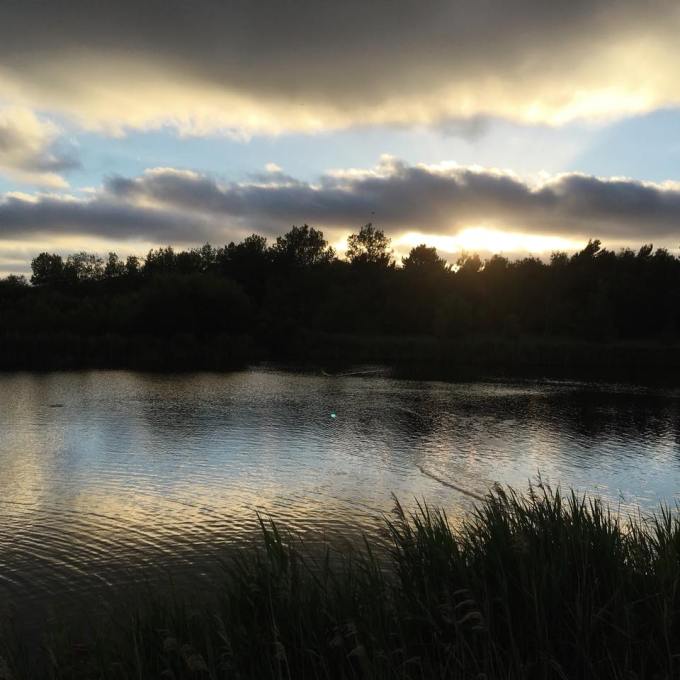
Some people find it strange that we always go back to the same place but as far as I can tell, there are two basic types of holidays: going to explore and going to relax. Both have their pros and cons. This is definitely a relaxation holiday. It’s familiar and calm and beautiful. It’s a bubble away from reality where I can just be, in a way I can’t at home. And, of course, familiarity and Autism go together like fish and chips. We also ate a lot of fish and chips…
I’ve been back from Norfolk a few days and I just really wanted to write about it. After having had so much change with the house move, the changing of medications, and the decision to keep my cat’s kittens, it was really nice to be somewhere so familiar and safe. And as much as I love the cats, I really enjoyed having some dedicated dog time with Lucky. Because he’s now so arthritic, we have to be careful to not over walk him (his enthusiasm far exceeds his physical ability so he’s not much help there) but we manage a couple of trips to the beach, which he loved. He can’t really run anymore but there was a fair amount of skipping, one sure-fire way to know he’s enjoying himself. It’s very cute.
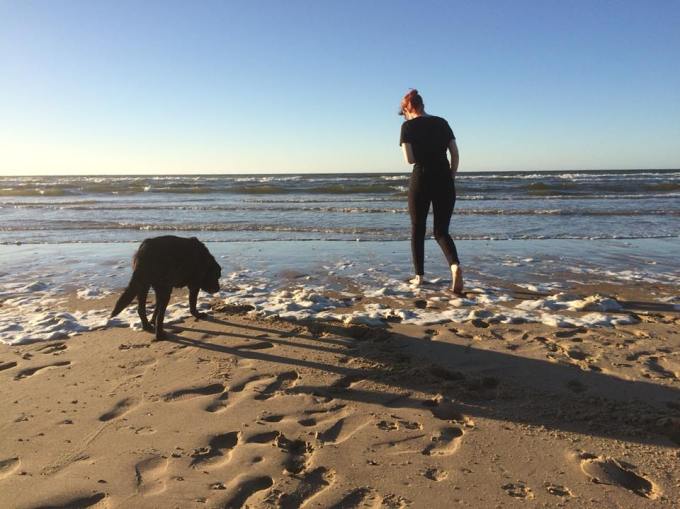
The beaches in Norfolk are just beautiful. The closest beach, the one we jokingly call ‘our beach,’ is particularly close to my heart. Every year, I step onto that beach and everything just clicks into place. It’s subtle but I suddenly feel like my head’s a little clearer, like I can breathe more easily. Something inside me settles. It’s like I leave a little piece of myself there, that I miss all year round, and then, when I get back, it’s an overwhelming relief. I’ve spent some glorious evenings on that beach.


It was ridiculously hot all week so I spent a lot of time inside with all the windows and doors open. I’m really not good with heat. It’s something I’ve heard from quite a few other people with Autism; I wouldn’t be surprised if there’s a link, given the hypersensitivity that often comes as part of being autistic. Anyway. It gave me the opportunity to do a lot of writing and catch up a bit with my diary (if you’ve read this post, you’ll know that my writing can be quite compulsive). That felt really good. I also rewatched some of my favourite films and played chess. The latter is something I haven’t had the concentration to do for months so that felt like a victory in itself, much more exciting than actually winning at chess.
Being there doesn’t eradicate my anxiety entirely but it does a pretty good job of dampening it. Sometimes anxiety feels like this constant vibration that I can’t stop, can’t take a break from. But in Norfolk I can. I still get anxious about specific things but that relentless vibration momentarily ceases. And that’s such a relief.

Tips For Travelling as an Autistic Person
Posted on July 7, 2018
Travelling is hard work for everybody. It’s exhausting and stressful and frustrating. But add in sensory issues or anxiety or whatever it is you struggle with and it can be a traumatic experience. Since we are now in the summer holidays and prime travelling time, I thought I’d put together some things that I found helpful to do as an autistic person who struggles with anxiety. I would like to point out (again) that there is a maddening lack of resources (and even simple testimony) for or from the point of view of autistic people. I spent hours searching for something but there was next to nothing; all the advice was for parents of young autistic children. Of course that information is important but it’s very demoralising to an autistic adult – essentially being compared to a child – especially one who was diagnosed late and has had to work so hard, often unaided, to manage their difficulties.
PLAN AHEAD – I know, this is my advice for everything, but it really does help. Struggling with unexpected change is a common trait in Autism and while planning can’t prevent all of those changes, it can make a huge difference. It can also give you a confidence boost, knowing that your actions have prevented a certain amount of anxiety.
SPEAK TO A TRAVEL AGENT – Being able to hand some of the responsibility off to someone else can be really helpful, especially if you have limited energy. You have to prioritise the tasks and if there are people who can help, that is a valuable resource. These people are also more likely to know the ins and outs of booking flights and accommodations etc and will therefore be more equipped to help you get what you need and want to get the most out of your trip.
CHOOSE YOUR ACCOMMODATION CAREFULLY – Having somewhere where you can have time out and recharge is so important when travelling. We all have different sensory needs and different things we can tolerate so choosing a place to stay is really important. For example, staying with other people (people I don’t know) causes me a lot of anxiety so when we look through Airbnb, we look at places that allow us to be the sole inhabitants. It won’t be the same for everyone but if you can identify what you need, you can hopefully find somewhere to stay that can be a restful place rather than a stressful one.
WRITE A LIST OF EVERYTHING YOU’LL NEED AND HAVE SOMEONE CHECK IT – Having a list makes packing so much easier and having someone check it for you just reduces the chances of making a stupid mistake like forgetting your pyjamas. Because that really isn’t something you need to deal with when you arrive wherever you’re going. Also make sure that you’ve got any medications or medical equipment that you need because those can be particularly difficult to get hold of, especially if you’re in another country.
PACK AN EMERGENCY KIT IN YOUR CARRY ON BAGGAGE – On the off chance that your bags get lost along the way, pack a change of clothes, some medication, etc in your carry on bag so that you can at least get up the next day and work out a solution.
BRING YOUR OWN FOOD – You’d need to check with your airline but there are certain foods that you can take in your suitcase that won’t cause you any problems while travelling. That means that, at the very least, you’ll have something to eat when you get to your destination. But in my case, it gave me a staple food that I knew I could eat in case I couldn’t find anything I could tolerate. It took away some of the anxiety, for which I was grateful.
PREPARE SPECIFICALLY FOR THE FLIGHT – Apparently, we’re flying in this hypothetical. Many people have fears associated with flying and while I don’t have any magic words of wisdom there, there are a couple of tricks to make it slightly less difficult, especially if you have sensory issues. Take sweets to suck on and relieve the pressure in your ears. Wearing a mask over your face can help if you’re worried about bad reactions to everyone’s germs in one confined space, as well as chemicals from perfumes etc. I’ve also found that a playlist of familiar music helps with the constant noise of flying. And wearing comfortable clothes: you’re most likely gonna look awful when you get there anyway so why bother with anything more than a T-shirt and leggings.
BUILD IN TIME OUT AND DON’T FEEL GUILTY FOR IT – Easier said than done, I know but burning yourself out in the first couple of days doesn’t make for a good trip. So try to take breaks between things and listen to your body: if you need to rest, rest. It will make the whole trip more enjoyable and worthwhile if you do.
As of now, I think that’s all I’ve got. But if you guys have any tips that you’ve found helpful, please let me know!


 Finding Hope