 Finding Hope
A Four Month Detour…
Posted on December 24, 2025
I really didn’t mean to abandon this blog but the last four months have been completely miserable, healthwise.
Less than a week after I last posted, I started experiencing what felt like electric shocks in my lower back. It was so painful that, at times, all I could do was scream. Even when the electric-shock-like spasms weren’t actively happening, I was in – quite possibly – the worst pain I’ve ever experienced. And given my experience with chronic pain, that’s saying something. It was horrendous, especially as the painkillers that usually give me some relief weren’t having any effect. Eventually I managed to get some stronger painkillers from my GP and they were so strong that, for the first few days, I could barely keep my eyes open: I was asleep for around twenty hours each day. Thankfully, that did wear off after a while but I still felt slow and blurry while taking them.
It was a completely new kind of pain for me and while we had a few theories from the network of health professionals I’ve worked with, we still didn’t know what was causing it, how long it would go on for, or if it was a permanent change. The massage therapist I’ve done some work with – who has both personal and professional experience of Hypermobile Ehlers-Danlos Syndrome and chronic pain – was a godsend and thankfully, my Mum found a new physiotherapist nearby who had professional experience with hEDS and who was able to come to the house to see me. He was fantastic: he was thoughtful and thorough and explained everything with great care (sometimes multiple times); he really listened to me and took my priorities into account when choosing the exercises for me to do; I felt like he actually cared about me as a whole person, which has not been a common experience. He assessed me and felt that I had a pinched nerve in my lumbar spine, which typically heals in about eight to twelve weeks. That felt like an interminably long time but I was relieved to hear that he expected the pain to go away. He gave me some very gentle exercises to do as I felt able to, with the goal of strengthening the muscles in my back to support my especially hypermobile lumbar spine (and hopefully reduce my chronic pain). Between the pills (despite the side effects), the massage, the physiotherapy exercises, and the time that I was forced to take to rest properly, the pain finally started to decrease and I was able to slowly increase my mobility – I’m still working on that.
Unfortunately that was only the first part of the story. In early October, I started to struggle with multiple symptoms that I’ve rarely experienced, including stomach pain, nausea, acid reflux, and difficulty swallowing. It made eating so difficult that I could barely keep any food down and it made sleeping difficult because I felt worse when I was lying down. I felt awful but my Mum had been unwell a week or so earlier and so I assumed that it was the same thing and would pass relatively quickly; I thought I just had to rest and wait it out, like I often do with a seasonal illness or the symptoms of my chronic illnesses. But that didn’t happen. The symptoms got more intense until I wasn’t eating at all – sips of water were all I could manage – and the POTS symptoms I experience everyday had become debilitating. I hate going to the doctor but if there was ever a time, this was it.
I managed to get an appointment with one of the GPs pretty quickly – not my usual GP but that isn’t unusual and I did manage to get an appointment with her for later in the week – but when I explained what was happening, this doctor said that there wasn’t time to explore each of the symptoms so she questioned me about the difficulty swallowing, prescribed me a medication, and sent me on my way. I was deeply unimpressed and had no confidence in her diagnosis or the medication: treating one symptom when several are presenting at the same time… that seemed very unlikely to help whatever was causing the multiple symptoms. I’m passionate about the NHS (and about improving it) but it’s not exactly straightforward when I’ve been repeatedly invalidated and mistreated by medical professionals.
I didn’t have time to even take the medication before the stomach pain got so bad that I couldn’t move. We ended up calling 111 and their recommendation was to call an ambulance and head to A&E. The idea of being in an ambulance – as an already overstimulated autistic person – felt horrific and I almost had a meltdown; I didn’t know what I was supposed to do when I felt like I could barely move. Eventually my Mum had to all but drag me into a cab to go to A&E. For once, being autistic was a help rather than a hindrance because the receptionist moved us straight from the initial waiting room into the actual A&E department where people were being assessed and treated. We still had a considerable wait ahead of us, which felt incredibly long given how much pain I was in. It wasn’t exactly a restful environment either: besides the patients and nurses coming in and out, there were paramedics and police and one young woman who cried the entire time she was there. If I hadn’t been in so much pain and so overstimulated, I might’ve been impressed – and a lot more sympathetic. But I was running on empty and on the edge of sensory overload and all I wanted was some quiet; it was a rough night – for everyone clearly.
After a couple of hours, several different nurses did a series of tests, including taking blood and doing an ECG (during which my cannula from the blood draw was jostled, leading to the bruise pictured below – that hurt for a while). A little while later, another nurse gave me a low dose of morphine that did, thankfully, slowly bring my pain level down. But after that, we were left for several hours; even when we were the only people left in the little waiting area, no one came for us or even gave us an update. I was starting to think we’d been forgotten about.
When a doctor did finally call my name, he didn’t have any real answers for me. He did at least have a reasonable understanding of hEDS and how it can cause strange or skewed test results: a hEDS body does not react to anything the same way a non-hEDS body does, surprise surprise. So there was no obvious explanation for my symptoms but he prescribed antibiotics and recommended getting a referral to the hospital’s Gastroenterology department if the symptoms weren’t resolved by the antibiotics. I don’t love the approach of just throwing medication at a problem and hoping it helps but I was desperate and that was the only option being offered.


(Left: the bruise left by my cannula, having being knocked during A&E tests // Right: me, asleep on the sofa the day after the night spent in A&E with Izzy keeping me company)
We got home around seven and I was asleep the moment I lay down on the sofa. I was just completely exhausted. I took the antibiotics I’d been prescribed but then, when I saw my actual GP, she was surprised by how high the dose was, adjusted it, and prescribed another antibiotic, as well as sending the referral to the Gastroenterology department at the hospital. Again, it wasn’t exactly reassuring since we still didn’t know what the actual problem was and I was starting to spiral a bit about the possibility that this was more than just a passing illness, that it was something much more serious that was getting overlooked (with the potential to lead to an even more debilitating outcome). But I tried not to go down that rabbit hole. I was trying to at least give the various medications a chance to work.
Over the next few weeks, I just lay on the sofa and tried to eat when I felt able to. Between my body trying to fight whatever was going on and the fact that it was trying to function on very little fuel, I was barely able to do anything. I was forced to rest, to literally just rest; I couldn’t even do the most passive of activities. I was physically, mentally, and emotionally exhausted. My body and my brain were barely functioning: a good day consisted of a shower and watching TV (and eating what I could). But the medications started to work and, very slowly, I started to feel better and the symptoms started to decrease in intensity, even if I was still building back up my capacity after so long with so little fuel in my body. And then, just as I was finishing the courses of medication, I started to feel actually well again and I don’t think describing my mood as “overjoyed” would be an exaggeration. Eating went from being a struggle to being joyful (a word I don’t think I’ve ever used in the context of eating) and I was sleeping well, not only for the first time in weeks but in months: I was feeling so good that it felt more than a little surreal but I wasn’t complaining. It was a huge relief after eight weeks of feeling so terrible.
But less than a week later, the symptoms started to reappear and I started to feel really unwell again. I had bloodwork done (which had been ordered way back when I’d first gone to the doctor) but all of the tests came back fine or inconclusive again. I was wondering if the medications had been treating just the symptoms and not the underlying issue, which made me deeply anxious about what that underlying issue could be. I wasn’t sure what the next step was supposed to be but I’ve had a lot of conversations with a lot of different people in my various circles and, long story short, it seems that these digestive issues were a delayed response to the increase of one of my long term medications: some (professionally guided) experimentation has proved as much as is possible that my digestive system can’t handle this medication over a certain dosage so I’m currently taking a break from it (which is something you can safely do with this medication) while getting my food routine and some of my energy and strength back. After Christmas, or maybe the New Year, we’ll reassess and I’ll likely start taking it again at the lower dose since I had had a positive experience with it until that final dosage increase.
So that is where I’ve been: too sick to do anything, too sick to even write a blog post about being sick. When I say it’s the most unwell I’ve ever felt, I’m not exaggerating. I’ve dealt with a wide range of symptoms and various levels of pain during my life but never have I been so ill, in the way we typically picture illness. I’ve dialled everything right back to absolute basics and I am starting to feel a bit more normal, despite a few bumps in the road. Fingers crossed, I’ll be feeling more like myself again by the time the New Year rolls around…
Happy Birthday, Claire
Posted on April 10, 2022
TW: terminal illness and death.
Today is what would’ve been Claire Wineland’s twenty-fifth birthday and even though she died in 2018, I still think of her often. I wanted to do something for her birthday and since I hadn’t yet watched the documentary about her that was released after her death, I decided it was time to watch it, even if it would make me cry (not much of a spoiler: it did). She was an incredible person and it breaks my heart that she’s no longer here, that she didn’t get the chance to live a life she fought so hard for and saw so much potential in.
As I said, I wanted to honour her birthday so I sat down and watched the documentary; here are some of my thoughts…
It’s a beautifully made documentary and a beautiful tribute to Claire and the message that she dedicated her life to sharing with people. You get a real sense of her: she’s so articulate and eloquent but she doesn’t take herself too seriously (and ‘Little Claire,’ as she refers to herself, is so cute). So much of what she said was so poignant and moving and, as always, I felt deeply inspired by her words. It also gives you real insight into what living with Cystic Fibrosis is like, as much as you can as someone on the outside, and while her experiences are very specific to Cystic Fibrosis, I could also see a lot of broader parallels as a person with multiple disabilities.
I found the second half (approximately) especially emotional because I remember experiencing it in real time: watching her videos, donating to her gofundme and watching the total rise and rise, watching her live on social media when she got the call from the hospital for the transplant, waiting for news, and then finally hearing that she’d died. I remember it all so vividly. And seeing the video about needing new lungs now, hearing her say, “There’s so much more I wanna do,” makes me so deeply sad because everyone was so hopeful throughout the transplant process but then, suddenly, it was over and Claire was gone. There was so much she wanted to do and she truly saw how much she could do in this world and she didn’t get the chance; that still makes me so very sad.
The montage at the end was gorgeous and the ending was perfect. As I said, it’s beautiful and I feel like, as familiar as I was with Claire’s videos and therefore her approach to life and so on, I walked away from the documentary with a better understanding of her and her message.
There are so many great quotes throughout the documentary but here are a few that stuck out to me…
- “The truth is: people who are sick, people who have suffered have something beautiful to give to the world. So, for me, it was really important to see people who were sick who were thriving… It’s important to have people who are sick who are actually living full lives so that kids like me, like Little Claire, doesn’t have to feel like all there is in the world is being someone’s pity case. You know, that there’s a life for her to live. And that it’s going to be wonderful.”
- “Innovation doesn’t happen because there’s some person who’s in a great circumstance and everything’s going well and they just get on a roll and they make something for the world. Innovation happens, art happens, because of suffering.”
- “We’re all just trying to not feel so alone and to feel like we have something that is worth giving.”
- “There’s this notion that we go through life with that, if we’re just better… If we just do more, if we just fix ourselves more, if we become better people, if we get healthy […] Once you’re healthy, then you can live your life. Once you’re healthy, then you’ll be happy. Once you’re healthy, then you’ll be okay. And we all go through life like that, not just sick people… all of us. Like, once we’re rich we’ll be okay; once we’re in love we’ll be okay; once we have a family, we’ll be okay. Health itself is never gonna make your life better but for some reason, people don’t wanna frame it that way. If I was to sit here and say, ‘money doesn’t equal happiness – it’s what you do with the money,’ you’d be like, ‘Yeah, completely.’ But if I was to say, you know, ‘being healthy doesn’t matter – it’s what you do with the health…’ People don’t like hearing that necessarily.”
- When talking about her near death (and actual death) experience: “And after the terror left, there was this grief, you know? Like, I grieved how much potential there was in me and how much of that I didn’t utilise in the time I had. And I grieved it. It wasn’t fear. It wasn’t, like, ‘Oh god, I don’t wanna die.’ It was, like, ‘Wow. There is so much that a human being is capable of doing and I won’t be able to do that.'” [This moment made me cry and seeing that the memory moved Claire to tears as well made me so incredibly sad and touched that it was something they shared with us; it was very moving and had a big impact on me.]
- “For me, what purpose really meant was changing the conversation around someone who’s sick where they have to wait and wait and wait until the day that they’re healthy before they do anything, to this notion that I could be exactly who I was in the moment with all of my mess ups and my failures and my pain and my complications, that I could be a sick person and still have something to give, still have a life worth living.”
- “Ever since the time I was a kid… and I think everyone has this experience… you’re taught that someone else is gonna do it, there’s someone else who knows more than you, someone else who can do this better, you’re not there yet, you’re not ready. And I realised that I can’t spend my entire life waiting for someone to give me permission to live a life that I’m proud of.”
- “I think everything good in my life has come from my sickness and that’s a terrifying thing to admit to someone because then, you know, what else is there?”
- “There is a really fine line between wanting something because of what you can give with that thing versus wanting it because you think it’s gonna make life better.”
I will also be making a donation to Claire’s Place Foundation as well. Claire had a profound effect on my life and I want to pay that forward. I’ll never been able to thank her for how she’s helped me but I can do my best to follow the example that she led by, to follow the message that she embodied.
I really recommend watching this documentary, especially if you or someone close to you is living with a serious illness or disability. Having said that, it’s very emotional so please take care of yourself if you’re going to sit down and watch it.
I’m sending all of my love to Claire’s loved ones, especially today.
To Gig Or Not To Gig
Posted on February 17, 2018
What with the medication and the side effects and the day-to-day consequences of my specific Venn diagram of issues, I have been feeling incredibly unwell over the last several months. It’s been really tough: I’ve been dealing with nausea, dizziness, weakness, shortness of breath, shakiness, and so on. Having spent so much time and effort convincing people that a mental illness is actually an illness, that it isn’t less important just because the symptoms are inside your head, I think it’s easy to forget that these problems also have physical symptoms. I’m guilty of it too and I’m not very good at accepting that reality. But I’ve had to of late. Or, at the very least, try not to give myself such a hard time over it.
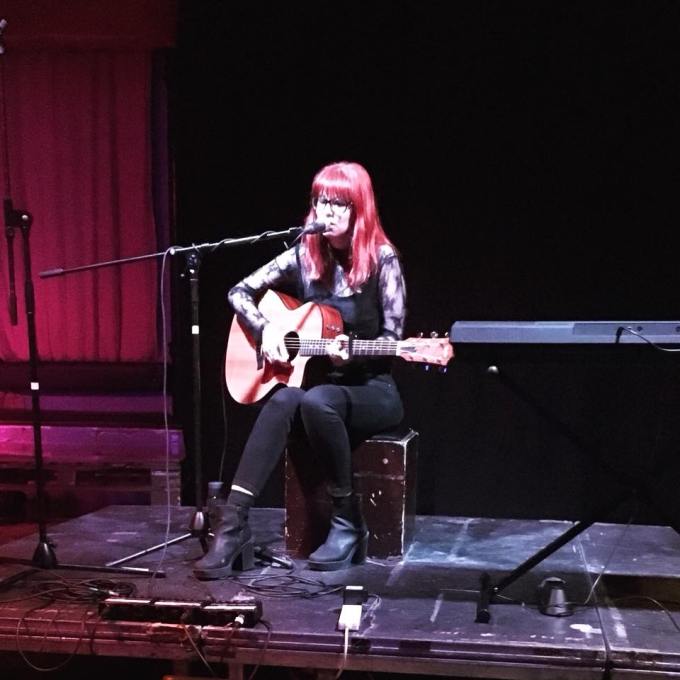
But this week I had my first gig in a really long time and I was going to do it, come hell or high water. The hardest thing has been not being able to do the things I love the most, namely singing and songwriting. That makes me a kind of stir crazy that I’m not sure I can put into words. So I did my absolute best to make sure I was ready, in both the health and music sense, and I thought I’d share some of the things I did in case they’re useful to anyone else.
Make sure your expectations are realistic – In the last six months, I’ve been offered a couple of gigs that I knew I just couldn’t do, regardless of how much I wanted to do them. I just wasn’t well enough. But this one was perfect: a short set, a relaxed atmosphere, lovely and supportive people… It was a really good opportunity to do this thing that I love so much without too great a cost to myself.
If it feels right, let those in charge know – I don’t think this is always necessary but when you know it could affect your performance, it can be a good move. It’s my default position to be open and honest and because I write songs about my experiences with mental health and Autism, they find out soon enough anyway but I’m also aware that people can jump to incorrect conclusions when they hear the word ‘Autism.’ So there are pros and cons but it’s something to consider.
Practice in small doses – There’s no getting away from the fact that you need to practice to be ready to perform well at anything. But it doesn’t have to be a huge, daunting black cloud that swallows up your day. I hadn’t been doing much consistent practice because I just felt so awful but I managed to build in fifteen minutes a day. It felt pathetic given that I used to be able to sing and play for hours but I’m trying to just acknowledge the thought and then put it aside. Even fifteen minutes was leaving me shaky but it gave me back some of my confidence and even though I don’t have another gig for a while, I am going to try and keep to this. It gives me more than it takes away.
Physically prepare your body – Make sure you’ve slept enough, eaten enough, and drunk enough water. These can be hard; I’ve struggled with all of them. But try to remember why you’re forcing yourself through it and do your best. It puts you in the best possible position to perform well which is, after all, the goal. Hopefully that motivation is enough.
Do whatever it is that gives you a boost and if you can’t do that, avoid the things that bring you down – I usually listen to music to inspire and energize me before a gig. They’re not necessarily happy songs but they are all high energy or high intensity. That helps me get into the right mindset to perform and that usually overrides whatever I’m dealing with physically.
If you need to stop, stop – I’ve been to multiple gigs where acts have had to call it quits mid set because of a terrible cold or whatever and every single time, the only thing anyone says is how impressed they are that the person got as far as they did. That may not always be the case but would it be better to push through and end up face planting onto the floor when the dizziness turned into fainting? No, it would not. Do what you can for as long as you can and then gracefully retreat.
Now I can’t prove that these things helped but I know they didn’t hurt. The gig went really well and it felt so good to be performing again. A couple of days later and I’m still tired and shaky but if that’s the price, I’m more than happy to pay it. For the first time in weeks, I feel like I’m in sync with my life; my anxiety has dissipated and I actually feel calm. That’s not something I can say very often.
 Finding Hope