 Finding Hope
Ideas To Help With Hair Pulling
Posted on February 13, 2021
Trigger warning for Trichotillomania/hair pulling. Please don’t read this if this is something that will upset or trigger you. I only want this to be helpful, never harmful.
Having just written about some of the things that can trigger episodes of Trichotillomania, I wanted to post a list of ideas that have the potential to help someone struggling with hair pulling. There are lists all over the internet with various collections of ideas but I felt that it would be irresponsible to post about the triggers of Trich without offering some kind of help, especially the kind of help that you can practice yourself without having to wait to see a specialist (although I would encourage you to seek out professional support as well). These aren’t cures obviously – there are currently no proven cures for Trichotillomania – but numerous accounts have shown that many of these strategies have helped people manage and reduce their urge to pull, which is obviously a big deal. I also wanted to share which strategies have helped me – if you relate to other things that I’ve posted maybe they’re a good place to start.
There are a number of things I want to mention before getting into this list:
- You have to remember to forgive yourself for not being perfect. Trying to stop pulling is an incredibly difficult (although incredibly rewarding) task. Your progress isn’t always linear. Sometimes you’ll manage an amazing streak and then not even manage a day. But just as you can struggle, you can succeed. However, beating yourself up for ‘going backwards’ won’t help you move forward; it’s a waste of precious energy that you could be dedicating to your attempts to stop pulling.
- One strategy won’t necessarily work forever. It may work for a time and things may improve. But then, if you start pulling again, it may not be helpful the second time around. For example, I wore a hat consistently for months and that slowly stopped me pulling my hair out. I didn’t pull for a year but when I started again, wearing a hat just made me feel anxious and claustrophobic. So I had to try different methods.
- If you’ve ever tried to stop pulling before, you’ll know that you have to be committed. Seriously committed. As dramatic as it sounds, you have to be thinking about it all the time. And if you’ve been doing it long enough, there will be a degree of habit so you don’t even notice yourself doing it and yet you still have to have an awareness of it. It’s really hard. Really, really hard. But it is possible to reduce the pulling to some degree at least.
Now, onto the list…
* = I’ve tried this.
** = I’ve tried this and it helped.
- Wear a hat or bandana**

(I wore a hat for months, possibly more, consistently – to the extent that it’s become part of my look as a singersongwriter and I have been recognised because of it – and that helped me stop pulling for over a year. However, as I said earlier in the post, when I started pulling again, it didn’t help because I started pulling from a different area of my scalp.)
- Wet down your hair**
- Cut your hair short (or if necessary, shave your head)
- Wear a wig
- Sit on your hands until the urge passes or you’re distracted
- Snap a hair band or rubber band against your wrist
- If you use tweezers to pull, put them out of the way of your daily routines or throw them out if necessary**
- Squeeze a stress ball or something similar*
- Use a fidget toy (you may need to try several different ones to find one that works for you)**
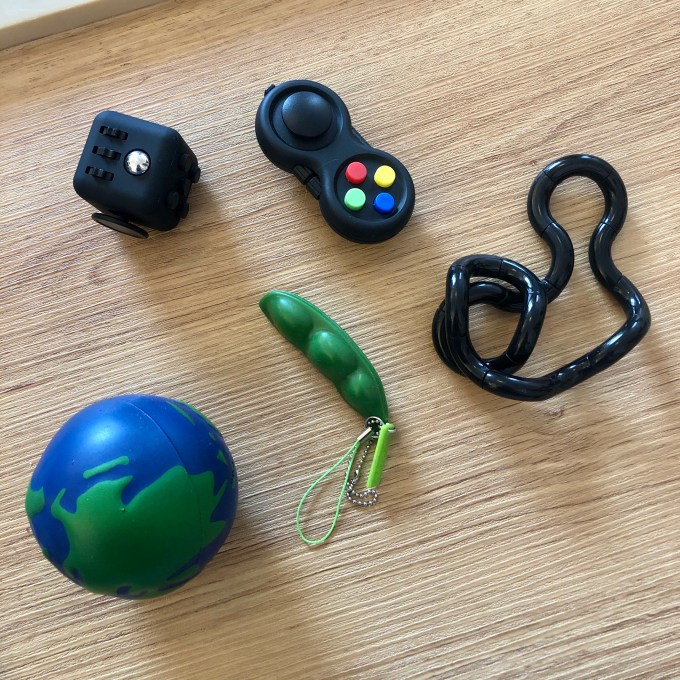
(These fidget toys are my personal favourites. I have more that I’m slowly donating to family and friends and acquaintances who have expressed interest in them. Personally I prefer plastic over metal because the metal toys make my hands smell. I also prefer the ones with buttons etc, rather than ones that you squeeze, like stress balls. But different fidgets appeal to different people).
- Put vaseline on your fingers or the hair you would be pulling
- Put plasters on your fingertips
- Wear gloves
- Journal about your experiences*
- If you feel comfortable doing so, ask your friends or family to point out when you start pulling*
- If there’s a room or environment you normally pull in, try changing your environment
- Play an instrument**
- Stroke or play with an animal*
- Exercise
- Start with small goals (periods of time where you don’t pull, for example) and increase as you can**
- Use a chart or app to track the amount of time between pulling ‘sessions,’ inspiring/motivating yourself not to break your streak**

(There are multiple phone apps that count days; it mostly comes down to whether there are any extra features that might help you, what kind of aesthetic you prefer, and whether you feel you need one that you’d have to pay for.)
- Try a hobby that occupies your hands, like origami or knitting*
- Brush your hair instead of pulling
- Come up with a saying that you repeat out loud until the urge to pull passes or say “No” out loud
- Form a ball with your fist and tighten the muscles in that arm
- If your pulling is triggered by texture or colour, try dyeing or care for your hair to minimise pulling**
(Hairs with a coarse texture is a really trigger for my pulling so I’ve been searching for a good product that at least reduces that problem for years. I love Aussie’s Miracle Moist Collection – the shampoo, conditioner, conditioner spray, and the 3 minute deep conditioner – because it makes my hair really sleek. It’s the best product I’ve found. I am trying to find a vegan, cruelty-free replacement but I do have to balance that search with how bad my Trich is and the state of my finances. I’m determined to keep looking though.)
- Fiddle with dental floss or thread
- Wear jewellery you can fiddle with/wear specially designed fidget jewellery**
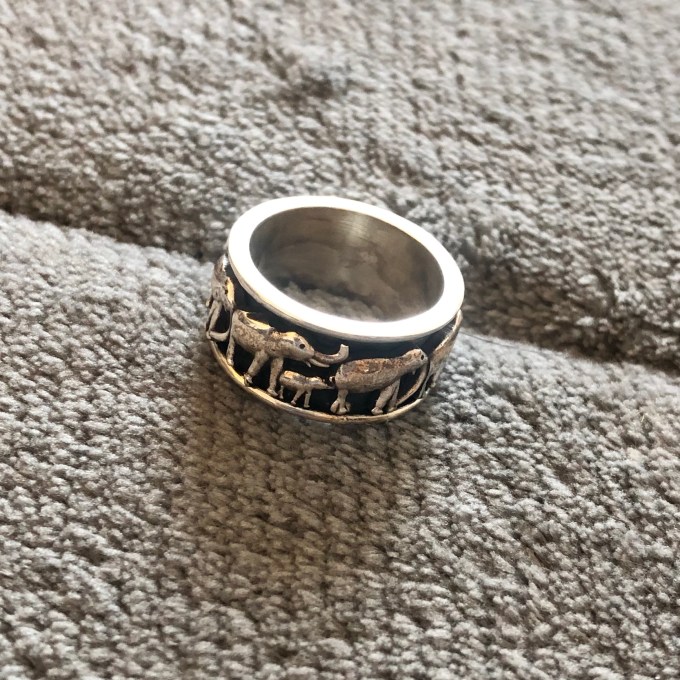
(I had a spinner ring for several years that I adored. It was silver with elephants on it and I was constantly wearing it and spinning the outer band. But recently it broke and the replacement isn’t quite the same: it isn’t as comfortable and so I don’t wear it as much.)
- Use positive reinforcement (reward yourself even in the smallest way, like treating yourself to your favourite snack or having an extra indulgent bath or shower, when you achieve a certain period of time without pulling)
- Weed the garden
- Cut your nails short or wear acrylic nails, making it difficult to get ahold of strands
- Style your hair in a way that prevents access to the area you pull from*
- Try meditation or mindfulness*
- Pull from or fiddle with the hairs of paintbrushes
- Use a hand grip strengthener*
- Make yourself aware of the action (putting essential oil or perfume on your hands, for example)
- Attach a weight to your pulling hand
My latest strategy has been to use a strip of elastic (like the kind used in clothing or sewing) and attach one end to my portable desk, the other loosely around my wrist. Technically I can still reach my hair if I really try but it’s awkward and uncomfortable and so far, just the sensation of the elastic pulling against my wrist has stopped me trying to pull. It hasn’t been long so I don’t know how successful it will be long term but it seems to be working so far.

It’s also worth mentioning that there are therapies, and then issue specific therapies within those therapies, such as Habit-Reversal Therapy (several studies from 1980 concluded that it had a 90% symptom reduction rate), which was born out of CBT. Hypnotherapy has also shown results for some people. However, access to CBT can take a long time via the NHS and these therapies can become incredibly expensive if you venture into the world of private healthcare.
There are also support groups, both online and in person (although not currently due to the COVID-19 pandemic). Search out Trichotillomania organisations and charities for general online support groups. You can also search for Facebook groups for both general and location specific support groups. I can’t speak to the effectiveness of these as I’ve never personally used them – I didn’t personally feel that that sort of support was one that would be helpful – but I know they make many people feel less alone and allow people to share tips and strategies.
I hope this list has been informative. Hopefully some of these tips have been or will be helpful. At the very least, it’s a varied collection of things to try. If you’re struggling with Trichotillomania, I’m thinking of you and I hope that something on this list will help.
Trichotillomania Triggers
Posted on February 13, 2021
Trigger warning: This post is dedicated information and experiences with Trichotillomania so if this is a difficult subject for you, please don’t read on. I would hate for you to be triggered. Having said that, immediately following this post will be one on a list of ideas and tips to help with hair pulling.
It’s been a while since I talked about Trichotillomania, whether about my experience or about the disorder in general. I’ve been learning more and more about what triggers me so I thought I’d do some research into triggers more generally and after doing all that reading, I thought I’d collate some of it in case it could be helpful to any of you guys.
CAUSES
Scientists still don’t know what causes Trichotillomania – and other BFRBs (Body-Focused Repetitive Behaviours) – but there are various theories, including:
- A way of dealing with stress or anxiety
- A genetic factor, like a chemical imbalance in the brain, similar to obsessive compulsive disorder (OCD)
- A change in hormone levels during puberty
- A type of self-harm to seek relief from emotional distress
- A trauma in childhood
Pulling can then become a type of addiction. The more a person pulls their hair out, the more they feel the need to keep doing it.
TRIGGERS
While there isn’t much definitive research into the causes of Trich, we are learning more and more about what drives people to pull once they’ve started pulling, the internal and external triggers that occur right before someone pulls. External triggers include certain people, or places, or situations while internal triggers include certain thought processes, emotional states, or physiological sensations. When the particular trigger (or one of multiple triggers) is experienced, a person who struggles with compulsive hair pulling may be ‘triggered’ to pull. The pulling satisfies something, like creating a feeling of relief or calm for example.
These triggers can be sorted into a multitude of categories, these being some of the most common…
- Emotional – The emotions behind hair pulling can be very complicated and multi-layered. For many individuals with Trichotillomania, pulling is a way of dealing with negative or uncomfortable feelings, such as stress, anxiety, boredom, or frustration, to name just a few. Several studies have shown that stress was reported to be the most common trigger for increased hair pulling. This may be because pulling out hair relieves stress; when someone is anxious, the tension in their body increases and the sensation (and sometimes pain) of pulling can help to release some of that energy. I can definitely relate to all of this. When the pulling is focussed (as opposed to automatic – something I’ll come to later in the post), it can almost be a mindful activity, centering in on what your hands are doing and allowing some of the anxiety in your system to dissipate. Pulling can feel satisfying and create a sense of relief, which can reinforce the urge to pull, especially when trying to cope with negative feelings; we all want something to make us feel better when we’re struggling.
- Sensory – Many people will pull out particular hairs that have a certain feel to them, such as being thicker or longer than the rest of their hair. Texture can also be a huge trigger, if certain hairs feel crinkly or just stand out when touching one’s hair, for example; this is huge one for me. My hair is mostly straight (if vaguely wavy) but the individual hairs are very smooth so when I find a crinkly hair, it really stands out and it’s all I can think about until the tension is so high that I can’t concentrate unless I pull it out. Sometimes that’s it but sometimes that causes a period of pulling that can last for days, or until my pulling arm gets so painful that I physically can’t lift it to reach my hair. The location (like the parting or hairline – another relatable experience) and the physical sensations that hair can create against the skin can also trigger someone to pull in order to relieve a person of those sensations.
- Environmental – A person may have particular locations and situations where they are more likely to pull. The privacy of rooms like a bedroom or a bathroom may make pulling more tempting; these rooms are also ones where you’d mostly likely find mirrors and tweezers, items that could also serve as triggers. There are also certain activities that create opportunities for pulling, such as using a computer, reading, watching TV, and so on, all of which have certain things in common: these activities are generally stationary and your posture during these situations gives your hands more access to your hair, if you pull from your scalp or eyebrows for example.
- Cognitive – Cognitive triggers are often connected to thoughts about imperfection. I can definitely relate to this as a lot of the triggers for my hair pulling are related to perfectionist thoughts and feelings. And these thoughts can manifest as hair pulling in multiple ways. The imperfection could be with the hair itself: that it feels too thick, too curly, that it’s the wrong colour, or that it doesn’t match the rest of your hair. And when the hair starts growing back, a person may feel compelled to pull out more hair to balance out the length of the regrowth. Sometimes the imperfection comes in the forms of attempting to stop pulling. For example, if a person challenges themselves not to pull for a day and then they pull just one hair, then they may think that they have failed. ‘Failing’ to meet those goals can results in even more pulling, out of frustration and a low sense of self worth. Pulling can also be triggered by perfectionist thoughts in other areas of their lives, like school or work or relationships, etc. When one (or many) of these areas start to break down and a perfectionist can’t fix it, the loss of control can be overwhelming, leading to the developments of problems like Trichotillomania where they feel that they do have some sense of control. At least to begin with anyway: when they feel out of control, they can pull out their hair and think, “Look, I can control what I look like; I am still in control.” However, when hair pulling spirals into the disorder that is Trichotillomania and stopping feels impossible, the perfectionist thoughts only get worse because now you’ve lost control in another aspect of your life.
There are two ‘types’ of pulling: focused pulling and automatic pulling.
- Focused pulling is when a person pulls their hair out intentionally. This may be due to feeling a hair that’s too thick or too coarse or out of place somehow, to relieve stress or anxiety in their lives, or to get some relief from the overwhelmingly strong urge to pull. Or it could be a combination of things.
- Automatic pulling is when a person pulls out their hair without realising it, or without fully realising it. Automatic pulling may occur while working on a computer, watching TV, reading a book, or really anything that can be done one-handed. Similar to this, some people are completely aware that they’re pulling but feel absolutely unable to stop themselves, like their hands have a mind of their own. This can be due to how long a person has been struggling with Trich or the strength of the urge to pull, for example.
Some people do one or the other but many people do both.
This is obviously not a medical or scientific guide. I completely encourage you to research the subject further if any of this resonates with you. The NHS, for example, has a great page about Trichotillomania but I wanted to share what I’ve learned while researching and my experience with some of the areas that came up. And as I said at the beginning of this post, I will be sharing a collection of suggestions for managing and potentially reducing your pulling directly after this post.
EXTRA NOTE: Here are some of the articles I read while researching that I found to be really interesting and potentially helpful: (1) (2) (3) (4) (5) (6) (7)
 Finding Hope