 Finding Hope
Christmas and Autism
Posted on December 9, 2017
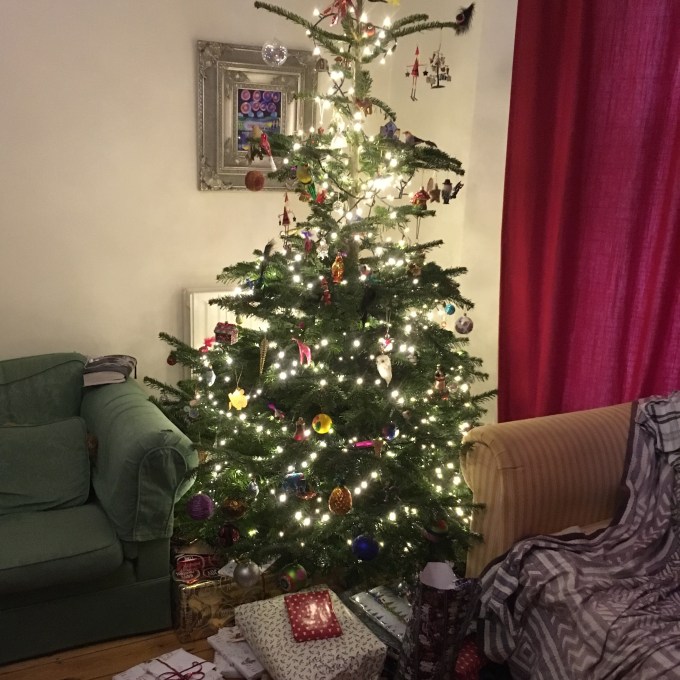
Christmas and Autism aren’t hugely compatible. Lots of bright lights, noise, high emotions, family, socialising… It can all get too much. It can be a really stressful time. So I’ve been thinking about the past few Christmases and the one coming up and how I can make it restful and comfortable but also enjoyable.
Make sure you have the medication you need – To run out and go into withdrawal (depending on the kind of medication you have) is awful anyway but it’s adding insult to injury to have to go through it during a time that is characterised by its joyfulness. So make sure you know the dates your doctors/pharmacy will be closed and make sure you have the medication to get through that time. Please. If you need any extra motivation, do it for me. You do not need to go through that.
Plan presents with friends and family – I get really anxious about receiving gifts. I always worry that I’m not reacting positively enough, that I’m letting the giver down. I worry that they’ll see a microsecond of anything other than joy and that will upset them. Another anxiety about presents comes from the times when I feel really far away and disconnected from myself, something I often feel at times of high emotion. When I feel like that, something like being given a present doesn’t impact me the way it would if I didn’t feel like that and that brings it’s own myriad of emotions: guilt, frustration, loneliness, etc. I feel like I’m being ungrateful and the lack of personal connection to whatever I’ve been given makes me feel very alone, like people don’t know me. I know that it’s my head messing with me but that doesn’t make the emotions any less real. To counteract those feelings, I’ve started discussing present buying with my family and friends. Asking for things can feel really, really, REALLY awkward but if I’ve learned anything, it’s that talking things through does help. So we talk about that and we talk about what I want and what they want, the more specific the better. It does take out the surprise element but I don’t really like surprises anyway and if you have anxiety, chances are you don’t like them either. For example, for my birthday, the biggest surprise was which poetry book I got from a particular writer. It made the whole day so much easier on my emotions.
Get as much information as possible – I make a point to know what’s going on as much as possible. For me, the biggest anxiety is food so when it comes to the important meals (such as Christmas Eve and Christmas Day – the ones where my family all get together), I make sure there will be at least a couple of things I can eat. I’m lucky because my family are very used to my struggle with food so they do take that into account when planning a meal and that means a lot to me. It makes a massive difference to my Christmas experience.
Space out social events – Obviously there are some things you can’t avoid but where possible, I try and space out the socialising to give myself time to recover and recharge. And knowing in advance allows me to prepare myself, physically, mentally, and emotionally. This makes it a bit easier to regulate my mood. Some things can’t be helped but my aim is to try and keep my emotions relatively even, rather than the tumultuous up and down that they can be, which is exhausting and upsetting.
Try not to beat yourself up about negative emotions – Something I also struggle with at Christmas is this feeling that I’m not enjoying myself enough, like if I’m not ecstatic I’ve somehow failed Christmas. I’ll look around at everyone and they’re all laughing hysterically at some ridiculous Christmas dinner activity (anyone else have those differently tuned whistles that you had to blow in a particular order to play Christmas songs?) but I feel like crying. I’ve had that experience a couple of times and it’s one of the most isolating feelings I can think of. It makes me feel so alone and disconnected from everyone and it’s horrible. I haven’t figured out what to do about this feeling yet but I think the first step is acknowledging it and accepting that it’s there. My plan is to try some of the things I listed in a previous post about connecting to the world around me. I’ll report back with whether it works or not.
Accept the anti climax – I often crash after Christmas and really struggle with the anti climax. That really drags my mood down. I’m hoping that spreading out the Christmas events will soften that a little and I plan to have some fun, gentle things to do to afterwards but again, I’m trying to acknowledge and accept it. I probably won’t be as calm about it when I’m in it; I’ll probably rage against it as is my default these days but I can but try. At the end of the day, that’s all you can do.
When you can’t get out of a stressful event, create a safety net – If there’s a stressful event that I have to go to, I plan as much as possible. I’ll scout out somewhere to retreat to or bring/find a friend who can rescue me if needed. I create a safety net for myself and often it’s existence is enough. It takes off the pressure.
Take the time to think about the sad stuff if you need to – At Christmas, I can’t help but think of the people who aren’t there, who are gone for whatever reason. I miss them, not necessarily more than any other time but in a more obvious way. They are not there at Christmas dinner, there’s a glaring hole in your shopping list, and there’s no present from them on Christmas morning. I think we do a disservice to ourselves and our emotions to push that aside, because it’s a holiday about joy or because it’s too hard. But if it’s something you want to do, you have to do it in a way that works for you. Sometimes it feels right to raise a glass at dinner and sometimes it’s right just to take a few moments to think of them. Sometimes it’s right to flip through photo albums and sometimes it’s right to cry about it. Grief and sadness aren’t things you can do to someone else’s formula. But I think it’s important to take the time to remember and acknowledge the sad stuff, in whatever way you choose.
Ultimately, it’s all down to communication and planning. Planning, planning, and more planning, as always. That’s what I’m learning. I hope this has been somewhat helpful and that you guys all have the lovely, safe Christmases you deserve.
Originally written for Ambitious About Autism. You can find it here.
Tired
Posted on November 25, 2017
If I could change one thing about myself it would be my energy levels.
I’ve struggled with fatigue for most of my life. When I was twelve, I suddenly got sick and missed a lot of school. I was nauseous and so tired that even walking upstairs was exhausting. I went to the doctor, had many, many blood tests, saw various specialists but no one could figure out what was happening. No one could find anything wrong. And yet I was still very unwell. The only clue we had was that the blood tests showed I had had Glandular Fever at some point. But that was it. Months passed and we tried lots of different approaches but nothing helped. I was managing a bit of school but it was only a handful of classes a week and even that exhausted me. I basically lived on the sofa, missing out on pretty much everything.
Just over two years in and someone suggested something called the Lightning Process. It sounded strange but I was desperate so we said yes. It’s a fascinating idea: changing the pathways in your brain to affect your body and your health. I went to the three-day training course but by the end of the second day, I knew something had changed. I felt completely different and it showed. I still had very low stamina but somehow I had more energy. It was like a switch had been flipped. I went back to school and although I did still struggle a bit, it was so much better than before.
Everything seemed normal until I was eighteen and doing my A Levels. The stress was overwhelming and before I knew it, I was drowning in exhaustion. Somehow, I made it through my exams but my mental health deteriorated to a point where I couldn’t start the next course I’d planned to do. I struggled with both anxiety and depression and my fatigue seemed – and still seems – to be inextricably linked. It’s not as simple as ‘I’m more tired when my mental health is bad’ but there is a correlation. Medication has helped and was one of the major factors in getting me through university but it’s still something I struggle with daily.
When I was diagnosed with ASD, I was told that fatigue isn’t unusual and sleep problems are common with Autism. Personally, I’ve struggled with insomnia but more often, I sleep long hours only to wake up as tired as when I went to sleep. It’s like sleeping is just a break between days; I don’t feel like I actually get any rest from it. I think that it’s also to do with how hard my brain is working all the time. Simply existing requires a lot of processing of information: my surroundings, what other people are saying or doing or feeling, sounds, smells, as well as my own reactions and emotions about all of those things. I have to actively process all of that and it’s exhausting. That’s a normal day. If something emotional happens, good or bad, it takes all of my energy to deal with that. To me, strong emotions are like fog and it can take days or weeks to work my way through it. Sometimes longer. I also live with a lot of anxiety, which has always done a number on my energy. That anxiety feels like a programme running in the background of my brain, using up my energy, physically and mentally.
It’s a constant struggle, a constant frustration. I know that I have less energy than the people around me but I can’t seem to change my expectations. I try over and over again to do the same amount as everyone else but I can’t sustain it. Sooner or later, I crash, completely exhausted. I’m getting better at managing my energy and building in recovery time but I can’t seem to stop myself raging against it. I can’t accept it. I feel a bit like one of those wind up toys that just keeps running into a wall. I want to do so much more than I have the energy for and that’s really, really hard to deal with. As is the long-term nature of it. You can’t just quit your life for a few days like when you get the flu or have a migraine. I’m not making light of those things – I’ve had and hated both – but the need to keep pushing forward despite feeling so exhausted and the anxiety about not making any progress wears me down in a way nothing else does. It affects every aspect of my life and it’s starting to feel like a part of me.
This makes it impossible for me to work. I’ve been extremely fortunate to get some benefits over the last few years but it’s still very, very stressful. I find it so difficult to adjust my thinking, to adjust to my new reality. I keep trying to meet the standards I’ve grown up believing I need to reach only to feel like a failure when I can’t reach them. The idea of even a part time job fills me with blinding panic because I know that I am physically incapable of doing all the tasks that would be required of me. Some days, even having a shower feels like climbing Mount Everest. I want to link to this Tumblr post because I think it explains the relationship between energy and the tasks you’re trying to do really well.
And it’s not just physical energy; it’s mental and emotional energy too. I get overwhelmed and burnt out really quickly, I think because I feel everything so intensely. A job that doesn’t account for that would have a devastating effect on my mental health and even though the world is starting to think about mental health and spread the message of putting you’re mental health first, I still feel incredibly anxious about this area of my life. I feel like having so little energy means I’m lazy. I feel like a burden for not having moved out, for not being able to be independent, for not having a job. Everyone I know has had jobs that they didn’t like and I feel like I’m entitled for wanting a job that I like and can do with the limitations I have. I feel like I shouldn’t want more than my neurotypical peers, like I should just get on with it and stop expecting special treatment. And yet, I know the limits of my mental health and of my body. These two sides keep clashing (which I’m sure doesn’t help my energy levels). It’s a horrible place to be stuck in and I can’t help but think that it’s connected to getting an Autism diagnosis so late: I grew up with the same external expectations as everyone else but a different internal capability. I know that now but it’s hard to hold onto that when the voices in my head are telling me that I’m just not trying hard enough. That one is a constant, in every area of my life.
I’ve often used being a Mac in a PC world as an analogy for Autism: most of the functions are there but they’re in different places or you have to find an alternate way of doing something. And I think it’s true here as well. When you run a programme that isn’t meant for the system you’re using, it doesn’t work as well. I think that’s a good analogy for being neuroatypical in a neurotypical world. I feel like I have not been designed for this system and so I don’t function as well as the people that have. Or maybe the system hasn’t been designed for me. It’s a chicken and egg situation. But you get my point. For whatever reason, I feel incompatible with my environment and that takes up a hell of a lot of energy.
I don’t really have any answers to this problem. I’m not even sure how to finish this post. This is something I struggle with daily and at the moment, I feel very worn down by it. I don’t want to spend my whole life planning in recovery time, replying to ‘how are you?’ with ‘tired’. I don’t want my life to be decided by my energy levels but I’m scared that it will be.

One Woman With Autism
Posted on October 14, 2017
Ask anyone about Autism and they’ll most likely describe the stereotype: difficulty socializing, a ‘lack of empathy’, specific and focused interests. But, as with everything, it’s so much more complex than that, especially for girls and women with Autism. While there are various statistics on the ratio of boys to girls, it’s clear that there are many more girls and women with Autism than was originally thought. And because the diagnosis of Autism has always been based on the male presentation of Autism, it can be really difficult for girls and women to get diagnoses and support. I can’t speak to anyone else’s experience but I can speak to mine.
I was a shy kid. I was so shy, and so anxious, that I couldn’t be left at after-school clubs or activities. I was petrified and cried until my Mum would take me home. I was constantly told I was too sensitive, that I took things too personally, that I needed to grow a thicker skin. And that really upset me – but then I was being too sensitive, wasn’t I?


These issues continued through my childhood and into my teenage years. I was always anxious and strived for perfection in everything. I was a vigilant rule follower; I couldn’t, and still can’t, break a rule for anything. I was terrified of turning in homework late, convinced it was an unforgivable act. The one time I did forget a piece of homework (because I’d taken it out of my bag to check I’d packed it and then forgotten it in a panic about being late – another constant anxiety), I cried in a corridor and my hands shook when I told my teacher. It was fine, of course, but it didn’t help my anxiety. I was so scared of doing something wrong, of getting into trouble.
In addition to that, I never felt like I quite fitted in. Anywhere. I felt like I was stuck behind glass, separated from everyone else and unable to break through it. Everything seemed so much easier for everyone else; everything they seemed to do effortlessly took all of my energy, leaving me exhausted. I couldn’t understand why I just couldn’t cope as well as everyone around me. For some unknown reason, I couldn’t function as well as everyone else and that made me feel like I was broken. Despite all of this, no one clocked that there was a problem, not a doctor, not my family, not me.
What had always just been a feeling of not coping started to take over other areas of my life. I’d always done well as school, despite missing more than eighteen months when I struggled with an unidentified illness that caused debilitating fatigue. My lowest grade at GCSE was an A (although I was disappointed with not having achieved more A*s). I got to Sixth Form and everything changed. Suddenly every class, every test was a struggle. Learning and applying knowledge had always been something that had come easily to me, something I’d enjoyed, and all of a sudden, it had become so difficult and that was incredibly distressing. My anxiety got higher and higher and depression started to creep in. I was constantly exhausted and just getting through the day started to feel like an impossible task.
The turning point came when I failed an exam. I locked myself in a toilet stall and scratched at my arms over and over with a broken paper clip, desperate to feel anything other than this howling feeling of failure that came from somewhere deeper than I’d ever experienced. I don’t know how long I sat there and I don’t remember much of that day, but that was when my family and I started to realise that there was something really wrong.
A lot went into getting my diagnosis. I’ve lost count of all the doctors I’ve seen, the amount of times we left without any answers, the amount of books we read. I’ve been diagnosed with multiple mental health problems and tried a lot of different medications. I tried various therapies like CBT and EMDR. Nothing helped. But due to my Mum’s never ending commitment, I ended up at the Brighton and Hove Neurobehavioural Service and after several hours answering questions, I walked out with a diagnosis of Autism Spectrum Disorder. To start with, I was too exhausted by getting to that point to take it all in but slowly, everything started to make sense. All these disconnected pieces of my life and my personality began to click into place.
I’ve always felt emotions strongly. If something goes well, I feel like I’m bulletproof. If something goes badly, I can end up in a meltdown: crying, shaking, screaming, and often self-harming. Either that, or I go into shutdown where I retreat to my room and lie in the dark, unable to think or talk properly. Sometimes a meltdown leads to a shutdown and it can last for days, or even weeks.
I’m extremely sensitive. To a lot of things. A change of plan, loud noises, bright lights, unfamiliar people and places, all of those things increase my anxiety, making it difficult for me to function, to make decisions, to interact with people or the environment around me. Processing that information takes a lot of energy and I’m easily exhausted and overloaded. Too much sensory information, too many demands placed on me, the closer I get to a meltdown. It’s a fragile existence, like walking on a tightrope.


I’ve never had trouble with empathy, with ‘stepping into another’s shoes’. Or more accurately, I’ve never found that difficult to do. My struggles tend to be with the other extreme: I’ve been told I’m too empathetic. I frequently experience other people’s emotions as if they’re mine and with such strength that I feel completely overwhelmed. It’s strange and upsetting to, for example, feel grief for someone I didn’t know. It can feel like I’m intruding even though all I ever want to do is help because I know how strong those emotions can be. It’s incredibly difficult for me to see someone upset and not be able to do anything. It can also be very difficult to do something as simple as walk down the street. I just feel overwhelmed by how big everyone’s lives are, how much makes up a person: memories, favourite colours, foods they hate, things they want to happen, things they don’t want to happen, phone numbers they’ve forgotten, songs stuck in their heads. I could go on forever. And when I’m surrounded by people, I feel all of that pressing in on me. It makes it hard to breathe.
Socialising is difficult. Again, processing all the information around me takes a lot of energy: a person’s words, body language, tone, how other people are reacting, everything going on in the background. It’s hard work. It feels like everyone else has a rulebook that I never received and so I’ve had to learn how to be social. Where everyone else processes all this information automatically, I have to actively process it, which takes a lot of energy. So it’s not hard to imagine why I’m tired out very quickly by social situations. Of course many people don’t notice this and have no idea that I’m autistic. Even the visible signs go unnoticed, like my difficulty with eye contact. Aside from the fact that I have no idea how long you’re supposed to hold eye contact for or which eye you’re supposed to look at it, I also feel very vulnerable when someone is looking into my eyes, like they can tell what I’m thinking and feeling.
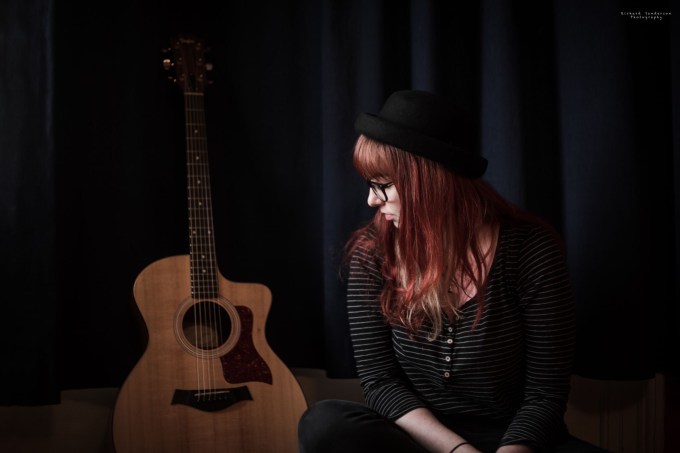
I do have my own specific interest: writing, in all forms, but my favourite is songwriting. I’ve read a bit about these focussed interests and apparently the interests in the female presentation of Autism tend to go under the radar because they can be similar to a neurotypical girl’s interests, like animals, TV shows, books, particular singers or music groups. It’s the intensity that’s different. I’ve never simply liked something; once I’m interested in something, nothing else matters. When I’m writing, I lose all sense of time. I recently spent ten hours working on a particular piece and only stopped because I noticed my hands shaking. When I looked up, it was dark and I realised that a whole day had passed and I hadn’t eaten. Writing, and writing songs, is everything to me. It’s the only thing I want to do, the only thing I want to do for the rest of my life. It’s hard though, because there’s a big part of me that feels like my life isn’t worth living if I’m not doing that one thing, if I’m not doing songwriting. The music industry is tough as hell so it’s terrifying to think like that. But that’s the truth.
Of course there are other symptoms and this is just one presentation of Autism. As the specialist that diagnosed me said, we are the experts of our own Autism. But, in my experience, it’s really hard. And it’s made harder when there’s so little understanding around the way Autism affects girls and women. Life post-diagnosis is difficult but at least I know what I’m struggling with. I’m learning what helps and what doesn’t. Not knowing was awful. I felt like I was drowning, like I couldn’t even find the surface. And the years of asking for help and being turned away made it worse. The lack of awareness and understanding about how Autism affects girls and women has real consequences. The time it takes to get a diagnosis and the repeated invalidation causes problems of their own. The people supporting me now think that that was part of the reason I developed Borderline Personality Disorder, a mental health problem that involves instability of mood, behaviour, and self image. And I will never forget one particular doctor’s opinion, that maybe that’s just how life was going to be for me. That remains one of the most upsetting experiences of my life and years later, I’m still struggling to believe that I will ever be happy.
I am so lucky to have found the people who are supporting me now and I feel it because I know that without them, there’s a very real chance that I wouldn’t be here now. But there are so many people without this support. There needs to be more information, more awareness, more understanding of Autism in women. Too often it goes unidentified and the effects of that can be worse than the struggles caused by the Autism itself.
 Finding Hope