 Finding Hope
Claudia Boleyn on BPD and Obsessions
Posted on April 20, 2019
EDIT: Since writing this post, I’ve learned a lot about the language around mental health and I no longer think that the word ‘obsession’ is necessarily a helpful one. I think something like ‘subject of intense interest’ or ‘specialised interest,’ not dissimilar to language used when describing ‘special interests’ in Autism. Having said that, I’m reluctant to change the language in this post because it’s the language that Claudia uses and because I think it’s potentially important to leave the post in its original form. Also, the negative connotations of the word ‘obsession’ are potentially relevant in the context of BPD as it’s a condition that can have unhealthy (a word often linked to obsession) and damaging behaviours for both the person living with it and the people who surround them (and I say this as someone who struggles with BPD).
I’ve written about Claudia Boleyn’s videos before but this is another great one that I think really clearly explains something that happens with Borderline Personality Disorder (also becoming known as Emotional Intensity Disorder) and various other mental health problems. I really recommend watching it.
In this video, Claudia talks about how, when you’re struggling with your mental health, you can develop obsessions with certain things, particularly fandom related things: fictional characters, books, TV shows, etc. These special interests can overlap with autistic special interests but they can also come about as a coping mechanism; they can become an escape from the difficulties of the real world.
She talks about how she can categorise her life by her obsessions, including Emmerdale and Anne Boleyn and certain areas of art history. She talks in particular about her obsession with Anne Boleyn, how it strengthens her and gets her through the really tough times. She even uses Boleyn as a surname: “I use it to exist in the world.” She talks about how she uses this obsession and others to understand herself. All of this makes those obsessions really special and important. I can definitely relate to this. My life can be divided up by my obsessions: animals but particularly horses – I obsessively read the Animal Ark and Saddle Club book series – Harry Potter, crime dramas, Taylor Swift, certain youtubers, anything superhero related…
“My identity and my life is sort of filled up with the stories of other people rather than stories of my own.”
With BPD, there’s the extra layer of struggling with your identity and your sense of self. Claudia talks about how she would go to school dressed as her favourite characters and how a teacher once asked her, ‘When will you come to school dressed as yourself?’ But that’s really hard when you don’t know who you are. I’ve always found it very easy to lose myself in fandoms or characters because I don’t know who I am to begin with and I’ve had a couple of experiences where I’ve done things I didn’t actually want to do because I thought that’s what a character would do, i.e. what I should do to embody those good characteristics.
“I’ve never felt like I have a proper identity in myself so I’ve sort of constructed one in a way based on what I admire and what I want to be and what will make me as good a person as I can be and what will make me contribute to the world but it’s really tough.”
It can be a good, helpful strategy – until it starts to dictate your emotional state.
“I think this isn’t spoken about enough with BPD, especially because we can struggle with identity and who we are and what sort of people we are. I think we often construct ourselves based around fiction and around those characters we admire and I think it matters a lot to us. It feels like it becomes a part of our identity in a way, so when it goes wrong, it feels like we’re falling apart. Yeah, it’s difficult.”
Another problem in BPD is that of regulating your emotions. Small things – day to day things – can have massive impacts on your mood. It can be exhausting and stressful to go through such ups and downs and it’s constant; there’s a lot of fear and uncertainty involved. So escaping into an obsession or fandom can be helpful and soothing but then, when something goes wrong in or around that fandom, for example, it can cause really negative emotions because your escape, your safe place, has been threatened. It might seem extreme from the outside but it’s very real and personal if you’re going through it.
I really relate to this video and I’m really grateful to Claudia for putting it out into the world. We need to talk about all parts of living with mental health, not just the relatively straightforward ones.
A Letter Under The Floorboards
Posted on April 16, 2019
Today is exactly a year since we moved house. That was a terrible day. It was stressful and upsetting and exhausting. I had a meltdown when we finally collapsed in the new house (surrounded by boxes and carefully balanced furniture) and neither me nor my Mum slept that night. It was all just too much.
It’s better now. I’m still adjusting, but then I had spent most of my life in that house so I didn’t expect a quick recovery. I’m getting there. My room almost feels like my room.
Since we moved out, we’ve actually learned quite a bit about the history of the house and the people who lived there. Our favourites are two women who lived and worked together their whole lives, the first head and deputy head of Varndean School. We even found pictures of them, which is really cool. We were all weirdly moved to learn these stories.
When we moved out, I wasn’t thinking about the history of the house and our part in it. I was just trying to figure out a way to say goodbye. So I wrote a letter and tucked it under the loose floorboard in my room. It was a letter to any and all future occupants, asking them to look after the house for us, for me. We’re part of the house’s history now and perhaps, one day, someone will find this letter and feel the same way about us as we feel about these two women. And since we live in a technological age and the first step of investigation is to google something, I thought I’d put this out into the internet. Maybe one day they’ll find me.
To whoever finds this,
This has been my bedroom, on and off, for about seventeen years. That’s most of my life. That’s a surreal thought, one that I’m trying not to obsess over. It took a long time to feel okay about moving and I’m scared that thinking too hard about all of it will be the wind that blows me back into that storm. I didn’t think I’d survive it the first time. I don’t want to leave but I don’t want leaving to be a life altering tragedy. I’m trying to remember that I don’t need this room to be me, even if it feels like that sometimes.
A lot has happened in this room, in this house. I grew up here, watched thunderstorms, brought friends over for dinner, celebrated birthdays and Christmases. I wrote stories and songs and my brother learned lines and turned the flickers of ideas into masterpieces. I said a last goodbye to my cat of fifteen years, learned that I could love another one, and then raised two litters of kittens with her. I taught my dog to sit, sneaked him onto the sofa when no one was home, and sang to him while emptying the dishwasher. I studied for GCSEs, A Levels, and my degree. I graduated with a first and I found out in this room. I had my heart broken. I struggled with my health and my mental health. I found out that my Dad had died.
I worry that leaving this room, this house, means leaving all of those things behind and that I’ll lose myself because of that. It may not be rational but it’s how I feel. I hope that I’ve managed to box all of that up with my belongings but I guess I’ll see when I get to the new house. There’s a little voice in my head that says that the rooms feel empty because we’ve packed all the memories and emotions but I’m scared to believe it.
Maybe this is all too flowery and fluffy for you. That’s fine. A room can be just a room. A house can be just a house. But regardless of whether you see it as four walls or a time capsule, please take care of it for me. For us. We have loved it dearly and hope that you will do the same. Fill it with life (and extra radiators because, as you’ll soon find out, it’s practically impossible to keep it warm). I hope you will feel as safe here as I have.
Look after this place. I’m trusting that you will.
LAH
16/04/18
Nashville Looks Good On You
Posted on April 13, 2019
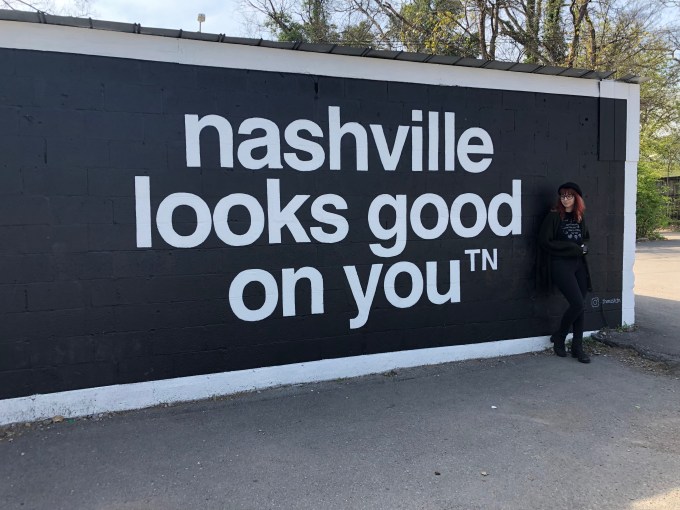
This trip to Nashville wasn’t exactly what I’d expected. I’d had this vision of going out there and writing a load of songs and going to show after show after show and seeing all the friends I’ve made out there. I managed to do some of those things – and I’m really proud of what I achieved – but my mental health really dominated the trip, much more than I’d hoped it would.
We got off to a pretty rocky start when I forgot to take my medication the night before we flew out. We had to leave at two o’clock in the morning so I never really went to bed and therefore my nightly routine was disrupted. Plus I was excited and nervous and just generally all over the place. We got to the airport and I couldn’t even walk the distance to security, I was so completely out of energy. I thought it was the lack of sleep and stress of travelling but I physically couldn’t do it. We ended up asking the airport staff for assistance and they were absolutely amazing, at every airport we travelled through over the trip: they got me a wheelchair and took me wherever I needed to be, getting me early access to the planes, and so on. It was so helpful and honestly made the whole thing possible. I don’t know what I would’ve done without their help. It took a few days to recover and it was only then that we realised what had caused it.
The reason we go at this time of year is because the Nashville Songwriters Association International hold the Tin Pan South songwriters festival, where hundreds of songwriters perform songs that they’ve written. They have a great mix of famous and up and coming so you get a lot of different, beautifully written songs. All of the shows that I went to were good and some of them were fantastic. My favourites include Lori McKenna, Alyssa Micaela, Emily Shackelton, Hannah Ellis, Natalie Hemby, and Travis Meadows. They were truly incredible.


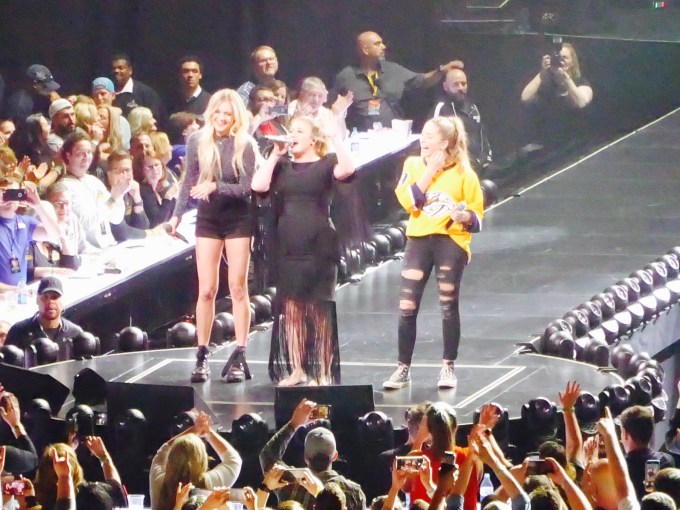
There were a couple of other musical highlights too. By some wonderful coincidence, Kelly Clarkson was playing the Bridgestone Arena while we were in Nashville. I’ve always wanted to see her and I’ve always wanted to go to a show at Bridgestone. And to make it even sweeter, Kelsea Ballerini – who I LOVE – was opening. So it was perfect. The show was amazing and I had a blast. Totally a bucket list moment.
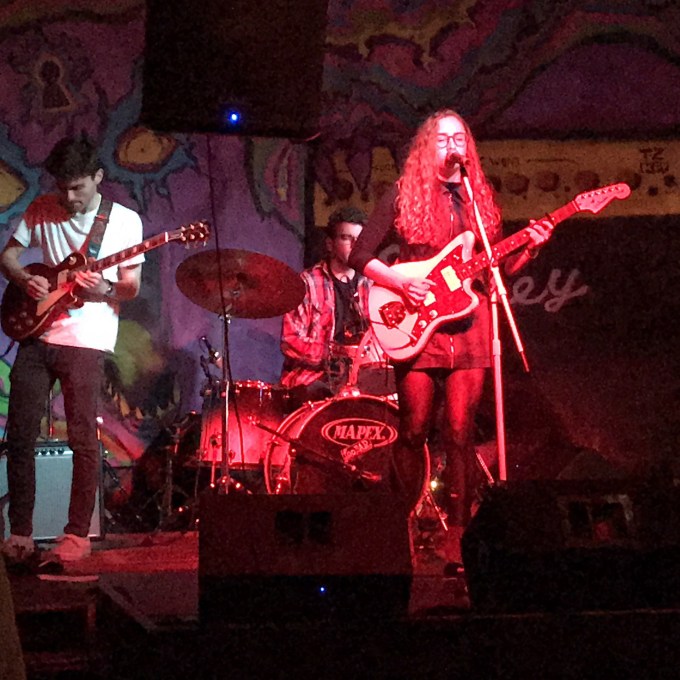
The other musical highlight was getting to see my friend, Caylan Hays, perform. We’ve written together several times and on my last trip, she came to see me play a gig and by another beautiful coincidence, she was playing on the last night of our stay. She was fantastic. She’s such a talented writer and I love her voice. Throw in some gorgeous electric guitar and I was in love. You can check out her music here.
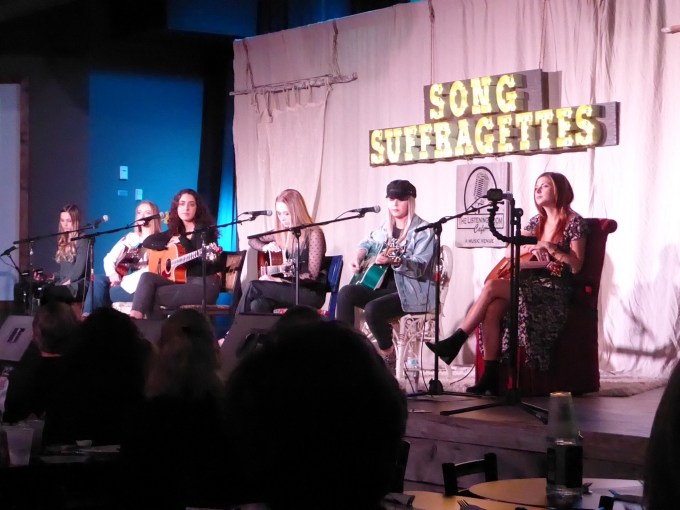
And of course, I got to go to two Song Suffragettes rounds. I love this organisation with my whole heart and so it meant so much to me to see both shows while I was there. They – the people who run it and the girls who play – are so inspiring and I hope I can play with them again someday.
I had several writing sessions while we were there and for the most part, they were a struggle. I love the people I was writing with dearly but my brain still isn’t right: a casualty of my depression and the medications I’m taking. We’re still trying to find the balance where I’m emotionally stable and not creativity stifled. Still, I’m trying and I so appreciate these writers for having patience with me while I work through this. I also got to spend some time with friends, old and new, and they really inspired me in this dark patch of my life.
But throughout the trip, I really, really struggled. My anxiety was so high that I actually had trouble breathing and my depression was so overwhelming that I found myself falling apart (even in public places, which I’m usually able to avoid doing) multiple times. There were lots of tears and lots of Diazepam; it was very hard. I struggled desperately with wanting to go home and I was battling suicidal thoughts (helpfully described by Claudia Boleyn as, “my brain trying to kill me”) for most of the trip. In truth, it was a bit of a nightmare but there were some really great moments that helped me manage it and of course, I had my wonderful people (my Mum and my writing partner, Richard Sanderson) there to support me. The trip wouldn’t have been possible without them.
Also, shout out to Pancake Pantry for teaching me what it’s like to get excited about food.
 Finding Hope