 Finding Hope
When Results Day Isn’t What You Hoped It Would Be
Posted on August 8, 2020
Trigger warning: This post contains details of an emotional breakdown and mentions of self harm.
So results day is coming up. The timeframe is much as it ever was: school grades will be released as planned: A Level results will be released on the 13th August and GCSE results will be released on the 20th August. Degree results tend to depend on the specific university. Despite all of the upheaval over the last several months and the changes made to the expected academic year, many people still took exams of some kind, worked hard on projects or coursework, and pushed themselves to attain the highest marks they could so, regardless of the unusual circumstances, the anxiety around these days is no doubt mounting.
As I’m in the middle of my course, I’m not currently awaiting any grades. I completed my second module back in April and received my marks not long after. But every August (and to an extent, January, when some modules are assessed), I think of all those anxiously anticipating those numbers or letters that they’ve been working towards for months, that their lives have revolved around for so long (not a healthy mindset, mind you, but one that society has entrenched in us and one that I’d like to talk about further at a later date). I think of those young people and hope that, whatever grades they have received, they are coping in a positive and healthy way.
What with my GCSEs, some in Year 9 and some in Year 11, my AS Levels, my A Levels, all the results during my degree, and now my Masters, I’ve had many, many a results day. And the majority of them have been absolutely fine, if not better than fine. Some of them have been downright amazing. But I do have one very negative experience that I think is important to share because chance are, at some point or another, we will all have a bad results day that comes as a shock. So I want to tell this story and then share some advice for dealing with a similar situation…
It was a chilly morning in March 2013 and I was anxiously awaiting the release of the Autumn module results with my friends. The only course I’d had an exam in was Physics and although I’d found it difficult, I finished it feeling like I’d done okay. Having been absent for a lot of secondary school due to ongoing illness, I’d missed out on a lot of foundation material so I’d found the course difficult but during the most recent parent-teacher evening, my teacher told us (me and my Mum) that she had absolute confidence in my abilities and that I was on track for a high grade. So when I opened my results and saw the little printed ‘u,’ I was initially confused. Surely it was a mistake. I’d always gotten good grades and my teacher had said such positive things. I waited restlessly for the mark to be confirmed and when it was, it felt simultaneously like everything went still and like everything was crashing down around me. I made my escape and headed for the more secluded of the two toilet blocks – I felt like every emotion I was feeling was visible on my face and I had no idea how to talk about it or how to pretend that I was fine. I needed to be alone.
I was crying before I even made it into the toilet stall and I sat on the lid, sobbing so hard that my chest hurt. I was gasping for air but it was like my lungs had pinprick holes in them, the air rushing straight out again. Even to this day, I’m not sure I can explain exactly what I was feeling. It’s not especially subtle and sounds very dramatic but it felt like the world was ending. I felt like a failure and I felt like the only thing people would see when they looked at me was a failure. All I was was this ‘u.’ All I was was ‘unsatisfactory.’ I couldn’t move past that thought. Everything else disappeared.
I don’t know how long I sat in that cubicle, crying and self harming, before my friends tracked me down. I wanted to stay there and hide forever but somehow, I dragged myself up and walked out to face them. I still remember the shock on their faces; I still remember looking at myself in the mirror, my face a mess of thick, mascara stained tear tracks and my arms covered in scratches. I looked as bad as I felt.
One of my best friends – someone I still consider a good friend despite the fact that we don’t see each other as often as we used to – took control of the situation, taking me off campus to a coffee shop where she gently coaxed the story out of me over hot chocolate. We both had to go back for classes but she arranged for us to talk to a mutually beloved and admired teacher at the end of the day. I wasn’t convinced but I was operating on autopilot, drained of the will to protest. So after my lesson (a lesson in which I didn’t say a word), we went to see this teacher and in her typical fashion, kind but direct, she told me about some of her experiences and talked me through my options. Then I went home and didn’t return for over a week.
It’s worth noting that my mental health had been deteriorating exponentially over the previous year, so this happened at a time when I was completely unequipped to handle it and it was a catalyst for a lot of big decisions. I dropped out of the physics course, partly because I wasn’t mentally healthy enough to manage the number of courses I was taking and partly because I was so distressed by the experience that I felt completely incapable of going back into that classroom and continuing with the course. Just thinking about sitting in that room triggered anxiety too extreme to function. And I can admit now that there was some shame involved too: I couldn’t bear the thought of my teacher and my class looking at me and seeing a failure. So I dropped Physics, completed the rest of my courses, and started seeking professional help for what were now obvious mental health problems.
To this day, I still struggle to open exam results. I work extremely hard and then, when the results are released, I’m very careful to open them at a time when I feel emotionally equipped to handle whatever they’ll say and when I have the time to process the emotions that I’ll potentially experience. I’ve talked about this a lot with my therapist, in general terms, but then we talk about it every time new results loom. Not long ago, she referred to the experience as ‘a trauma’ and the relief of having it validated for the distress it caused and continues to cause was so overwhelming that I swear my heart stuttered in my chest. After having so many of my experiences (and the ongoing problems they caused) invalidated, it was a really emotional moment. That day had a massive effect on my mental health and my relationship with education and still triggers debilitating anxiety.
Not all results days are like this. In fact, most of them aren’t and I hope that you – you, reading this – never have to go through an experience like this one, but just in case you do, here are some of the things that I’ve learned about coping with difficult results…
IN THE MOMENT
- Get yourself to a safe place – Dealing with difficult emotions is hard enough in itself but factors like crowds of people, lots of noise, and so on can make it even more difficult. Whether you need to be alone or with a friend, somewhere quiet or somewhere too noisy to let yourself dwell (momentarily is fine, indefinitely obviously isn’t healthy), being in a place where you feel free to express your emotions can only make it easier to cope with the torrent of emotion.
- Give yourself time to process your emotions – I always find that, when something huge and unexpected happens in my life, my emotions completely overwhelm me and while I know what I’m feeling right then and there, it often changes as the intensity recedes. I try not to make any decisions until everything feels more stable; if I do, I usually end up regretting them. So let your emotions flow and evolve and eventually simplify. Once that happens, everything will be clearer.
- Talk it through with someone – Talking to someone (someone you feel safe and un-judged with) about what you’re going through can you help you process the emotions and make sense of what’s causing them, whether it’s a fear of disappointing people, a fear of damaging your future, or a fear of failure in general. Or something completely different and personal to you. And then, when you’re ready, they can help you put it in perspective and decide what to do next.
- If it feels helpful, compare with your peers – Whether this is a good idea can only be judged by you. Sometimes sharing can be a bonding experience; for example, if the exam or module was marked universally harshly, the shared emotions can help you deal with the situation. However, if you decide to compare your grades with your classmates, be careful about who you choose to talk to: some people may approach the problem with potentially invalidating positivity, some may have done worse and be sensitive about it, and so on. It’s not a straightforward choice and one that only you can make.
ONCE YOUR EMOTIONS HAVE SETTLED
- Talk to your teacher(s) – Not only do your teachers know the system, they will also have seen and helped multiple people through experiences similar to yours. They will have useful advice and experience that they can share with you that will hopefully make it easier to decide on your next steps.
- If you get feedback, assess areas to improve on – If your results come with feedback, read through it carefully and think carefully about how you can perform consistently in the areas you excel at and how you can improve in the areas you lost marks in. Having clear goals for your future work can improve not only your future performance but also help with negative feelings around your recent grades.
- Think about whether you want to resit – Retaking exams can be a smart route to take because resits can give you extra time to learn the material and they can help you boost your overall grade. And if that overall grade affects your next steps, it may be possible to continue with that original plan, just a year later. However, resits eat up time, can distract you from whatever comes next – whether that’s working on new modules, new experiences in a gap year, etc – and challenge your mental health with added anxiety and pressure. Again, only you can make this choice but I recommend talking to multiple people with various viewpoints before making a final decision.
- Consider getting extra help – Whether you’re starting a new module or resitting previous exams, support from a tutor or mentor might be helpful, both in your approach to learning and your overall grades. You might also find that you need some support with your mental health after upsetting results or in the face of moving forward in education so you may want to talk to your school’s counsellor or the pastoral care team or even your GP. It may also help to talk to a teacher, not specifically for mental health advice but for advice on who to talk to concerning this matter.
Despite the trauma of that day and the vivid images that come to mind whenever I recall it, there are three things that I actively choose to focus on:
- The absolute kindness of my friend – I don’t know how that day would’ve gone if my friend hadn’t come to find me, taken care of me, and taken me to talk to a teacher I trusted. While I wasn’t capable of properly acknowledging her help at the time, I am so grateful that she was there and that she looked after me in my most fragile state, nonjudgmental of my emotions, accepting of my self harming, and thinking only of how to help me. Whether we’re friends forever or our paths diverge, I will always remember and appreciate it.
- The words of my teacher – I so appreciate my teacher sharing her story with me and what she’d learned from it, even if I wasn’t really taking it all in at the time. I didn’t know it at the time but she helped. She really helped. I can’t remember her exact words (much of that day is a blur) but in essence, she said: there is always more than one path to get to where you want to be. I didn’t truly understand it at the time. I had a plan and I was going to follow it but looking back, she was right. I may not be literally where I wanted to be but I’m metaphorically where I wanted (and want) to be and more importantly, I think I’m where I’m supposed to be, if a little battle-scarred.
- It was the beginning of a very important journey – It was a horrible day with far reaching consequences but it was that day that really made us realise that something was very wrong and we needed to do something about it. Of course, if you’ve read my other posts, you’ll know that my mental health journey has been and continues to be full of twists and turns but if not for that day, who knows how much longer I would’ve struggled before something pushed us into action. I thought it was the end of everything but in fact, it was the start.
This post turned out to be a lot longer than I’d intended but I hope it has been somewhat helpful. I hope you remember that whether your results are good or bad, whatever you feel is valid. You have spent years working towards this moment and it’s natural and totally okay to have strong feelings about them. It would be odd if you didn’t. You’ve worked hard for this. So feel what you feel and do what you need to do to make sense of this big, messy experience that you’ve gone through. It will be okay – maybe not in the way you expect but it will be okay. I can promise you that.
Sleeping and Dreaming in the Time of Covid-19
Posted on August 1, 2020
Since the pandemic began, many people seem to have been having trouble sleeping, from not getting enough to getting too much to having vivid and often scary dreams. It’s been well documented – scientifically and anecdotally via social media. I’ve had problems with fatigue for years but over the last several months, my struggles in the sleep department have dramatically increased and so I thought I’d do a bit of research into the subject and see how my experiences compare to those of others.
SLEEP
We all know that sleep is massively important to our wellbeing. It’s vital to the functioning of our immune systems, the health of our organs (especially our brains), and the maintenance of our mental health to name a few. The ideal amount of sleep ranges from person to person but most adults need seven to nine hours in order to perform at their best, with children and teenagers requiring even more. But during the pandemic, most people are getting far less than the amount they need, making it even more difficult to handle the stress and uncertainty that have become the norm over the last several months. Personally, I’ve spent much of the pandemic and lockdown either getting less than five hours sleep or getting nine hours but waking continuously and struggling to get back to sleep.
It’s not surprising that the pandemic has had this effect. The loss of time anchors like scheduled work hours, anxiety over you or your loved ones getting sick, economic instability, isolation, and increased screen time are all factors that are contributing to this surge in disturbed sleep and continuing lack of sleep can cause real problems. In the short term, it can become difficult to concentrate and make decisions and can contribute to mental health issues such as anxiety and depression. I’ve definitely experienced these effects (despite already struggling with anxiety and depression, they’ve both become much more significant and life altering since the pandemic began). In the long term, it can put you at risk for dramatic and dangerous health problems.
Fortunately, there has been a lot of research into sleep and the factors that affect it…
ADVICE ON IMPROVING YOUR SLEEP
- Keeping a routine – Setting times to get up and go to bed (and sticking to them) helps you to programme your brain and internal body clock, making it easier to get to sleep and wake up at normal times. Building other factors into your routine, such as relaxation techniques and turning off screens (ideally) ninety minutes before bed, can also aid with this.
- Reserve your bed for sleep only – With so many of us working or studying from home, it’s tempting to be comfortable and settle on our beds but that then makes it much harder to settle down and sleep because our brains have associated the space with thinking and processing rather than relaxing.
- Consistent exposure to natural light – Natural light is one of the triggers for our circadian rhythms (our sleep wake patterns) so making sure we get plenty of natural light helps our bodies to better regulate our sleep.
- Avoid naps if possible – We all know that naps make it harder to get to sleep at night because we’re less tired when it comes to bedtime but it’s very tempting when we’re having trouble sleeping. Of course, the problem then perpetuates itself. So avoiding naps altogether (or as much as possible) is the obvious solution to this. As someone who has struggled with energy, I know that sometimes naps do become unavoidable but it’s important to keep them short where possible and to avoid allowing it to become habit.
- Exercise – While many of our exercise habits have been disrupted, it’s still important to exercise and burn energy, something we all know helps us to unwind and sleep. There are lots of alternatives to going to the gym, from walking to home exercises (there are SO MANY on YouTube) to just doing physical jobs around the house. However, the closures of gyms have been problematic for those requiring specific types of exercise due to injuries or illnesses that affect movement. For example, weight bearing exercise is often very painful for me and so I have desperately missed being able to swim, my main form of exercise pre-lockdown.
- Reduce alcohol and caffeine – Both of these have been proven to disrupt our sleep and therefore many doctors and scientists are recommending avoiding these during this time when our sleep is already disrupted.
- Meditation or relaxation techniques – Many people have found these to be helpful when it comes to reducing stress and getting to sleep, before the pandemic and during. Apps like Calm are highly recommended with guided meditations and breathing exercises to aid with relaxation, mindfulness, and better sleep.
- Practice kindness and connection – Human connection (whether in the flesh or via technology) and positive actions have been proven to reduce stress and therefore aid relaxation and sleep. We all need space and alone time but it’s so important to avoid isolating ourselves, something that’s very easy to do when there are literal isolation procedures in place. Spending time with animals is also good here, especially if making conversation feels too overwhelming.
STRANGE DREAMS AND NIGHTMARES
Along with difficulty sleeping, a significant number of people have reported struggling with nightmares, or more nightmares than usual, and I’ve definitely experienced this phenomena. Here’s a few examples of the dreams I’ve been having:
- Walking on a deserted, desert-like planet (not dissimilar to pictures of the surface of Mars).
- My Mum having only one day left to live and the panic of having so little time left with her.
- Losing my dog, Lucky, in the London Underground and never being able to catch up to him as much as I shout for him.
- Being trapped in a packed London Underground tunnel, people pressing in on all sides (this is a recurring one).
- Various post apocalyptic scenarios.
- Walking about destroyed cities.
- Very vivid experiences of self harming.
- England being invaded and bombed and the house exploding around me.
- Breaking precious and fragile possessions.
- Trying to walk one way down a hugely busy street with endless amounts of unmasked people walking the other way, rushing past and bumping into me (another recurring one).
I also often wake up feeling unsettled and anxious, sweating from dreams that are already fading, disappearing before I can figure out what had happened in them.
There are multiple theories for why we dream but the most common seems to be that, while we’re sleeping and our consciousness is resting, our subconsciousness is processing the events of our day, the big events in our lives, our emotions, our stresses and anxieties, and so on. We’re all obviously dealing with elevated levels of stress and intense emotions during this time so it’s not surprising that our brains are working overtime trying to make sense of it all, producing vivid and often weird or disturbing dreams. Our brains are trying to process something that it has no context for.
While the exact cause and content of these dreams is still being debated, there’s a lot more research into why we feel like we’re dreaming more in the last several months. On average, we dream four to six times a night but most of the time, we simply don’t remember them; but due to the disturbed sleep that many of us are experiencing (caused by stress, massive changes to lifestyle, and social isolation to name a few), we’re waking up during our dreams and that’s why we’re remembering them. Therefore, it seems as though we’re having more dreams when really, we’re just remembering more of them.
If you’re interested in sharing your experiences of these types of dreams or learning about the dreams of others, a website, I Dream of Covid, has been set up to do just that. You can submit your own dreams and read through the dreams of others. It’s really fascinating.
Here is a fascinating interview with Dr. Deirdre Barrett, the assistant professor of psychology in the Department of Psychiatry at Harvard Medical School, about pandemic dreams. She obviously has a much greater understanding of dreaming and of these dreams and offers some valuable thoughts and advice. She’s also running a research study into these dreams that involves an open survey where you can share your experience of pandemic dreams, adding to her data if you feel comfortable doing so and want to help.
TIPS FOR MANAGING QUARANTINE DREAMS
Considering the fact that these dreams are most likely helping our brains (and therefore our entire beings) cope with this incredibly stressful, uncertain period of time, it’s not necessarily in our best interests to try and prevent or reduce these dreams. But, having said that, I’m pretty sure we’d all rather not have to experience them, remember them, or have them hang over us. So that leaves us with the option of attempting to avoid remembering them. Here are some tips that will hopefully help in that endeavour:
- Try to get better sleep – If you can sleep for longer periods without waking up, you’ll be less likely to remember the dreams you’re having. Hopefully the tips in the above section are helpful in regards to this.
- Do something positive or relaxing before going to bed – Going to bed with a positive and relaxed mindset before trying to sleep has been proven to improve our quality of sleep, so creating a nighttime routine including things that help put you in a good mental space is worth investing in. These things will differ for everyone: some people like to have a bath; some people like to take time to read; some people like to meditate or journal. I personally enjoy watching a favourite TV show with my family or going for a swim (whether this is currently possible is still uncertain).
- Avoid the news and social media before bed – Filling your head with scary images and upsetting information is obviously not going to help you relax. The resulting anxiety is likely to continue the cycle of sleep disruption and remembering the dreams you’re having, the exact opposite of what we’re trying to achieve here. It’s hard to ignore the compulsion to feel like you’re up to date but it’s a good habit to establish, in general as well as during the pandemic.
- Talk through your nightmares with someone you trust – These dreams can feel very disturbing and so talking them through with someone you trust can lessen the anxiety they cause or even dissipate the dream itself (if you can work through whatever it is that’s causing that specific dream). But even if that doesn’t happen, sharing what you’re going through can at least prevent you from feeling isolated by the experience because, as we’ve seen, many of us are having a very similar experience.
- Reach out to sleep experts or therapists – I don’t want to offer something I’m not qualified to comment on but many sleep experts and therapists specialising in sleep have been sharing resources online or offering consultations online. If you’re really struggling, professional help might be the most productive way to get your sleep back on track.
So here is what I’ve experienced and learned about sleeping and dreaming during the pandemic and subsequent lockdown. It’s been a really interesting blog post to put together. I hope it’s helpful and/or interesting and I wish you all sweet sleep and sweet dreams.

SOURCES
- https://www.sleepfoundation.org/sleep-guidelines-covid-19-isolation
- https://thesleepdoctor.com/sleep-pandemic/
- https://www.helpguide.org/articles/sleep/sleep-needs-get-the-sleep-you-need.htm
- https://www.nhs.uk/live-well/sleep-and-tiredness/why-lack-of-sleep-is-bad-for-your-health/
- https://www.nhs.uk/live-well/sleep-and-tiredness/how-to-get-to-sleep/
- https://thesleepdoctor.com/2020/05/12/quarendreaming-why-your-pandemic-dreams-and-nightmares-are-so-weird-and-intense-and-what-to-do-about-it/
- https://www.independent.co.uk/life-style/lockdown-coronavirus-dreams-vivid-strange-sleep-emotional-state-a9486206.html
- https://www.sleep.org/articles/how-often-dreams/
- https://www.cnbc.com/2020/04/03/why-youre-having-pandemic-related-nightmares-and-how-to-sleep-better.html
- https://www.nbcnews.com/health/mental-health/why-so-many-people-are-experiencing-weird-pandemic-dreams-n1188901
- https://news.harvard.edu/gazette/story/2020/05/harvard-researcher-says-dreams-indicative-of-virus-fears/
- https://www.cnet.com/news/is-the-coronavirus-pandemic-giving-you-bad-dreams-heres-why-and-how-to-cope/
I Finally Left My House
Posted on July 18, 2020
On Monday, for the first time in over a hundred days, I left my house.
I was already self isolating when the UK lockdown went into effect. My university classes had moved online, I have friends and family that I could put at risk if I caught the virus, and it generally seemed like the safest, most socially responsible thing to do. Then the lockdown was officially put in place and it was me and my Mum in the house together. Struggling with Chronic Fatigue Syndrome, I don’t go out a whole lot because I physically can’t manage it but I had previously had university classes, seeing friends and family, and swimming at the gym (the only exercise that doesn’t cause me physical pain – probably because it’s non weight-bearing), all of which were suddenly gone. My Mum went out only to food shop and pick up medication prescriptions as necessary.
I’ve only been out once since then and that was to rescue my kitten who got stuck up a tree in a neighbour’s garden – we think she’d been up there for more than twelve hours. And when we did go to get her, all involved socially distanced and wore masks. It was stressful in the face of the virus but my kitten would not come down by herself and we were all getting really worried about her.
Ever since then, I’ve stayed in the house. My mental health has been a monumental struggle during this time, especially my anxiety – to the point that something as simple as laughing from outside or looking through the window at the street can cause severe anxiety and autistic meltdowns. And the longer this goes on, the worse it’s getting. I’m in contact with my psychiatrist, taking my medication, and having online sessions with my therapist but I don’t feel like it’s making much difference to my anxiety.
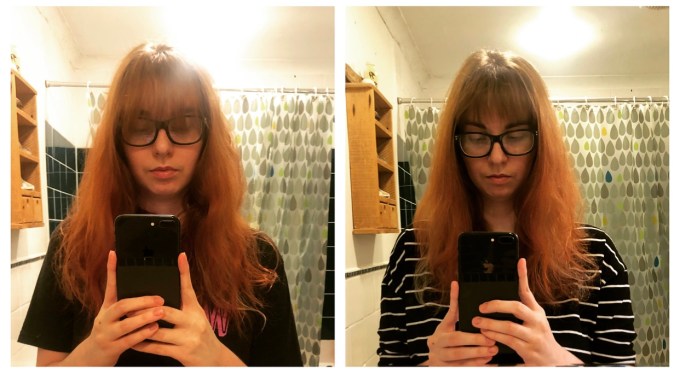
The easing of lockdown only increased my anxiety. With the scientists and Public Health England still warning of the dangers of Covid, it seemed (and still seems) incredibly irresponsible of the government to be making such changes. When it was announced that hairdressers would be opening on the 4th July, my anxiety sky-rocketed. Ever since the pandemic began moving into Europe, my Trichotillomania has escalated dramatically. It’s been a problem for years but with the recent extreme levels of stress, I’m now pulling my hair out more than I ever have. It’s not only causing pain in my scalp and damage to my hair, it’s also causing terrible pain in the fingers, hand, arm, and shoulder on the side I pull from, as well as tingling and numbness that often doesn’t pass for most of the day. So while I did, of course, want a hair cut (as I think everyone did), I was also desperate for advice and help with this problem. Plus, I go to an independent hairdresser and wanted to support them.
But despite all of that, I just as desperately didn’t want to go. Even with the all the strict safety measures they’d informed their clients of, I still felt overwhelmingly unsafe going out, especially into town. To make it feel more possible, we spoke to them and they arranged my appointment to be as stress free as they could possibly make it: we cancelled the colour to reduce my time there (it felt unnecessary as it was something I could do at home – I’d booked it way back when when it had looked like it would be (or feel) safer, they scheduled my appointment first thing on a Monday morning so the environment would be as clean and safe as possible, and they were happy to have my Mum come with me in case my anxiety got too bad. When we made those arrangements, it felt as good as I thought it was ever going to and we moved on, the appointment still a few weeks away.
But as it got closer, my anxiety grew and grew until I was having panic attacks over it. I didn’t want to go. I really, really didn’t want to go. It felt so unsafe to be going out, even with a mask, gloves, hand sanitiser, and safety measures in place. I didn’t want to go. The anxiety was unbearable and I had multiple awful panic attacks.
In the end, my anxiety just wiped me of all my energy and on the morning of the appointment, I just didn’t know what to do. I had nothing left. So Mum took over, got me up, and took me to the appointment. Even being outside felt terrifying: I felt so unsafe and exposed and vulnerable. We got there and the hairdressers was almost empty, as planned, and my hairdresser was as lovely as always. I’ve been camouflaging my Autism and my anxiety for so long – I’ve spent my life building a mask to help me manage in difficult situations, something that I want to write about more in the future – that most people see the ‘usual’ me but in reality, I was so anxious that I felt like I couldn’t breathe properly (and that had nothing to do with the facemask). I almost destroyed the fidget toy I’d brought with me and the whole experience was just exhausting. It felt like it only added to the trauma of the pandemic and lockdown.
(I do want to make it absolutely clear that that has nothing to do with them as people or a business. It was all about going out and feeling so unsafe outside my house.)
My hairdresser is awesome and so lovely and we had a good conversation about the condition of my hair and the textures that trigger my pulling. We talked about what might improve the condition of my hair and therefore lessen the textures that trigger me, which products might be helpful. So we’ll see how that goes. And simply cutting off the dry ends of my hair will hopefully help with the pulling too.
We were there less than an hour but I was completely exhausted. I was barely functional all day and ended up falling asleep on the sofa at about 10pm, hours earlier than I usually get to sleep at the moment. And it’s taken days to regain enough energy to concentrate and actually do things again. Even now I’m not sure whether I made the right choice or the safest choice but it’s done and I can’t go back and change it. Several people have said to me that going out would make going out again easier but if anything, it’s made it feel even scarier so, for the moment at least, I’m not going anywhere.
The next challenge, I guess, is when gyms reopen. As swimming is the only non-painful exercise I can do, my exercise has been severely limited during lockdown and on a personal level, I’m desperate to get back to it. I love it, I miss it, and I miss how it makes me feel, physically and mentally. But I just can’t imagine how on earth it can be safe. So there’s a lot of investigating to do, a lot of thinking and weighing the pros and cons to do. I’ve never been so jealous of people having their own private pools.
 Finding Hope