 Finding Hope
Life Without Lucky
Posted on February 9, 2021
It’s been just over a year without our beloved Lucky. I’ve thought about this post for a long time, about whether to post it a year after he was put to sleep but I decided that I’d rather post on his birthday. As of today, he would’ve been seventeen years old. We had to have him put to sleep roughly a week before his sixteenth birthday, a long life for a Labrador, especially one with several long-term health problems. I wish he was still with us but he was ready to go. I’ve heard people say that before and thought I knew what it meant, but I only truly understood it the night we had to make that choice. He was just ready, even if we weren’t.
I still miss him. I still miss him greatly, as I know the rest of my family does. He was one of those dogs that even dog-ambivalent and dog-disliking people fell in love with. He was so sweet and gentle and obliging. And he just loved everybody he met; you couldn’t help but fall in love with him in return. He became a bit of a legend within our circle of family, friends, acquaintances, and further; there are connections in our lives that are entirely a result of Lucky inviting himself, and therefore us, into their lives.
There’s so much I miss about him, so much I think about when I think of him. It hurts but it also makes me smile because he always, always made me smile. He was a dog of simple pleasures. Affection, food, a good walk, and a good snooze was all he needed in life. But he certainly had his quirks (just like the rest of the family). As a puppy, he ate everything he could get a hold of, from bananas to the radio remote; he once turned the gas oven on in an attempt to reach a cake on the sideboard – that could’ve ended disastrously… He loved meeting new people but always seemed somewhat confused about what he was supposed to do when he met other dogs. He spent a lot of time sleeping on his back with his legs in the air. He got upset and left the room when people on TV got emotional, let alone people in real life.
Some days, it still doesn’t feel entirely real. I’ll still look for him when I pass ‘his’ spots and expect to see him there. I’ll still tiptoe when I get up at night to make sure I don’t disturb him. I still expect him to greet me at the front door when I get home. And then it hits me all over again. There’s a hole where he should be and I feel it every day.
But as much as I miss him, I am – in a way – grateful that he hasn’t had to cope with the pandemic. He obviously wouldn’t have understood the pandemic itself but he was so sensitive and he definitely would have sensed our anxiety – certainly my almost constant panic. It would’ve been so distressing for him; I would’ve hated for him to go through that. And given his age and all of his health issues, chances are that we might’ve had to have him put to sleep during one of the lockdowns and the only thing worse than having him put to sleep would’ve been having to do so without being allowed to be there with him. That would’ve been unbearable. So, as awful as it was, I know that it could’ve been worse. That doesn’t make me miss him any less but it does give me a sense of… something… that I don’t think I could’ve had otherwise.
So, here we are, just over a year without our lovely Lucky. It’s hard and it hurts but I wouldn’t have given up that time with Lucky for anything. And to be the ultimate cheeseball, he might’ve been called ‘Lucky,’ but we were definitely the lucky ones.
2020 in Review
Posted on December 31, 2020
What the fuck was this year? I don’t even know. To think I ended 2019 with the phrase: ‘2020, please be kind.‘ I really don’t know how to write about this year. Time has become a bit of a nebulous concept and after a lot of thought, the only way I could divide up this year was by separating it into three ‘chapters’: pre-pandemic, lockdown-into-summer, and semester three of my Masters. It’s a bit of a weird system but then, is there anything about this year that hasn’t been weird?
So, here we go. This is my review of 2020, a year I’m sure none of us will ever forget.
PRE-PANDEMIC
The beginning of the year, the two and a half-ish months before the pandemic became less about ‘wash your hands’ and more ‘we’re going into national lockdown’ (in the UK anyway), feel impossibly long ago and kind of frighteningly busy. Looking back through my photos, it’s so odd to think that that version of me – of all those people in the pictures – had no idea what was coming. And now we’re entirely different people. I mean, I know I’m a completely different person because of the last nine months. I’m only speaking for myself but I imagine that a lot of people can relate to that feeling. I look at photos of myself from January, February, March and I almost don’t recognise myself…


Anyway, on with the review.
I wrote up January at the time because it was such a busy, emotional month. I had a frantic Christmas break, preparing for my January assessments (due to a misunderstanding about the assessment, a lot of my research wasn’t helpful and so I had to redo it so I got almost no free time during that holiday). That was incredibly stressful, as was the presentation, and I was beyond exhausted afterwards. And between the second single of the Honest EP, ‘Clarity,’ coming out and the very distressing DSA assessment in the following week, I didn’t really get any rest between the first and second semesters. And to top it off, I was pretty upset about the grade I received and by the time I felt coherent enough to appeal it, the deadline had passed. But in hindsight, it was the first grade of the Masters with a very new approach to working and grading so it’s probably not that surprising, especially as an autistic student.
The new module I was studying, Musicology (“the scholarly analysis and research-based study of music”), was really interesting and for the most part, the lectures were really engaging, something that was definitely aided by how passionate my tutor was about the subject. I’ve known him since my BA and he’s so knowledgeable; he’s a really great teacher and he’s a big part of why I did so well in the module. Not that my tutor in the first module wasn’t great – she’s truly awesome and so inspiring and I learned so much from her – but I learned a lot about how the Masters worked in that first semester that I was able to put into practice for the second semester, making it easier on my mental health and helping me to work more effectively, which did result in a much better grade. I found the songwriting classes less inspiring but since I was challenging myself with FAWM (February Album Writing Month) for a big part of the module, that wasn’t too big an issue.
I got to spend some really good time with my friends, both in and out of uni. A couple of them came down from London to visit me, which was really nice. Others I spent time with at uni or around London. I also had lots of writing sessions with people, which was really, really fun. I love my uni friends so much – I love my non-uni friends as well, of course, but during the semester, I rarely get to see them because I’m so busy – and there are a solid handful of people I’ve met during my time at BA and MA that I know I’ll be friends with for a really long time. I feel like I learned a lot about friendship this year, as I mentioned in my grateful post, and I just feel so lucky to have met these people; they are so wonderful and I’ve found it really hard to be separated from them for so long. I’m so looking forward to seeing them again and being able to spend time with them in real life whenever that will be.


(I haven’t got photos with all of my friends from this year and I do like to use photos from the year I’m writing about but don’t worry, you’re most certainly not forgotten.)
As well as writing A LOT, I was releasing music and got to play several really, really fun shows but I want to keep the music stuff together so I’ll come back to those.
One sadness of that time was that my favourite place to eat in Brighton closed, first temporarily and then permanently. That was very sad and I know a lot of people were upset by it. They made amazing Belgian fries with loads of homemade sauces and drinks – that I LOVE – that I’ve only ever had when I’ve travelled to and around the Netherlands where I have family. And the staff were absolutely lovely and it was always such an enjoyable experience; I always took friends there when they visited Brighton. So that was a shock. With everything going on this year, I probably wouldn’t have been able to go (and I’m not sure it would’ve survived as an independent business) but I have missed it. It was a true Brighton gem for the time it existed.
I think it’s safe to say that the biggest part of January, the pre-pandemic part of the year, and possibly the whole year, was having to let go of our beloved Lucky, our nearly sixteen year old black Labrador who we’d first met at three days old. He was very old (most Labradors live to between ten and twelve) and had developed some very difficult health problems in the last year or so of his life. We got home one night and he didn’t get up. He didn’t lift his head. He didn’t wag his tail. He was just done. It was heartbreaking and one of the hardest decisions I’ve ever been a part of but the next morning we took him to the vet and they put him to sleep. It was awful and I still miss him everyday, even though I know it was the right thing to do. He couldn’t have been more loved, by us, by everyone he met. He was a bit of a legend. I still wish him back but, again, as I said in my Grateful post, I’m glad that he hasn’t had to live through the pandemic, the sensitive soul that he was; it would’ve been very stressful for him. And the idea that we might’ve had to have him put down during one of the lockdowns where we couldn’t be with him is unbearable, so I do take some comfort from that timing. Still, the house feels empty without him.
Life was fundamentally different after that but we kept going, day by day, and there were good moments. I got to see my course mates put on an awesome show at a local venue, Song Suffragettes announced that they were coming to the UK on tour (I’m pretty sure I dug into my savings to get a ticket for every show…), and my Mum and I celebrated Lucky’s sixteenth birthday, even though he was no longer with us. I’d been planning it and so we just decided to celebrate for ourselves. I think that, in the future, we will think of him or go on a specific walk or something to remember him, even if we don’t actually ‘celebrate’ his birthday. The date will just be an excuse to dedicate some time to thinking about him and all the years we had together.
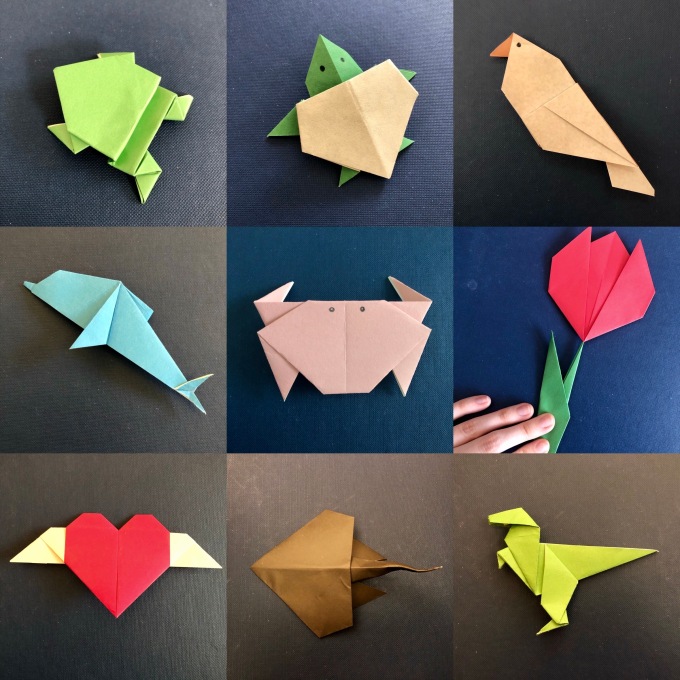
As well as dedicating the month of February to FAWM, I also took on the #30dayfeb Challenge For Tommy’s, organised by my university tutor/friend/mentor/super inspiring person, Sophie Daniels, under her artist project name, Liberty’s Mother, to raise awareness about baby loss and money for baby loss focussed charities. The challenge involved doing something everyday for thirty days that was positive for your wellbeing; I saw a lot of people doing yoga, for example. I chose origami and made a different piece everyday. These were some of my favourites:
I was lucky enough to see several shows and concerts before everything closed down. That’s something I’ve really missed this year as they’re sort of THE thing that I spend my money on and go out to. I was going to see The Shires, Alanis Morissette, OneRepublic, The Phantom of the Opera, Hamilton, the Song Suffragettes UK Tour, Taylor Swift at Hyde Park, and Tin Pan South in Nashville – those last three cancellations in particular hit me the hardest. I’d been so looking forward to them so I was really, really upset when they were postponed and then eventually cancelled.
However, I did manage to see Halsey twice on The Manic World Tour, which was incredible. I love her, I love this album (it was one of my favourite albums of the year), and the show was just mind-blowing. It was awesome to see her get to play at The O2 Arena (her biggest headline show to date, I believe), especially on International Women’s Day. She’s an amazing performing but I also love how she speaks to the crowd; it feels like she’s speaking just to you. I wanted to run out of the arena ahead of all the crowds so that that illusion wouldn’t be broken. Both shows, but especially that show in London, felt very special.
I also got to see Sara Bareilles in Waitress The Musical several times. I’ve seen several actresses (all amazing) play Jenna but there was something really special about seeing Sara play her, as the person who’d written so many beautiful songs coming from her perspective as a character. It took a minute to stop seeing Sara as Sara and start seeing her as Jenna but once I’d gotten my head around that, I was just enthralled. She was fantastic and so special; I loved the show all the more for seeing her in the lead role. I was lucky enough to go a handful of times and of those, on several special occasions (sometimes on purpose and sometimes by accident): I saw Sara’s first show, I saw the one year anniversary of Waitress in London show, and I saw Sara’s final show, which also turned out to be Waitress’ final London show. So while I knew that show was special, I didn’t realise quite how special it was until much later. I tried my best to meet Sara (one day, I hope…) but for most of the shows, Sara was either out of the building before we could line up or we were hustled away pretty quickly. I did see her on the last night – she walked up and down the queue of people waiting and waved to everyone – but she didn’t stop to talk or take pictures or accept gifts because of the growing concern about COVID-19. That show was actually the last thing I did before we went into lockdown, not that I knew it at the time.


Everything changed very quickly. One day I was talking to my friend about plans we had later in the week and the next, she was on the plane home before the borders closed. I made the decision to start self isolating but before I would’ve had to go back to uni (or, having come to this decision, contact them about it), the classes were moved online.
LOCKDOWN-INTO-SUMMER
The UK officially went into national lockdown on the 24th March. I’d already been self isolating for eleven days, as had my Mum, apart from necessary trips out (food shopping and business related stuff that had to be done in person). I had two weeks of online classes plus my assessment essay, which I was already working on. It’s strange: at the time, I wasn’t really aware of the outside world because I was a hundred percent focussed on my essay (and it was probably the most difficult, research heavy essay I’ve ever had to write). Maybe I was channeling all of my anxiety into that so that I didn’t have to engage with my paralysing anxiety about the pandemic. But then the essay was done and submitted and it all came flooding in.
Between the inevitable post semester and assessment period crash and the pandemic anxiety hitting me full force, I just went to pieces. I was either having meltdowns or staring blankly at old tv shows, too overwhelmed by fear to function. That went on for weeks and to be honest, it’s kind of a blur. I think I was in some sort of checked out, survival mode haze. I just could not cope. In hindsight (and in the few moments of coherent thought I had at the time) I was and am so grateful that I had that summer semester off. Many of my friends on the Masters were having to work on their final projects during one of the toughest periods of our lives (and created incredible work in spite of it) and I just could not have done it. My mental health was in tatters. Even now that I’m in a better, more stable place, I still feel deeply traumatised by the events of the last nine months: by the constant fear and paralysing anxiety, by the sheer overwhelming grief that so many people have experienced and are experiencing, by the confusion and frustration and outright horror at how the government – the people we depend on to lead us and take charge during extreme situations – have behaved. I mean, how do you cope with completely losing faith in your country’s leaders? Who are you supposed to turn to? Anyway. That could easily turn into a rant and that’s not what this post is about.
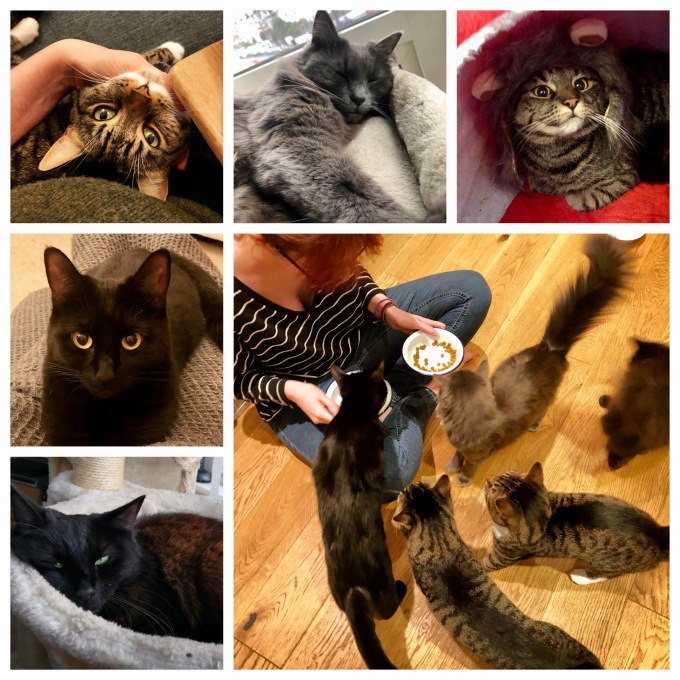
I’m not really sure when I started to come out of that because it was such a gradual process. But slowly, with LOTS of ups and downs, I started to feel more able to engage – if only with the people directly around me and the things that I enjoyed doing. Thank god for the cats (and Mum – I’ve talked about how grateful I am for her in my Grateful post – but we both agree that the cats were a lifesaver during the lockdown). They’ve been so good for my mental health this year. It’s so mindful to watch them; you can’t help but feel calmer, watching them play or snuggle and so on. Especially without Lucky, their cuteness and cuddles have been vital and the ridiculous playful moments have made me laugh even when it felt impossible. I’m so, so glad to have had them around during this time and they certainly seem to enjoy our constant presence at home; a day rarely goes by without one cat or another draping themselves over me. As I said, they’ve been a lifesaver. I don’t know how I would’ve made it through without them.
I had online therapy sessions but I struggled with them and often ended up cancelling at the last minute because they just felt too overwhelming. All I could think about was the pandemic and my fears around it; I didn’t want to dig into that even more and it felt impossible to talk about anything else. So my sessions were fairly sporadic throughout the lockdown and most of the year really. I think, in hindsight, therapy just felt too big, too overwhelming to be helpful while all of my emotions felt so incredibly heightened and raw. I was just focussing on getting from one day to the next. The cats were a big help; I started escaping into the worlds of new films and TV shows, like Absentia and Away; and I lived for the livestreams that a handful of people were doing in place of live shows. My favourites were Kalie Shorr’s, both because I love her and because she did so many of them. She did interviews with both interesting and entertaining questions, played covers, and played her own songs, released and unreleased. I’m so grateful to Kalie for doing all of that; they really helped me keep going, helped me get through the darkest of my pandemic-induced depression.
As I said, towards the end of the first UK lockdown, I became a bit more functional, although it was like balancing on a tightrope: one little knock and I was plunging back into overwhelming anxiety and depression. And it happened a lot. But I also had better, more productive moments. I managed to write a couple of songs (which is pretty monumental what with my mental health being so bad); I had writing and production sessions with Richard; I started gentle music theory lessons in preparation for the upcoming semester with one of my parents (she’s a music teacher); I spent a lot of time playing piano (I started experiencing awful nerve pain in my left hand – as well as in my back and leg – during the first lockdown so playing guitar was basically impossible); and I stayed up until almost six am to watch Ingrid Andress’ first livestream show and chat with her in a meet and greet session afterwards. So I was doing just about okay. Probably the biggest help was that all of my family (and most of my friends) were being exceedingly careful around going out: fortunately able to work at home, they only went out for essential trips, like food shopping and picking up medication, etc. I’m so grateful to them for that. So beyond grateful.
The lockdown began to loosen and more and more people were out, which I found terrifying. The silence outside had been weird at first but suddenly every little sound turned me into an anxious mess. Hearing people converse outside the shop we live above, for example, caused so many panic attacks (for fear that those people were spreading the virus). It was awful. For most of the summer, I kept the windows and curtains closed, enclosing myself in my own protective little bubble. It was the only way I could find to protect my mental health. With the gyms opening, I was desperate to swim again (as I’ve previously mentioned, it’s the only exercise I can do) – both for my physical and mental health – but I just didn’t feel safe at my usual pool. Their precautions just didn’t feel tight enough. On the plus side, after various COVID tests, I finally got to see my brother for the first time in months – longer than I think we’ve ever gone without seeing each other. We were still careful but it was so, so wonderful to see him.
Meanwhile, music stuff (mostly to do with the Honest EP) was still happening. Again, I want to keep most of this together (I’ll probably put it all in one paragraph towards the end) but I think this particular day is important beyond the musical context. I’d spent a lot of time worrying about the music video for ‘Back To Life,’ the next single due to be released at the time because my original idea wasn’t going to be possible during the pandemic, even with the lockdown restrictions having been loosened. Richard and I spent a long time discussing it and eventually came up with a plan…
The filming of the video was a big deal for me. I found it very difficult and very stressful being out for so long (even though our planning meant that, of the videos we shot for the EP, this one took the least time) and just being near people caused me a lot of anxiety, even down on the beach at the water’s edge. We were incredibly careful and I did manage to enjoy it to a certain extent but I’m grateful not to have to do another music video under such conditions. It took everything out of me; I spent the next three days on the sofa, barely able to move from the exhaustion. I have no idea how I managed to look so relaxed and even happy in the video. But, as I said, I’ll talk more about it when I talk about the whole EP process this year.
The rest of the summer was pretty gentle. I was trying really hard to improve and manage my mental health. It still wasn’t great but I was coping better than I had been earlier in the pandemic. So I spent a lot of time doing things that have proven to be good for my mental health: I listened to the Taylor Swift’s new album, folklore, on repeat; I played a lot of piano; I wrote songs when I could; I had video calls and online movie nights with my friends; I kept writing for the blog. I took part in research projects involving Autism Spectrum Disorder, Chronic Fatigue Syndrome, Depression, and Anxiety; helping out with these always gives me a mental and emotional boost because it feels like some good is coming out of my difficulties, even if they don’t improve my experience directly. I also watched the final season of Agents of Shield, my favourite TV show ever. That was a very emotional experience because the show, and the character of Daisy Johnson, have been a really important part of my life over the last few years and the emotional processing of stuff from my childhood.
And I continued to work on my music theory as the module was based on these concepts and I wanted to be as prepared as possible but I found the idea of going back to university very stressful. I really didn’t want to defer so I spent a lot of time thinking about what I wanted to do in terms of the new semester, what I felt safe doing. I’d originally thought that I’d much rather defer than do online or blended classes but now that the semester was almost upon me, I felt a lot less sure. After a lot of thought and discussion with my family and course mates, I decided to go back as an online student. It wasn’t ideal because of the lack of social interaction and how much harder it made cowriting sessions but I didn’t feel safe commuting to London to be in a building full of people from all over for just two hours a week. It just felt like too much anxiety for not enough reward. Online seemed like the most productive way forward. But even with that choice made, the process of going back to university, getting clear information, the correct timetable, etc, was incredibly stressful, causing meltdown after meltdown after meltdown. I really wasn’t at all sure whether I was going to be able manage university classes during a pandemic.
SEMESTER THREE OF MY MASTERS
The beginning of the semester was a bit rocky as the university tried to make blended classes (the online and onsite groups combined as one using Microsoft Teams) but in the end, it was simply easier and a more productive use of the time to split the onsite and online groups. My groups were great and everyone was really supportive and encouraging, tutors and students alike. Plus it was fun to work regularly with Richard again. The work was hard and the songwriting briefs difficult since musical language isn’t my strong point but after really positive meetings with both of my tutors, I never felt like I couldn’t ask for help or miss a brief if I needed to. As long as we was experimenting with our music – with the use of melody, harmony, arrangement, etc – and turned in the assessment work, everyone was pretty relaxed about what we were working on.
Despite a pretty heavy workload, I managed to get up to quite a lot during the semester. I celebrated my 26th birthday with the family I could and had a couple of socially distanced meet ups with friends; it was simple and quiet but I’m not really into big celebrations anyway. It would’ve been nice to see more of my family though.
I saw a lot of really awesome live-streamed shows, including Ingrid Andress at The Bluebird Cafe, various shows throughout the virtual Country Music Week and Nashville’s Tin Pan South Festival (I’m so grateful that we didn’t lose out on them entirely because of the pandemic), Halsey’s poetry book release day livestream, Maren Morris’ livestream concert, and Kalie Shorr’s charity StageIt show. But my personal highlights were Sugarland’s livestream show, Kalie’s ‘Unabridged For The First Time’ show (even though technical difficulties meant I missed bits of it), several of the Tin Pan South shows, and Tim Minchin’s ‘Apart Together’ livestream show.

I also attended several webinars and conferences about ASD and mental health, as well as actually speaking at one. That was a really special experience, being invited to speak on a panel and share my experience about being autistic. I felt like I was really able to use my experience to help other people and several of the attendees confirmed how useful my contributions had been. So that felt like a really significant moment.
Even though I was still on the course, many of my friends did the Masters in one year rather than two. They had a virtual graduation ceremony, which I attended in support. They all created such incredible work and under such difficult circumstances; I’m so proud of them and can’t wait to see what they go on to do. Some of them have already released really cool and interesting work and I know that many more are working on really cool projects. We had a celebratory drink via video call afterwards, which was good fun. I hadn’t seen a lot of them since March so I really enjoyed that.
I finally found somewhere to swim that actually felt safe, or as safe as possible: they had really strict safety measures. So I finally got to swim again and it was awesome. Each session gave me such a mental boost and it felt so good to exercise and really stretch my muscles again. I couldn’t get there as often as I would’ve liked (they spread the bookings out to keep the numbers low) but it was absolutely wonderful to be going again. It was erratic, especially with the second lockdown and most of the country now in Tier 4, but I enjoyed every second of it while I had it and I will again when the pool reopens.
The swimming was also good for the nerve pain in my back and leg. A few months earlier, I’d been diagnosed with hypermobility (very common with autistic individuals) and referred for hydrotherapy, which I’m unlikely to get for a while, but the swimming and basic exercises I’d been given did help. Or they seemed to anyway. I’ve also been referred to Rheumatology, Occupational Therapy, Pain Management, and had an MRI just to rule out anything unrelated to being hypermobile. It’s been a very slow process but I feel like we are starting to make progress, which feels really good.
The US Election was obviously a massive deal and not just in the US. I’m really glad that it fell during my reading week because there’s no way I would’ve been able to concentrate on classes. I’m honestly surprised by how much work I got done that week, given how much time I spent checking the news outlets for updates. In the end, it was Richard who texted me that the result was in. I shrieked, I laughed, and then I cried. I was so relieved.
Apart from swimming, the second lockdown didn’t change much for me. I was spending most of my time at my laptop, working on uni stuff. I had to turn in a portfolio of songs and an essay on the 4th January and, determined to get an actual break this year (unlike last year), I worked super hard: I wanted to have all of the work done before Christmas. So the end of the semester was intense and suddenly it was the last week, the session with Richard, and then the Christmas holidays. I worked every day from the end of the semester to Christmas Eve but I did manage to get all of the work done, which I was very proud of.
Christmas was weird. We obviously couldn’t see our larger family but then we couldn’t even see my brother because London went into Tier 4 (and then we went into Tier 4 on Boxing Day). I’d been prepared for a very different Christmas but it didn’t really emotionally hit me until a few days before and then I found it pretty difficult. We tried to embrace the difference: we decorated our tree with origami creations rather than our usual decorations; we structured our day differently… we kept it as different as we could so that the forced differences (like the lack of my brother) didn’t stick out so much. But we still managed to have a good day, I think. My brother and his partner had made a really great quiz, which we all had so much fun doing. That was definitely the high point for me. We were all together, laughing our heads off, and that felt really good.
I also just want to throw in here that there were some really great albums released in the fourth quarter of the year, which definitely boosted my spirits and inspired me a lot. There was Taylor Swift’s folklore: long pond studio sessions, which was both incredible and a fascinating look into the stories and emotions explored throughout the album; Kalie Shorr released the deluxe version of Open Book, Open Book: Unabridged, which included four new tracks, all of them as stunning as the original album tracks, if not even better – ugh, can you tell I love this album? And then, as if folklore wasn’t a big enough surprise, Taylor Swift released a second surprise album, evermore, which was another amazing album. The three of these, plus Manic by Halsey, were the musical highlights of my year. I love them all and I learned so much from them as a songwriter.
We’ve had a quiet few days up to new year, which is good. It’s been nice to have a bit more space to breathe, if that makes sense; there’s a bit less pressure in my life at the moment. Having said that, being in Tier 4 with a spike in COVID cases, has caused my anxiety to rise again.
And that’s the year…
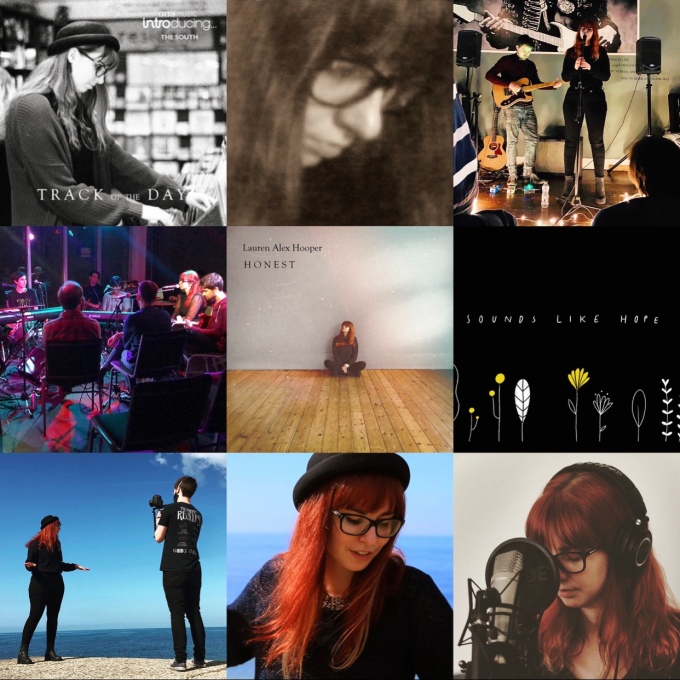
So it’s time to talk about the music. With more content coming, I don’t want to go into too much detail; I kind of want to save the real round up for when everything is done, but I do want to do a quick review of my musical year because I think this is the first year where I’ve really felt like a professional singersongwriter. Of the five tracks on the Honest EP, all but one were released this year (the first single, ‘Bad Night,’ came out late last year). The second single, ‘Clarity,’ came out in early January with an accompanying music video; it did even better than ‘Bad Night’ and was even selected as BBC Sussex & BBC Surrey’s BBC Introducing Track of the Day. That was very cool!
I got to play a handful of gigs, all of which were so much fun. I headlined one of Indigo Eve’s nights, where people both waved their phone lights to a song and sang along to another. It was one of best gigs I’ve done and one of the best nights of the year. I played as part of my university’s songwriters’ circles, which is probably my favourite uni event; it was particularly special because it was the LGBTQ+ History Month special. That meant a lot to me and it was a great round. All of the performers were fantastic and the atmosphere was so positive. Looking back at my Instagram post about the show, I said, “I’m just on a joy train!” That was very accurate; it was a wonderful night. I was also invited to perform in the foyer of The Brighton Dome for their Access Open Day event; it was so much fun and I was giddy about the fact that I was performing there again when it was the first place I publicly performed. And before the lockdown started, I even managed a day in the studio, recording a fun project with some friends.
Everything slowed down when lockdown began but with a lot of help from Richard, we did eventually get the EP cycle moving again, starting with the release of ‘Clarity (Academic Remix)‘. A month or so later, the third single of the EP, ‘Sounds Like Hope,’ came out, followed by a music video beautifully animated by the lovely Lois de Silva. This one didn’t do as well as the previous two but it was a much slower, less radio friendly song so that wasn’t surprising. Having said that, it got some of the highest praise of the EP so although it didn’t reach as many people as the others, it seemed to really resonate with the people who did hear it.
The summer was a very exciting time, in terms of the EP. I got to ‘perform’ in the virtual Disability Pride Brighton Festival: they played the ‘Invisible‘ music video and it was streamed online and on TV! That was very cool: seeing myself on the television for the first time! Then, as I described earlier, Richard and I planned and filmed the music video for ‘Back To Life.’ I was very anxious about putting this one out, given its upbeat sound and title during the pandemic. But in the end, I decided that to leave it out would be to release an incomplete body of work, as the song is an important part of the EP. So I announced it with this message: “Given the difficult and often distressing times we’re currently experiencing, I seriously considered delaying the release of new music, especially as we reach the more upbeat songs on the EP. But I didn’t want to leave the story half told. This song represents the upward turn after a painful chapter of my mental health and it feels important to include because while there are brutal lows, there are also wondrous highs. They’re all important and all part of the journey.” (x) I released the song in August, hoping that people would understand that the title was metaphorical, rather than literal. It didn’t do quite as well as the others had but given everything, I wasn’t surprised. It may have done better in a world without the pandemic but then we’ll never know, will we? Richard edited the video – with my feedback at various stages – and despite it not being what I’d originally imagined, I absolutely loved it. I’m really proud of it, especially given the circumstances and stress under which it was made.
And then, in October, I released the fifth and final single of the Honest EP, the title track, ‘Honest.’ It’s my favourite song on the EP and putting the last of our budget into promoting it, it did really, really well – the best of the EP. I’m so proud of it: the song means so much to me. It felt fitting to have the music video show some of the weird and wonderful ‘behind the scenes’ of this EP process…
As I said, the project isn’t over yet so I don’t want to write anything that sounds like too much of a conclusion but I’ve learned so much from it, from this year. I’ve learned a lot, dealt with enough stress that it’s probably taken years off my life, and never been so proud of anything I’ve done. I can’t wait to share the rest in 2021…
This blog post spiralled into something much bigger than I thought it would. But then, given that ‘normal life’ sort of evaporated around us and everything was constantly changing, maybe it’s not that surprising. I guess, there were a lot of things I felt I couldn’t leave to assumption so I included them just to be sure. Hopefully it’s made sense and got you thinking (or not thinking) about your experience of this year. It’s weird, isn’t it: we’ve all gone through this massive, world-encompassing event together and yet our years will look quite different. It reminds me of a quote I saw on social media (that I will have to paraphrase, unable as I am now to find it): “We’re all on the same sea but we’re all in different boats.” So, yes, we all experienced a global pandemic but our personal situations created a spectrum of experiences, with either end looking nothing alike. But I think we can all say that we’ll always remember this year. I know I will.
Although I spent a lot of the year feeling very negative, feeling depressed or anxious or frustrated or angry, I’m actually finishing the year feeling overwhelmed by gratitude. Yes, I’m anxious about being in Tier 4 and the rising COVID numbers – I think it would be ignorant not to be – but I’m just so grateful for all the positive moments and experiences that I’ve had this year. And, of course, the people in my life. I could not have gotten through this year without them.

“I don’t even know how to fully sum up this last year. If I thought 2019 was difficult, 2020 was on a whole new level of emotional chaos. I’ve been in survival mode for most of it, just trying to wade through waters that kept rising and rising, and every time I thought I’d found my balance, another strong wave appeared to knock me down. It’s easily been the hardest year of my life and one I know I won’t ever forget. But as painful and terrifying and exhausting as this year has been, there have been some amazing moments too: pre-pandemic gigs, releasing my EP, the contact with my friends and family, time with my cats, the awesome music, movies, and TV shows I’ve discovered this year, the chances to swim… So despite all the negative emotions I’ve experienced this year (and continue to experience), I’m overwhelmed with gratitude for the good in my life. // There’s a blog post with all my ramblings via the link in my bio 💜” (x)
A Tribute To Daisy Johnson
Posted on November 23, 2020
For a long time, I avoided all things superhero because they reminded me of my Dad who died suddenly in 2008, when I was thirteen years old. He loved superheroes and passed that love on to me: we’d spend Saturdays watching Justice League and Teen Titans, drawing the characters and designing our own heroes and villains. It was something really special that we shared but when he died, they just became a painful reminder of what I’d lost. So I avoided anything related to superheroes for a long time.
But then, at some point in 2015, I stumbled upon Agents of SHIELD and instead of the hollow ache that I’d come to associate with anything superhero related, something just pulled me in. I loved the characters, I loved the relationships, I loved the stories and the different aspects of sci-fi and drama and action that they explored. I also loved how they didn’t take themselves too seriously, but how they also let the heavier moments rest and breathe. I can’t really explain it but for the first time I felt comforted by the superhero world, rather than saddened by it.
I instantly loved Daisy Johnson. Now, I could write a thesis on her (I’ll try not to, I promise). She’s smart and funny and tough; she also feels her emotions deeply and is incredibly driven, often by those deep emotions and her sense of what’s right and wrong. Over the seasons, we see her go from a foster kid turned hacktivist, trying to find information on her parents to a loyal, dedicated agent and superpowered hero. Of course, she grows up and goes through a lot in that time: she’s betrayed by people she trusts; she develops powers that allow her to manipulate vibrations, to the extent that she causes earthquakes while unable to control her abilities (or emotions); she discovers that she’s a descendant of an ancient race that call themselves Inhumans and finally meets her biological parents, only to be caught in a war between the Inhumans and SHIELD; she guides new Inhumans as more and more gain their abilities (a result of the war); she becomes a leader; she loses more loved ones than anyone should; she isolates herself after she’s brainwashed, unable to forgive herself for the harm she causes; she struggles with trust and guilt and how dangerous her powers make her; she finds herself in a virtual reality, in a dystopian future, far out in distant space, in an alternate timeline… But through all of that, she finds family in her team and a place to belong in SHIELD, two things she’s spent her whole life searching for.

She’s not perfect, of course – she makes her fair share of mistakes and bad decisions. Sometimes she hurts the people she loves. But while every blunder becomes a part of her, she doesn’t allow them to define her. She’s defined by the future, by what she does next. She inspires me to be the same. And above all else, her motivation is to help people and that’s something that’s never changed; it’s something that’s at the very core of her and I find that really inspiring too.
The show ended a few months ago and if I’m honest, I’m still trying to get my head around that. How can my favourite show be over? But if it had to end, they couldn’t have done a better job. The last two episodes of the season are some of the best they’ve ever done (although I’m not sure anything could surpass the legendary time-loop episode) and the final scenes are as heart-warming as they are heart breaking.
*Major spoiler alert* The season (and the show) end with the team meeting (bizarrely enough, through an ultra sci-fi version of Zoom) for the first time in a year. They catch up for a few minutes before leaving one by one, giving us the opportunity to see what adventures they’re in the midst of now. Eventually the only two left are Daisy and Phil Coulson (“It was so special to have that moment with Clark [Gregg].” Chloe Bennet says), without whom the show would never have existed. It’s kind of funny: the show would never have existed without Coulson and neither would Daisy, had he not pulled her out of her van and onto the SHIELD plane. From that moment on, there’s something really special about their relationship. Every relationship in the team is unique and special but there’s just something about Coulson and Daisy’s relationship that has always felt bigger than words. There’s definitely elements of student-teacher, best friends, partners in crime, and father-daughter (the last comes up throughout the show), but again, it seems to transcend all of those. The actors seem to agree, and both have spoken about how similar that relationship is to their relationship in real life.
“It’s such a dynamic friendship in a way that you don’t really see that often in life, let alone on TV. He is a coworker, and people say father figure, but he’s so much more than that. He’s a friend, a mentor, he’s hilarious. I just feel so special to have such a unique, dynamic relationship with this person. And obviously that shows up on camera and it’s nice. It’s really special.” (x)
“From the first interrogation scene with Skye, after we pulled her out of her van, there was just something different about Chloe Bennet. And the way she has a realness and a fire to her as a performer. There are a lot of great actors to work with on that show but the through line of that relationship, that friendship, that family-type relationship… people say father/daughter, and it definitely has that in it, but I think, like my relationship with Chloe, it has so many permutations and it isn’t that simple. Where she’s helping and teaching and rescuing me as much as I’m doing that for her. For me, it was that part of the show where I grew the most as an actor and as a human,” says Clark Gregg. (x)
This relationship has always been one of my favourites on the show and one that’s felt very close to my heart. Maybe that’s due to the loss of my own father and watching a character I love and relate to find that relationship, I don’t know. But I’m grateful that we got one last moment between the two of them. The atmosphere is warm and supportive, and they exchange a few meaningful words before parting. Daisy tells Coulson that he’s still needed out in the world, finding new recruits for SHIELD, commenting on one final thing that has come full circle in this final episode: Coulson was the first person to believe in her, which ultimately led to who she is today and now she is following in his footsteps, the first to believe in her sister (discovered in the alternate timeline) and guiding her on the road to becoming a SHIELD agent. It’s a very emotional moment, even as the actors carry it off effortlessly.
Coulson leaves and Daisy takes a moment to look around at all of the empty chairs. But it’s not the end. She evidently has ongoing secret communications with Simmons and they’ve promised to meet up as a team at the same time and place every year (although, in my head, they meet in various combinations between those full team gatherings). Then she removes her communications device and we discover that she’s on a spaceship – the commander of said spaceship – with Daniel Sousa (her new, taking-it-slow-but-utterly-head-over-heels-for boyfriend) and her sister, Kora. And the last we see of her is the three of them staring out at a stunning nebula.
(Apparently the nebula was never officially named but Jed Whedon, writer of the episode, left it as: “The three look out at the Nebula, an otherworldly multicolored cloud of space dust. A new family.” (x) That made me super emotional: the show began with Daisy searching for her family, finding a completely unexpected family in SHIELD, and the show ends with her building a family, or an extension of her existing family. So that quote felt very special.)
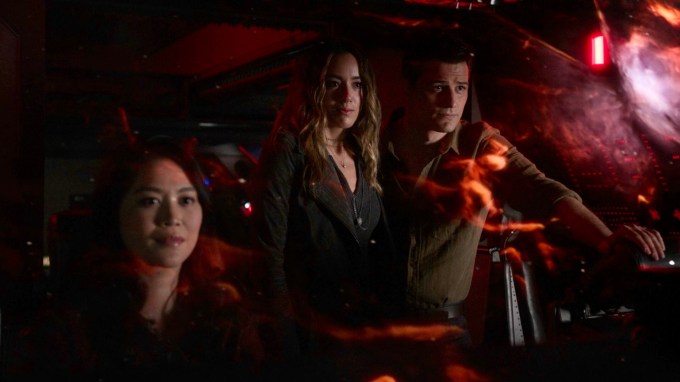
In these final scenes, there’s something different about Daisy. Yes, she’s still Daisy – there’s always been something incredibly consistent about her as a character, right from the beginning – but there’s also something we haven’t really seen before. There’s a sense of calm, a sense of peace. She knows who she is, she has complete faith in herself and her abilities, and she’s surrounded (physically and emotionally) by people who love her and support her. As Chloe Bennet says, “There’s a lot more groundedness within her.” She’s grown into someone her season one self could never have imagined and it’s incredible. I found it more inspiring than I can put into words, considering how much of myself I see in her as a character. Her ‘ending’ gives me hope.
I got caught up with season seven a few days before the finale. It was clear the finale was going to be incredible and I just felt that I wanted to do something to commemorate how much the show and how much Daisy meant to me, how much of an effect they’ve had on my life. I thought about it and decided that I wanted to get a daisy tattoo: to remind me how much this show and this character have meant to me and helped me through hard times; to remind me of Daisy and all of the things about her that inspire me, like her determination, her strength, her resolve to help people, and so on; to honour the love of superheroes I share with my Dad and that connection we will always have.
At some point between that moment and the finale, Chloe Bennet posted on Instagram, asking for suggestions as to what she should do with all the stuff she’s collected from her time on the show. I replied with some ideas but I also thanked her for all the show and Daisy have done for me, as well as my plan to get a daisy tattoo. And then – on the day of the finale, a plan she’d apparently had for a while – she posted a couple of photos on Instagram… of herself getting a daisy tattoo.
I couldn’t believe my eyes. It put the biggest grin on my face. I loved the idea that we’d both had the same thought process over commemorating Daisy, although obviously Chloe Bennet’s relationship to Daisy is on an entirely different level to mine. In one interview, she said: “I definitely would [play her again]. I mean, I have such a soft spot for her. I started shooting the show when I was 20, and then I finished when I was 27. To get this time right now, in isolation, to kind of contemplate the past seven years and how much it’s meant to me – it hasn’t really hit me yet that the show is over, so it doesn’t really feel like I’m done playing her yet.” And in another, she said something similar: “I don’t feel like I’m done playing her. I feel like there’s room in the Marvel Universe for more Quake. So hopefully you’ll see that happen!”
When this fan-made trailer appeared, at least half the internet fell for it, believing that a Daisy centric show was in the works. You’ll see why when you watch it.
It’s stunning, a perfect summation of Daisy’s story so far and an exciting look at how her story could continue. As much as I’d love a show about Daisy, or really just any extra Daisy content, the idea does make me a little nervous. She’s been so beautifully developed as a character that I’m not sure I’d trust her with anyone but Jed Whedon and Maurissa Tancharoen (the main showrunners of the series from the start). But knowing how much Chloe loves Daisy, I doubt there’s any reason to worry; Daisy couldn’t be in safer hands. I love Chloe Bennet and find her hugely inspiring too but I think I’ll save that for another post, otherwise we could be here forever…
And as I said, I probably wouldn’t have had any of this without Dad. And while the loss of him – that scar, that hole – will always be there, having this thing that he loved so much – this love that he passed on to me – back in my life has been a healing experience. The characters, the stories, and the lessons they teach us are his legacy to me and I’m grateful for whatever it was about Agents of Shield that made me feel able to engage with these worlds again.
Today would’ve been his birthday and while I have no way of knowing what life with him in it would have looked like, I like to imagine that we would’ve spent the day together: swimming in the morning (another thing we often did together) and then spending the afternoon and evening curled up on the sofa, taking turns choosing episodes of our favourite superhero shows. And I have no doubt that a great deal of them would’ve been from Agents of Shield.
 Finding Hope