 Finding Hope
Moving House When You’re Autistic
Posted on April 24, 2018
So I just moved house. It was not fun. I am going to write about it in more detail – I think the experience might be useful, maybe for someone trying to understand how change can affect a person with Autism – but I’m not ready to do that yet. It was really difficult and I’m still pretty emotional about the whole thing. Change is notoriously hard for people with Autism but I think the permanence of a change like moving house is particularly difficult. I definitely learned some lessons during the process so I thought I’d share them.
Some context before we begin: Not only were my family moving, we were separating into different houses, which was something I hadn’t been expecting. That was a real shock to me and made the whole thing even more difficult. But we’re still close and live close enough that we still see each other as much as before, which I’m really grateful for. Now I live with my Mum; I’m not ready to move out.
Right, here we go.
TIPS
Prepare for emotions, yours and others – First, however you feel is okay. It’s a big deal. Whether you feel everything or nothing, it will take time to work that out. And just when you think you’ve dealt with all of that, it’s time to move and it all comes back. There were lots of tears on the day of the move, as well as the few days after. It’s emotional and stressful and exhausting: the perfect mix for someone to get upset. I think the only thing you can do is be gentle with yourself and each other and give people space when they need it.
Build in as much time as possible – Moving house is exhausting and emotional. And packing at the last minute just makes it worse. Giving yourself time allows you to be careful and methodical and it means you can take breaks if it gets too much.
Label the boxes – The destined room is not enough. By the time you’ve packed everything you own and transported it to your new home, you’ll have no idea where anything is. And every time you need anything, you’ll spend at least twenty minutes digging through all the boxes in order to find it. It will drive you up the wall.
Pack a suitcase – You know me: preparation, preparation, preparation. Make sure you have a bag of things you’re going to need for at least the first week. You might think that you can get yourself sorted in a couple of days but chances are you can’t and you really don’t want to find yourself out of things like clean clothes and make up remover. You don’t need that on top of the stress of moving. Also, remember to check the weather forecast before packing, just in case you find yourself caught unawares by a heat wave with only jumpers to wear like I did.
Try to create a safe space for yourself – Moving house is messy and if you’re anything like me, being surrounded by clutter for extended periods of time makes me feel very claustrophobic and panicked. So, both before moving out and after moving in, I tried to keep one area calm and somewhat neat to give me a space to decompress and recharge in. I wasn’t always successful at keeping it tidy but for the most part, it helped.
Set a reminder to put all your food in the fridge – The last thing you need is all your food going off and with a million things to remember, you’ll most likely forget something. Let that be something else.
QUESTIONS TO THINK ABOUT
How much help do you need?
Depending on your capabilities, you may need to enlist some help to move everything, whether that’s professional movers or friends and family or both. You really don’t want to get halfway through moving day and be unable to keep going so make sure to think carefully about what you need and ask for that help well in advance.
Do you need to be there on moving day?
This obviously depends on whether you’re moving with your family or by yourself: the demands on you will be different. In my case, my family knew how difficult the whole experience had been and so suggested going to see a friend while the removal people did their thing. They thought that the empty house would upset me but I felt like I needed to be there; it helped me say goodbye.
Do you need a clean slate or do you need to keep things familiar?
As already mentioned, change is often hard for autistic people so you might feel the need to keep things as similar as possible, such as furniture and when decorating. But on the flip side, many people with Autism feel emotions very strongly so a change might actually be the less overwhelming option. It wouldn’t be healthy to be constantly reminded of an upsetting event.
Do you need closure and if so, how can you get it?
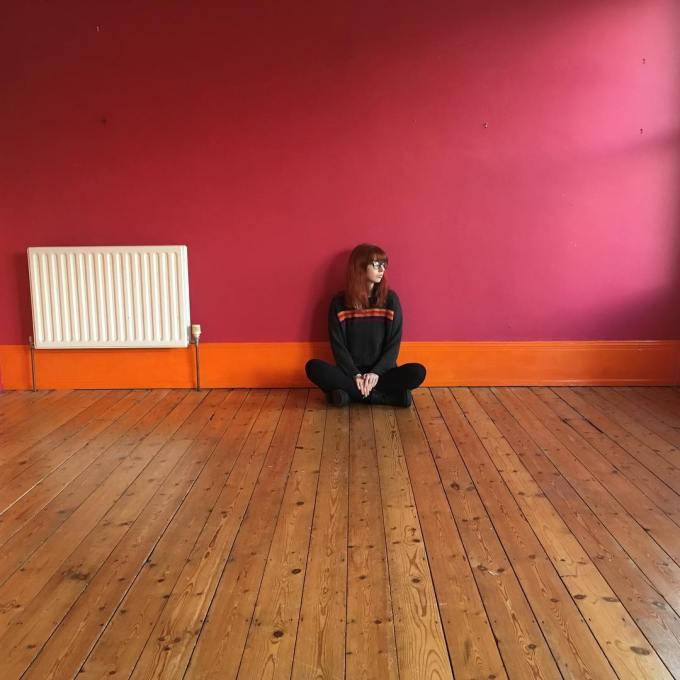
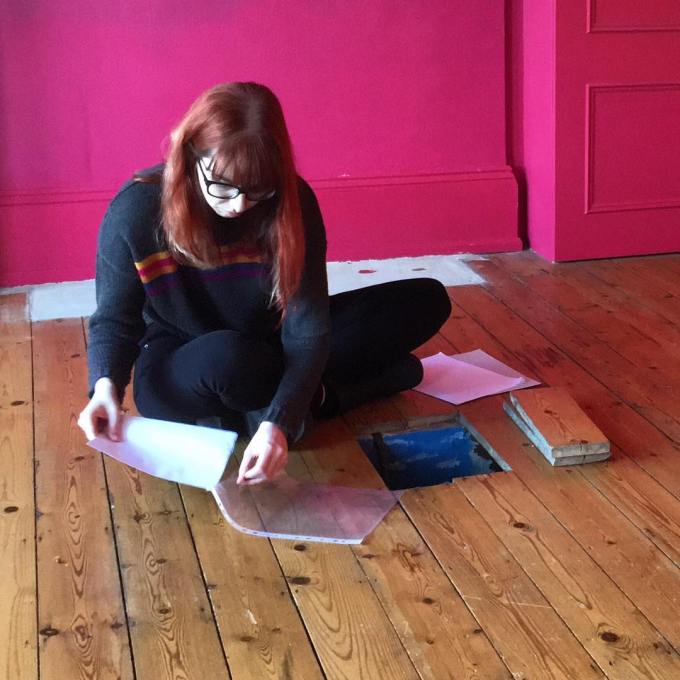
I definitely needed to say a real goodbye. I’d lived in that house for fifteen years; I felt safe there and there are a lot of memories associated with it. For a long time, it felt impossible to leave. So, once I could consider it, I thought a lot about what would help me leave, knowing that I wouldn’t be coming back. So, on the last day, we took some pictures of me in my room and then I put a letter I’d written for a future resident under a loose floorboard. I can’t tell you why or how but that did help a bit.
ADVICE FOR FRIENDS AND FAMILY
If you’re telling an autistic person that you have to move, be clear. Give them all the information. Especially when there’s so much emotion, it can be hard to process what’s going on so anything that isn’t explicitly stated may get lost.
Give them as much warning as possible. Something like this is really difficult to process – there are so many emotions involved – and it came take time to absorb and make sense of.
So I think that’s everything. I hope this has been interesting and helpful. One last thing to add: I found this article recently that is more relevant to someone moving out of their family home and thought it was definitely worth including here.
Autism Awareness Day 2018
Posted on April 3, 2018
Happy Autism Awareness Day!
Having been posting all week, I’m not sure I have anything new or exciting to say today. Plus I’m really jet lagged and struggling after an allergic-like reaction that I had on the flight to Nashville yesterday. I’m not sure how many words I have in me until I’ve had at least another night’s sleep. But I wanted to post with all the links to those posts and throw in my two cents (I’m in America, geddit…) to the discussions going on all over social media today.
Remember that, regardless of the things you find difficult or are unable to do, you are important and what you do matters. We may not always live up to the standards imposed on us and we may not always be as good as we want to be but that does not mean that what we can manage doesn’t matter, whether that’s exam results, exercising, or writing songs. How you do something, with your unique emotions, thoughts, and experiences, will be entirely different to how any other person would do it. That’s special. You’re special.
I’ll see you all soon. And here are all the posts from this week, all aimed at greater understanding around Autism:
World Autism Awareness Week 2018
The Consequences of an Autism Diagnosis
When Anxiety Is The Only Thing On The Menu
Posted on April 1, 2018
I know I touched on issues with food already this week but I thought I’d go into a little more detail so those of you who don’t experience this difficulty can get a glimpse into what it’s like. Food is a massive problem for me; it’s a daily cause of stress. Where am I going to be? Will there be food I can eat? If not, can I bring my own food? Can I get away with not eating or will people notice and point it out? It’s a constant loop and that is exhausting.
As I said in a recent post, I’m incredibly sensitive to the flavour of food; add even the smallest sprinkling of pepper to a meal and I can’t eat it. It overwhelms me and I just cannot eat it. Forget spicy food entirely. So I can only eat the simplest things: plain rice or pasta, unadorned chicken or fish, and so on. I practically live on fruit and vegetables. When there are lots of different flavours, I get overloaded. I can’t describe it better than I did in my sensory sensitivity post: “It’s like throwing a load of different coloured paints together: you don’t see all the different colours, you just get one new colour and it often isn’t a nice one.”
I’m also very sensitive to texture; there are very few things that don’t trigger my gag reflex. I’m sure all of you have experienced that at one time or another so you can imagine how desperate I am to avoid it. I remember a particularly bad experience with tofu; I’m actually shuddering just thinking about it. I have a similar problem with wet foods touching dry foods. It triggers the same response. So while my family – who are all fairly adventurous when it comes to food, at least from my point of view – flip through a library of cookbooks, I eat simple meals with ingredients that I can separate and I eat them over and over again.
Honestly, I don’t mind that. It’s safe. It’s comforting. It’s the pressure to eat ‘like a normal person’ that’s stressful. Going to restaurants and eating in public is a major anxiety: it’s very rare that there’s something on the menu that I feel able to eat and asking for something simple feels impossible. I find asking for anything difficult and drawing attention to this issue is something I try to avoid if at all possible.
As a child, I was labelled a picky eater and strongly encouraged to try different food. I know that my family and friends were just trying to help me: they were trying to prepare me for a world that would expect me to eat complicated food. But instead of it getting easier, it got harder. So eventually we reached this uneasy stalemate. But getting a diagnosis made a massive difference: it gave people an explanation, made them realise that it was something I couldn’t help. It took the pressure off in a big way. But as important as that is, it hasn’t fixed my problems with food. And as much as I struggle with it physically and struggle to get the right nutrition, it also has a big impact on my mental health.
People make assumptions when they hear how little I can eat. They think I’m being picky or deliberately difficult and see me as an inconvenience. I know that it’s not my fault and that it’s a valid reason to struggle but I find it incredibly embarrassing that I can’t eat like everyone else. I feel like it keeps me from really becoming an adult, especially when so much socialising revolves around the consumption of food and drink. It feels like a weakness; it’s something I’m ashamed of, which definitely feeds into both my body image issues and my depression, as well as my anxiety. When I get really low, as in dangerously low, food becomes even harder and I just lose the will to eat all together.
I vividly remember being about ten years old and reading a magazine article about a girl who had to have intravenous nutrition for medical reasons and I found myself wishing I could have the same, wishing I could not eat because it would be so much easier. And I still relate to that. I would give anything to be in control of this, rather than it have control of me. I wish I could choose what to eat, rather than navigate around the things I can’t. I wish I could eat according to my beliefs instead of having to worry about whether I’m getting enough protein or calcium or whatever (I would love to be a vegan, or even a vegetarian, and often feel guilty that I’m not but health wise, it’s ill advised when there’s already so little that I can eat). I wish I didn’t have to be afraid of blowing a sensory fuse, of getting completely overloaded, which can trigger a meltdown. I wish I could enjoy food. But I can’t and I’m scared I never will.

 Finding Hope